Monarchy of Prussia
The Monarchy of Prussia represents one of the most influential political lineages in European history. Led by the House of Hohenzollern, the Prussian monarchs evolved from regional dukes into the emperors of a unified Germany, shaping the geopolitical landscape of Central Europe for nearly four centuries.
The story of Prussia begins not as a kingdom, but as a theocracy. The state emerged from the Teutonic Order, a Roman Catholic crusader state located along the Baltic Sea. The transition to a secular monarchy occurred in 1525 when the last Grand Master, Albert, converted to Protestantism and secularized the lands, establishing the Duchy of Prussia.
Key Facts
- Dynasty: House of Hohenzollern.
- Duration: 10 April 1525 to 9 November 1918.
- First Monarch: Albert (as Duke).
- Last Monarch: Wilhelm II.
- Primary Residences: Königsberg Castle and the Stadtschloss in Berlin.
- Final Status: Abolished following the abdication of Wilhelm II.
The Evolution from Duchy to Kingdom
The Duchy and Brandenburg-Prussia
Initially, the Duchy of Prussia existed as a vassal of the Kingdom of Poland. By 1618, the Duchy passed to a branch of the Hohenzollern family who were already the Electors of Brandenburg within the Holy Roman Empire. This created a unique political entity known historiographically as Brandenburg-Prussia—a personal union of two territories under different suzerainties.
Following the third Northern War, the Duchy gained full sovereignty. This independence provided the legal foundation for the Hohenzollerns to seek a royal title, though they had to navigate the complex politics of the Holy Roman Empire to do so.
The "King in Prussia" Distinction
In 1701, the state officially became a kingdom. However, from 1701 to 1772, the rulers used the title "King in Prussia" rather than "King of Prussia." This subtle linguistic choice served two purposes: it avoided offending the Holy Roman Emperor (to whom they still owed fealty as Electors of Brandenburg) and acknowledged that they did not yet hold sovereignty over the entire Prussian region, as parts remained under Polish control.
By 1772, as Prussia emerged as a Great Power, the title was updated to "King of Prussia." The legal fiction of the Electorate of Brandenburg continued until 1806, when the Holy Roman Empire dissolved and Brandenburg was formally merged into the Prussian state.
The German Empire and the End of the Monarchy
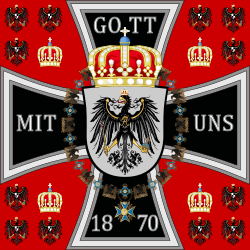
The pinnacle of Prussian power arrived in 1871. Following the Franco-Prussian War, the German Empire was established. Wilhelm I, the King of Prussia, was crowned German Emperor. While the Kingdom of Prussia remained the largest and most powerful constituent state of the empire, the title of German Emperor took precedence.
The monarchy persisted until the end of World War I. On 9 November 1918, the last monarch, Wilhelm II, abdicated, marking the formal abolition of the Prussian monarchy.
Summary of Prussian Monarchs
| Era | Notable Monarchs | Key Transition/Note |
|---|---|---|
| Duchy (1525–1701) | Albert, Frederick William (Great Elector) | Secularization of Teutonic Order lands. |
| Kingdom (1701–1871) | Frederick I, Frederick II (the Great) | Rise to Great Power status. |
| Imperial Era (1871–1918) | William I, Frederick III, William II | Kings of Prussia also served as German Emperors. |
Frequently Asked Questions
Who was the first monarch of Prussia?
The first monarch was Albert, who became the Duke of Prussia on 10 April 1525 after secularizing the lands of the Teutonic Order.
Why was the title "King in Prussia" used?
The title "King in Prussia" was used between 1701 and 1772 to avoid offending the Holy Roman Emperor and to reflect that the Hohenzollerns did not yet control the entire Prussian region.
What was the relationship between Prussia and the German Empire?
Prussia was the largest and most powerful constituent state of the German Empire. From 1871 onwards, every King of Prussia also held the title of German Emperor.
Who was the last King of Prussia?
The last King of Prussia was Wilhelm II, who reigned from 15 June 1888 until his abdication on 9 November 1918.
What is the current status of the Prussian throne?
The monarchy was abolished in 1918; however, Georg Friedrich is recognized as the pretender to the throne.