Ministro Pistarini International Airport
Ministro Pistarini International Airport, commonly known as Ezeiza Airport (EZE), serves as the primary international gateway to the Buenos Aires metropolitan area. Located in Ezeiza, Argentina, this public airport is operated by Aeropuertos Argentina 2000 and acts as a critical hub for both Aerolíneas Argentinas and Flybondi.
Since its opening on April 30, 1949, the airport has evolved into one of the region's most significant aviation centers, facilitating millions of passengers and thousands of tonnes of freight annually. Situated at an elevation of 67 feet (20 meters) above mean sea level, it connects Argentina to major cities across the Americas, Europe, Africa, and Asia.
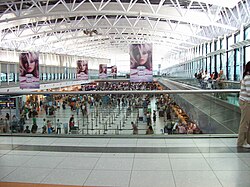
Key Facts
- IATA Code: EZE | ICAO Code: SAEZ
- Annual Passengers (2024): 11,077,000 (Ranked 2nd in Argentina)
- Annual Freight (2024): 229,260 tonnes
- Primary Hub For: Aerolíneas Argentinas and Flybondi
- Runways: Two asphalt runways (11/29 and 17/35)
- Time Zone: Argentina Standard Time (UTC−03:00)
Airport Infrastructure and Terminals
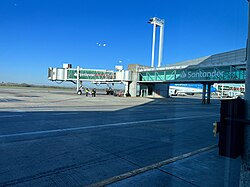
The airport's layout is designed to handle high volumes of international traffic through several specialized terminals. A significant expansion occurred in March 2013 with the inauguration of Terminal B, which covers 28,795 square meters (309,950 sq ft) and is primarily utilized by KLM and Aerolíneas Argentinas.
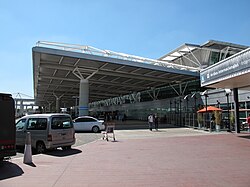
The facility also includes Terminal A and Terminal C, the latter of which serves as a key area for arrivals and specific airline operations.

Historically, the airport was a point of national pride, designed and built by Argentine technicians. In its early years, it was noted for being one of the largest and most modern air termini in the world, significantly larger than contemporary London airports of the era.
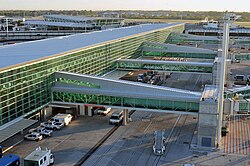
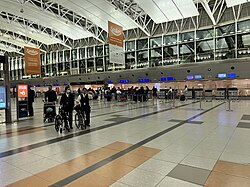
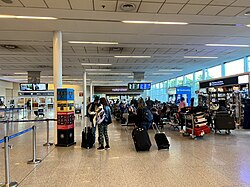
Modern travelers will find a range of services at the check-in counters and arrivals areas, ensuring a streamlined transition between the city and the sky.
Flight Operations and Global Connectivity
Ministro Pistarini International Airport maintains a vast network of destinations. Major carriers such as American Airlines, Delta Air Lines, and United Airlines provide essential links to the United States, while Lufthansa, Air France, and Iberia connect the region to Europe.
Regional and Intercontinental Reach
The airport is a vital link for South American travel, with frequent flights to São Paulo, Rio de Janeiro, Santiago de Chile, and Lima. Long-haul connectivity has seen various shifts over the years; for instance, Turkish Airlines provides a critical link to Istanbul, and Ethiopian Airlines connects Buenos Aires to Addis Ababa.
Route Evolution
The airport's route map has shifted dynamically. While some carriers like Qantas and Air New Zealand discontinued services in recent years, new opportunities have emerged. Notably, El Al is scheduled to begin non-stop flights to Tel Aviv on November 29, 2026. The airport has also seen the rise of low-cost carriers like JetSmart and Flybondi, increasing accessibility for regional travelers.
Technical Specifications and Traffic
To support heavy international aircraft, the airport operates two primary asphalt runways. Runway 11/29 measures 3,300 meters (10,828 ft), while Runway 17/35 measures 3,105 meters (10,187 ft).
Traffic statistics show a steady growth in passenger numbers over the decades. Between 2005 and 2010, passenger volume grew from approximately 6.3 million to 8.7 million annually, reflecting the increasing globalization of Argentine trade and tourism.
| Feature | Detail |
|---|---|
| Owner/Operator | Aeropuertos Argentina 2000 |
| Total Passengers (2024) | 11,077,000 |
| Freight Volume (2024) | 229,260 tonnes |
| Runway 11/29 Length | 3,300 m (10,828 ft) |
| Runway 17/35 Length | 3,105 m (10,187 ft) |
| Elevation | 67 ft (20 m) AMSL |
Frequently Asked Questions
What is the difference between EZE and Aeroparque?
Ministro Pistarini International Airport (EZE) is the primary hub for long-haul international flights, whereas Aeroparque Jorge Newbery primarily handles domestic and regional flights within South America.
Which airlines use EZE as a hub?
The airport serves as a major hub for Aerolíneas Argentinas and the low-cost carrier Flybondi.
When was the airport opened?
The airport officially opened on April 30, 1949.
What are the main terminals at Ezeiza?
The airport operates several terminals, including Terminal A, Terminal B (inaugurated in 2013 for KLM and Aerolíneas Argentinas), and Terminal C.
Does EZE handle cargo flights?
Yes, the airport is a significant freight hub, processing 229,260 tonnes of cargo in 2024.