Aerolíneas Argentinas: The History and Evolution of Argentina's Flag Carrier
Founded on May 14, 1949, Aerolíneas Argentinas serves as the primary flag carrier for the Argentine Republic. From its early operational beginnings on December 7, 1950, the airline has evolved through various ownership structures, transitioning from a state-owned entity to a privatized company and eventually returning to government control. Today, it operates as a vital link between Argentina and the rest of the world, utilizing two primary hubs in Buenos Aires.
The airline's operational heart is split between Buenos Aires–Aeroparque, which primarily handles domestic and regional traffic, and Buenos Aires–Ezeiza, the gateway for long-haul international flights. With a workforce of over 10,000 employees as of 2019, the carrier maintains a significant presence in focus cities such as Córdoba and Rosario.
Key Facts
- Founded: May 14, 1949.
- Ownership: Government of Argentina.
- Alliance: Member of SkyTeam and SkyTeam Cargo.
- Primary Hubs: Buenos Aires–Aeroparque and Buenos Aires–Ezeiza.
- Fleet Size: 83 aircraft (as of December 2025).
- Frequent Flyer Program: Aerolíneas Plus.
Historical Evolution
Early Years and Privatization
In its early decades, Aerolíneas Argentinas expanded its reach and fleet, moving from piston-engine aircraft to the jet age. Between 1990 and 2008, the airline underwent a period of privatization. This era was marked by significant volatility; for example, by 2001, the airline faced severe financial distress, reporting a debt of US$ 900 million and a substantial annual balance loss of US$ 390 million.
Renationalization and Modern Era
Following the challenges of privatization, the Argentine government moved to renationalize the carrier in 2008. This transition aimed to secure the country's air connectivity. Despite the return to state control, the airline has faced ongoing financial hurdles, reporting consistent losses in both pesos and US dollars through 2019, with a net income loss of US$ 603.15 million in the 2019 fiscal year.
Fleet and Operations
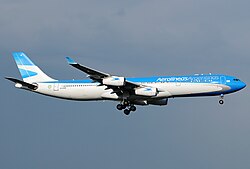
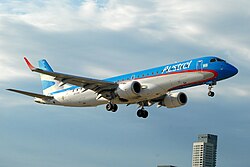
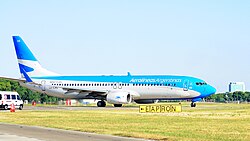
The current fleet is a mix of narrow-body aircraft for regional routes and wide-body aircraft for international long-haul flights. The airline relies heavily on the Boeing 737 family and Embraer 190s for short-to-medium distances, while the Airbus A330-200 handles the heavy lifting for overseas destinations.
Current Fleet Composition (December 2025)
| Aircraft Model | In Service | Orders | Total Capacity (J/Y) |
|---|---|---|---|
| Airbus A330-200 | 10 | — | 24 / 248 |
| Airbus A330-900 | — | 6 | TBA |
| Boeing 737-700 | 4 | — | 8 / 120 |
| Boeing 737-800 | 28 | — | 8 / 162 |
| Boeing 737 MAX 8 | 15 | 6 | 8 / 162 |
| Boeing 737 MAX 10 | — | 8 | TBA |
| Embraer 190 | 24 | — | 8 / 88 |
| Boeing 737-800BCF (Cargo) | 2 | — | Cargo |
Retired Aircraft
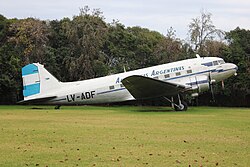
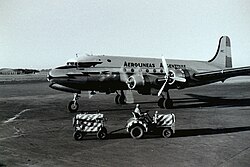
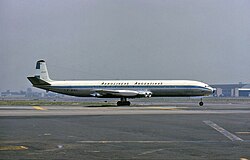
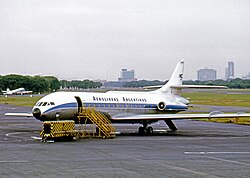
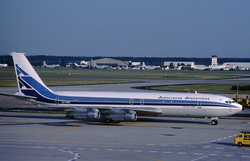
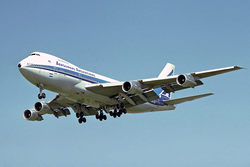
The airline's history is reflected in its diverse list of retired aircraft. Over the years, it has operated iconic models including the Boeing 747-200B, Boeing 707, the de Havilland Comet 4, and various Douglas DC-3 and DC-4 models. This progression highlights the shift from early aviation to the modern era of high-efficiency jets.
Global Alliances and Partnerships
To expand its global reach, Aerolíneas Argentinas is a member of the SkyTeam alliance. This partnership allows for seamless connectivity and shared loyalty benefits through the Aerolíneas Plus program. The airline also maintains extensive codeshare agreements with major global carriers, including Air France, Delta Air Lines, KLM, and Korean Air.
Additionally, the airline has interline agreements with carriers such as Emirates, Iberia, and Swiss International Air Lines, ensuring that passengers can book travel across multiple airlines on a single itinerary.
Corporate Structure
The airline is currently owned by the Government of Argentina and is led by President and CEO Fabian Lombardo. Its corporate structure includes specialized subsidiaries such as Aerohandling and Aerolíneas Argentinas Cargo, the latter of which is a member of the SkyTeam Cargo alliance.
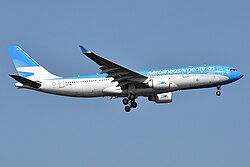
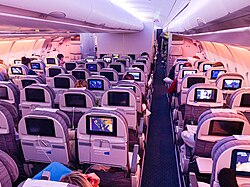
The passenger experience is tailored across different classes, with the Airbus A330-200 providing the primary long-haul configuration for economy and business travelers.
Frequently Asked Questions
Which alliances does Aerolíneas Argentinas belong to?
Aerolíneas Argentinas is a member of the SkyTeam alliance and the SkyTeam Cargo alliance.
What are the main hubs for the airline?
The airline operates primarily out of two hubs in Buenos Aires: Aeroparque Jorge Newbery and Ministro Pistarini International Airport (Ezeiza).
Who owns Aerolíneas Argentinas?
The airline is owned by the Government of Argentina.
What aircraft does the airline use for long-haul flights?
The airline currently utilizes the Airbus A330-200 for its long-haul operations, with Airbus A330-900s ordered for future delivery starting in 2028.
Does the airline have a loyalty program?
Yes, the airline's frequent-flyer program is called Aerolíneas Plus.