Military Divisions: Evolution, Structure, and Global Organization
In military science, a division is a large tactical unit that serves as a critical intermediate layer of command, typically sitting between a corps and a brigade. Designed to be self-sufficient, a division integrates various combat arms—such as infantry, artillery, and armor—to execute complex operational goals on the battlefield.
The composition and size of these units have shifted dramatically over the last century, evolving from the massive manpower requirements of the World Wars to the more flexible, technology-driven structures of the modern era.
Key Facts
- Scale: Modern US Army divisions typically range from 17,000 to 21,000 soldiers, potentially expanding to 40,000 with support units.
- Command: Most divisions are commanded by a Major General.
- Diversity: Common types include infantry, armored, airborne, mountain, and artillery divisions.
- Historical Shift: The People's Liberation Army (PLA) of China shifted from a division-dominated structure to a brigade-dominated one starting in 2011.
- Composition: A standard division often consists of several maneuver brigades and specialized support elements.
Historical Evolution of the Division
World War I: The Era of Mass Mobilization
During the Great War, division sizes varied by nation. French and Russian armies deployed divisions of approximately 16,000 personnel, while the German Imperial Army averaged 17,500. British and Austro-Hungarian forces were slightly larger, at around 18,000. By 1917, the United States entered the conflict with significantly larger formations; American infantry divisions numbered 28,061 officers and men, including 17,666 riflemen.
World War II: Industrialized Warfare
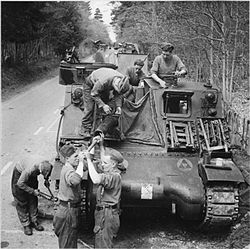
The scale of mobilization reached its peak during World War II. The Soviet Red Army maintained over a thousand division-sized units at once, with an estimated 482 rifle divisions raised during the Great Patriotic War (1941–1945). Nazi Germany also fielded hundreds of divisions, while the United States employed up to 91.
This era saw the rise of specialized units, most notably airborne divisions (paratroopers). The German 1st Parachute Division played a key role in the 1941 Battle of Crete, while US and British airborne forces became pivotal during the 1943 invasion of Sicily and the 1944 Invasion of Normandy.
Types of Modern Divisions
Depending on the strategic need, nations organize their forces into different divisional specializations:
- Infantry Division: The foundational unit, focused on ground combat and holding territory.
- Armored Division: Heavy units utilizing tanks and mechanized infantry for rapid breakthroughs.
- Airborne Division: Elite light infantry trained for deployment via parachute or glider.
- Mountain Division: Specialized for high-altitude and rugged terrain operations.
- Artillery Division: Focused on long-range fire support and ballistic missile capabilities.
Global Organizational Examples
North America
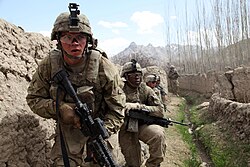
In the United States, a division typically comprises three maneuver brigades, an aviation brigade, and an engineer brigade. While some support structures were removed in 2007, divisional artillery (DIVARTY) began reappearing in 2014. The US maintains a mix of active-duty divisions (such as the 101st Airborne and 1st Armored), National Guard divisions, and Army Reserve training divisions.
Canada's divisional history is characterized by fluctuations. After the Canadian Corps of WWI, the 1st Canadian Division was reactivated in 1988 and later transformed into the Canadian Forces Joint Headquarters before returning to its divisional status in 2010. Today, Canada maintains five divisions, with the 1st Division commanding roughly 2,000 troops and others commanding approximately 10,000 each.
Asia and the Middle East
India and Pakistan utilize similar structures where the division is the primary striking force, commanded by a Major General. An Indian division typically consists of 15,000 combat troops and 8,000 support elements. India currently operates 40 divisions, including RAPIDs (Reorganised Army Plains Infantry Divisions) and mountain divisions.
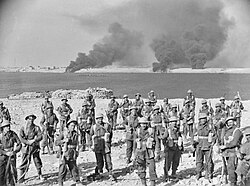
Egypt's force includes specialized mechanized units, such as the 19th Infantry Division, which is noted for its performance in the October 1973 War and the Battle of Suez.
Other National Structures
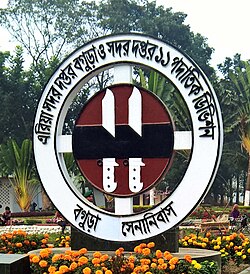
- Bangladesh: Maintains numerous infantry divisions across various cantonments, including the 11th Infantry Division in Bogra.
- Indonesia: Utilizes Kodam territorial commands and operates three Marine Forces divisions.
- Venezuela: Fields a mix of infantry, armored, and cavalry divisions.
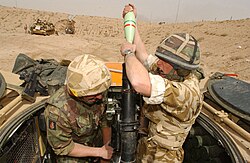
- United Kingdom: Currently operates two active divisions, alongside several administrative and regional divisions like the Guards and Parachute Division.
Summary of Divisional Characteristics
| Country/Era | Typical Size (Personnel) | Key Characteristics |
|---|---|---|
| WWI (France/Russia) | ~16,000 | Early industrial mass infantry |
| WWI (USA) | ~28,000 | High rifleman concentration |
| Modern USA | 17,000 - 40,000 | Combined arms, brigade-centric |
| Modern India/Pakistan | ~23,000 | 15k combat / 8k support |
| Modern Canada (1st Div) | ~2,000 | Joint operations focus |
Frequently Asked Questions
What is the difference between a division and a brigade?
A division is a larger formation that typically consists of several brigades. While a brigade can operate independently for short periods, a division is designed to be a self-sustaining entity with its own integrated support, artillery, and logistics.
Who typically commands a military division?
In most modern professional armies, including those of the United States, India, and Pakistan, a division is commanded by a General Officer Commanding (GOC) holding the rank of Major General.
Why did China move from divisions to brigades?
Starting in 2011, the People's Liberation Army (PLA) transitioned to a brigade-dominated structure to increase flexibility and responsiveness, reducing the bureaucratic layers between high command and tactical units.
What makes an airborne division different from a standard infantry division?
Airborne divisions are specialized light infantry trained for rapid deployment via aircraft. They are designed to be dropped behind enemy lines to seize key objectives, whereas standard infantry divisions are typically deployed via ground transport for sustained combat.
How did division sizes change between WWI and WWII?
While WWI divisions focused on massive numbers of riflemen for trench warfare, WWII divisions became more specialized (armored, parachute) and varied more widely in size to accommodate the needs of highly mobile, industrialized warfare.