French Army: History, Evolution, and Modern Capabilities
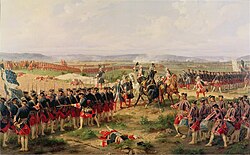
The French Army (Armée de terre) is the land warfare branch of the French Armed Forces. With a legacy spanning over five centuries since its formal founding on May 26, 1445, it has evolved from a royal force into a professional modern military. Guided by the motto "Honneur et Patrie" (Honour and Fatherland), the Army remains a central pillar of France's national security and international commitments.
Key Facts
- Founded: May 26, 1445.
- Active Personnel: 118,600 (as of 2020).
- Reserve Personnel: 23,000.
- Core Role: Land warfare.
- Key Units: Includes the elite French Foreign Legion and the Paris Fire Brigade.
- Current Leadership: Under the authority of President Emmanuel Macron and Army General Pierre Schill.
Historical Evolution
Early History and the Napoleonic Era
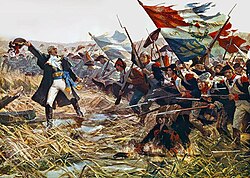
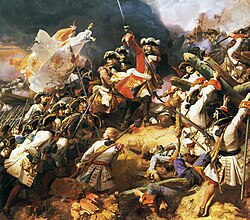
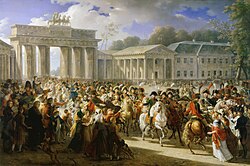
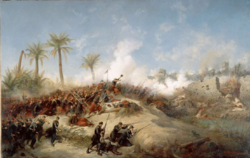
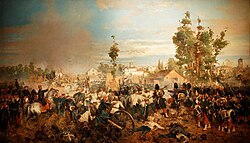
The French Army has been engaged in countless conflicts, from the Hundred Years' War and the Italian Wars to the global ambitions of the Napoleonic Wars. During the early modern period, the army transitioned through royal, revolutionary, and imperial phases, establishing France as a dominant land power in Europe.
The World Wars
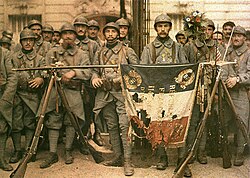
At the onset of World War I in August 1914, the army numbered 1.3 million soldiers. By the war's end, it had mobilized 8.817 million men, including 900,000 colonial troops. The conflict saw a dramatic shift in equipment; the conspicuous red and blue uniforms of the Franco-Prussian War were replaced in 1915 by the bleu-horizon (light blue-grey) uniform and the Adrian helmet to better suit trench warfare.
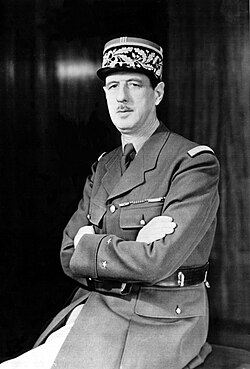
During World War II, the army deployed 2.24 million combatants during the Battle of France in May 1940. Following the defeat in June 1940, the Vichy government maintained a limited Armistice Army. Simultaneously, the Free French Forces, led by Charles de Gaulle, continued fighting alongside the Allies until the Axis defeat in 1945.
The Cold War and Decolonization
Post-1945, the French Army faced the complex challenge of decolonization. Despite significant efforts during the First Indochina War (1945–1954) and the Algerian War (1954–1962), these territories eventually gained independence. The Algerian conflict was particularly volatile, leading to a military coup in 1958 that returned General de Gaulle to power and a failed putsch in 1961.
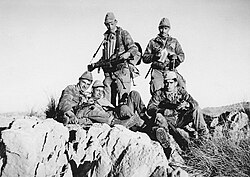
During the Cold War, France maintained a strong presence in Germany and was integrated into the NATO Military Command Structure from 1948 until 1966. Even after leaving the integrated command, the Army continued to plan for the defense of Western Europe, utilizing various Army Corps and the Rapid Action Force to support NATO's Central and Northern Army Groups.
Modern Organization and Personnel
Structure and Command
The modern Army is organized according to the Code of Defense. Its structure includes the Army Inspectorate, the Human Resources Directorate (DRHAT), and various forces and services. Territorially, France is divided into seven Zone de défense et de sécurité (Defense and Security Zones), with headquarters in cities such as Paris, Lille, Rennes, Bordeaux, Marseille, Lyon, and Strasbourg.
The French Foreign Legion
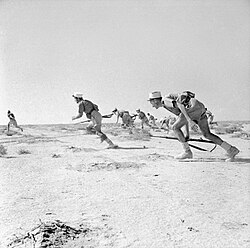
Established in 1831, the French Foreign Legion is an elite unit composed of foreign nationals. Numbering approximately 9,000 troops, the Legion is a commandement particulier (special command) whose regiments serve across various arms, including infantry and engineering.
Personnel Strength (2022 Data)
| Category | Strength |
|---|---|
| Commissioned Officers | 14,155 |
| Non-commissioned Officers | 38,684 |
| EVAT (Contractual Soldiers) | 61,372 |
| VDAT (Voluntary Engagement) | 466 |
| Civilian Employees | 8,119 |
Contemporary Operations and Equipment
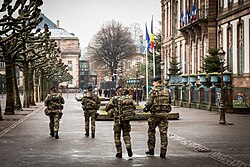
In recent years, the Army has undergone a professionalization process, reducing its reliance on conscripts. A primary domestic focus is Opération Sentinelle, launched in 2015 following terror attacks in Île-de-France. This operation deploys thousands of soldiers and police to protect sensitive sites across the territory.
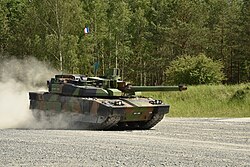
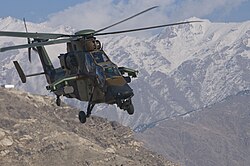
The Army utilizes advanced hardware to maintain its operational edge, including the Leclerc tank, the Félin infantry system, and the Eurocopter Tiger. These assets support a wide range of missions, from domestic security to international interventions like Operation Barkhane.
Frequently Asked Questions
When was the French Army founded?
The French Army was founded on May 26, 1445.
What is the role of the French Foreign Legion?
The French Foreign Legion is an elite military unit consisting of foreign nationals who serve under French officers, specializing in various roles including infantry and engineering.
What is Opération Sentinelle?
Opération Sentinelle is a domestic military operation established in 2015 to protect sensitive locations in France from terrorism following major attacks in Paris and Île-de-France.
How did uniforms change during World War I?
At the start of the war, soldiers wore colorful red and blue uniforms. By 1915, these were replaced by the bleu-horizon (light blue-grey) uniform and the Adrian helmet for better camouflage and protection in the trenches.
Who currently commands the French Army?
The Army is under the overall authority of President Emmanuel Macron, with Army General Pierre Schill serving as the Chief of the Army Staff.