French Colonial Empire: The Rise and Fall of Two Global Eras
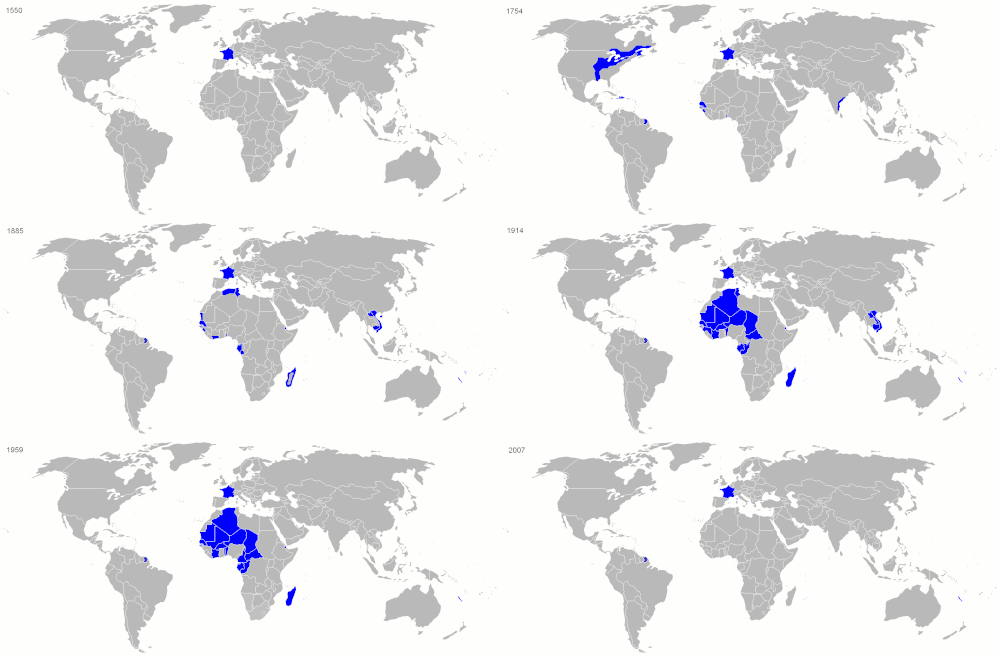
From the early explorations of the 16th century to the final withdrawals of the late 20th century, the French colonial empire represented a massive effort by France to project power, culture, and commerce across the globe. Spanning several continents, this imperial project was not a single continuous event but rather two distinct eras—the First and Second Empires—each defined by different motivations and geopolitical challenges.
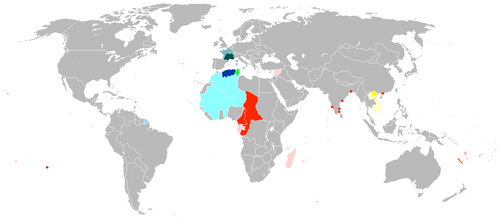
The empire's reach extended from the frozen landscapes of Canada to the tropical jungles of Indochina and the vast deserts of the Sahara. While driven by economic gain and strategic rivalry, France often justified its expansion through the concept of a civilizing mission (mission civilisatrice), the belief that France had a duty to spread its language, education, and culture to the rest of the world.
Key Facts
- Timeline: The colonial era spanned from 1534 (Jacques Cartier's claim) to 1980 (independence of Vanuatu).
- Two Phases: The First Empire (16th century to 1814) and the Second Empire (post-1830).
- Peak Population: By 1936, the total population of metropolitan France and its colonies reached approximately 110.6 million people.
- Major Territories: Included New France (North America), French West Africa, French Indochina, and Algeria.
- End of Empire: Transitioned through the French Union (1946) before most territories gained independence.
The First French Colonial Empire (16th Century – 1814)

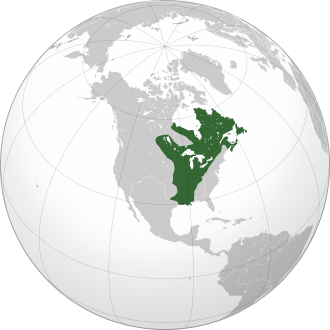
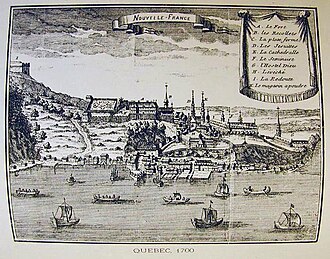
The first era of French expansion was characterized by the establishment of trading posts and the settlement of the Americas and Asia. In North America, France established New France (Nouvelle France), which encompassed Canada and Louisiana.
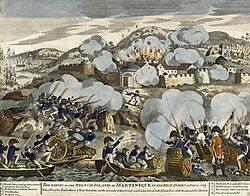
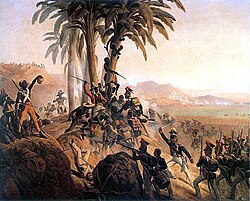
In the Caribbean, France developed lucrative colonies such as Saint-Domingue, Guadeloupe, and Martinique. These territories were central to the French economy but relied heavily on enslaved labor, eventually leading to the Haitian Revolution in 1791.

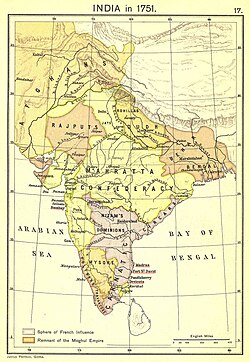
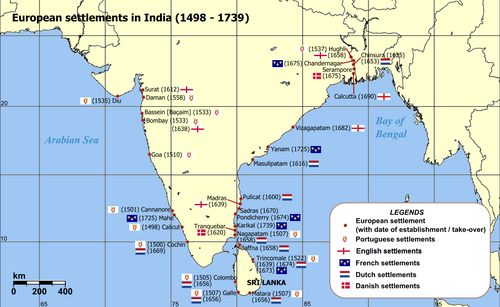
Beyond the Americas, France established a presence in India with outposts in Chandernagore (1673), Pondichéry (1674), and others. However, this first imperial wave eventually collapsed due to intense conflict with Great Britain and internal upheavals during the French Revolution.
The Second French Colonial Empire (Post-1830)

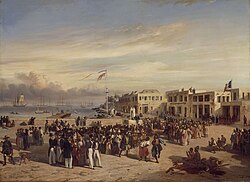
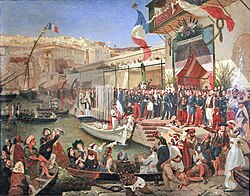
The second era began with the invasion of Algeria in 1830. Unlike the first empire, this phase was marked by more aggressive territorial conquest and administrative control, particularly in Africa and Asia.
Expansion in Africa
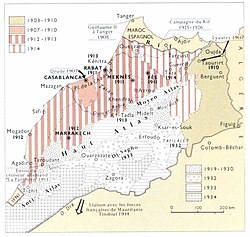
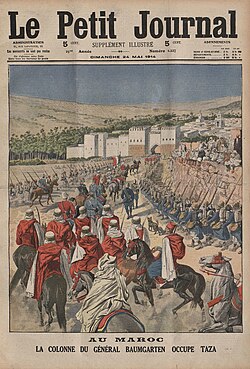
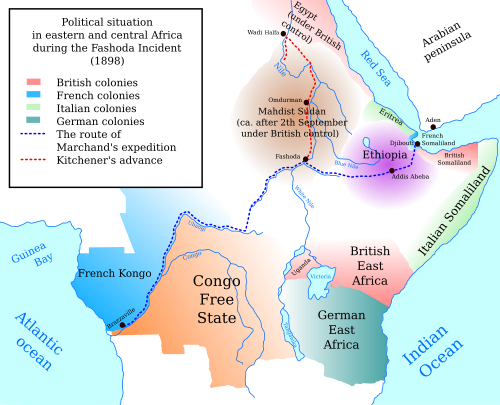
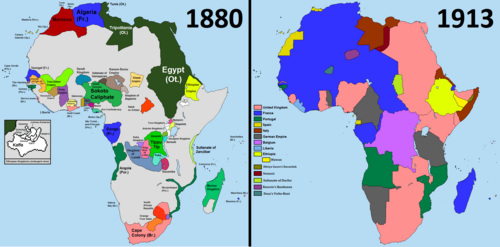
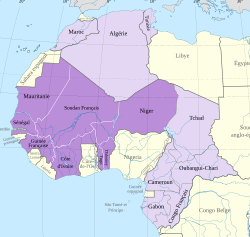
Algeria was the cornerstone of the second empire, though its conquest was brutal; historian Ben Kiernan estimates that 825,000 Algerians died during the conquest by 1875. France further expanded into Morocco, Tunisia, and vast regions of West and Equatorial Africa.

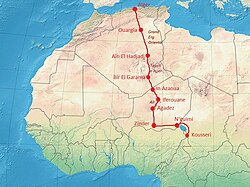
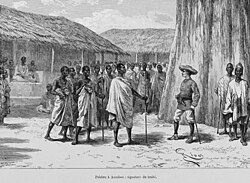
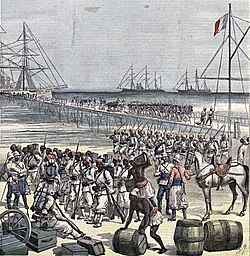
The drive for African territory involved military expeditions, such as the Foureau-Lamy expedition of 1898 to conquer the Chad Basin, and the annexation of Madagascar in 1895.
Asia and the Pacific
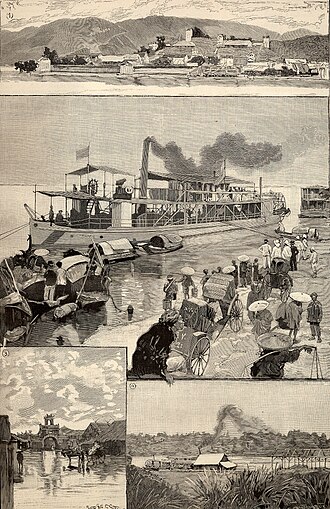
In Asia, France established French Indochina (comprising Cochinchina, Tonkin, Annam, Cambodia, and Laos). They also maintained concessions in China, such as those in Shanghai and Tianjin.

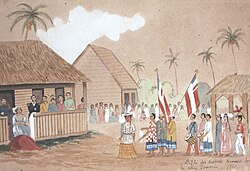
In the Pacific, France annexed Tahiti (1880) and New Caledonia (1853), extending its influence into Oceania.
Imperial Administration and Demographics
The French approach to colonialism often emphasized assimilation, attempting to integrate colonial subjects into French culture. This was managed through a centralized system based in Paris, utilizing the French franc as a primary currency.
| Year | Metropolitan France | Colonies & Protectorates | Total Population | World Pop. % |
|---|---|---|---|---|
| 1921 | 39,140,000 | 55,556,000 | 94,696,000 | 5.02% |
| 1926 | 40,710,000 | 59,474,000 | 100,184,000 | 5.01% |
| 1931 | 41,550,000 | 64,293,000 | 105,843,000 | 5.11% |
| 1936 | 41,500,000 | 69,131,000 | 110,631,000 | 5.15% |
Decolonization and the End of Empire
The decline of the French Empire was accelerated by World War II and the subsequent rise of nationalist movements. In 1946, France attempted to reorganize its holdings into the French Union to maintain ties with its territories.
However, violent conflicts erupted in several regions. The war in Indochina ended with a significant French defeat at Dien Bien Phu in 1954, leading to the independence of Vietnam, Laos, and Cambodia.
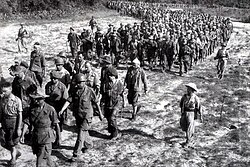
The most protracted struggle occurred in Algeria, where a bloody war for independence lasted until 1962. By 1980, with the independence of Vanuatu, the formal colonial empire had largely ceased to exist, though France maintains several overseas departments and territories today.
Frequently Asked Questions






What was the difference between the First and Second French Empires?
The First Empire (16th century–1814) focused on trade and settlement in the Americas and India. The Second Empire (post-1830) was characterized by larger-scale territorial conquest and administrative control, primarily in Africa and Southeast Asia.
What was the "civilizing mission"?
The civilizing mission (mission civilisatrice) was the ideological justification used by France to claim that its colonial expansion was beneficial to indigenous populations by bringing them French education, language, and culture.
Which territories were part of New France?
New France included Canada, Acadia, and Louisiana, covering vast portions of present-day North America.
How did the French Empire end?
The empire ended through a process of decolonization, often involving violent conflicts such as the First Indochina War and the Algerian War, as well as diplomatic transitions through the French Union.
What was the impact of the Haitian Revolution?
The Haitian Revolution (starting in 1791) led to the loss of Saint-Domingue, one of France's most profitable colonies, and served as a pivotal moment in the collapse of the First Empire's hold on the Caribbean.