Military Dictatorship: History, Evolution, and Global Impact
A military dictatorship is a form of government where the supreme power is held and exercised by members of the armed forces. Typically led by a commander-in-chief or a military junta—a committee of military leaders—these regimes often emerge through military coups or popular uprisings during periods of intense domestic instability. While these regimes frequently claim to seize power to combat corruption or restore national order, the actual motivations of the officers involved vary widely.
The modern iteration of military rule first gained prominence in Latin America during the 19th century before spreading to Europe in the early 20th century. The Cold War era saw a significant resurgence of these regimes across Africa, Asia, and Latin America. However, since the end of the Cold War, scholars have noted a general decline in the prevalence of military dictatorships globally.
Key Facts
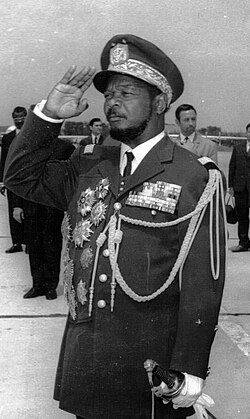
- Leadership: Usually headed by the military's commander-in-chief or a junta.
- Origins: Most commonly established via coups d'état or during civil unrest.
- Regional Trends: Historically prevalent in Latin America; currently most frequent in Africa.
- Cold War Influence: Political polarization and foreign aid during the Cold War incentivized military takeovers in several regions.
- Modern Status: Military coups have become rare outside of Africa in the 21st century, with Myanmar as a notable exception.
Historical Foundations and Early Rule
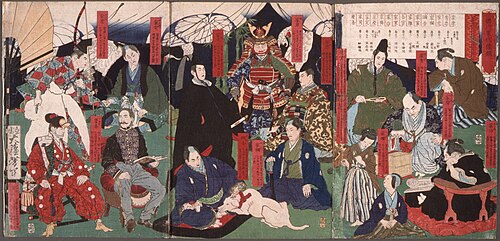
Military rule is not a modern phenomenon. In Japan, the country was governed by shoguns (military rulers) from the formation of the Kamakura shogunate in 1185 until the Meiji Restoration in 1868. Although the Emperor remained the nominal head of state, the shoguns held de facto power. Similarly, between the 16th and 18th centuries, Vietnam experienced de facto military rule under the rival Trịnh and Nguyễn lords.
The Rise of the Caudillos in Latin America
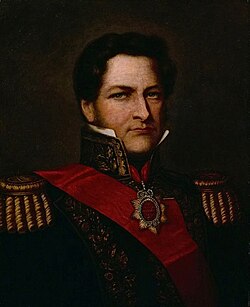
During the 19th century, Latin America became the primary hub for military dictatorships. Following the Spanish American wars of independence, many new governments fell under the control of caudillos—personalist dictators, usually from military backgrounds, whose rule was characterized by glamour and pageantry. While they often operated under a constitution, caudillos typically possessed the power to rewrite those laws to suit their needs.
Expansion in the 20th Century
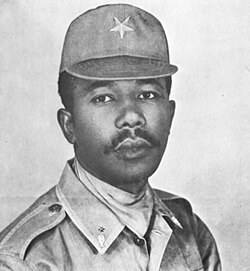
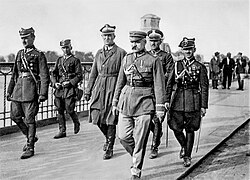
Following World War I, military dictatorships appeared in Eastern Europe. In Poland, Józef Piłsudski seized power through a violent coup, establishing a regime that was particularly militant due to threats from neighboring powers. Other European examples include Romania under Ion Antonescu and military regimes in Spain (1923) and Portugal (1926).
By the 1930s and 40s, Japan shifted toward military rule as officers gained influence, eventually leading to the appointment of General Hideki Tojo as prime minister in 1941.
Regional Analysis of Military Rule
Africa
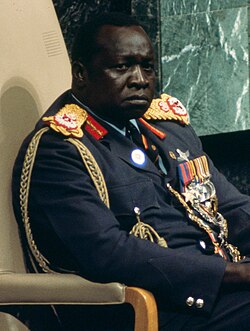
Africa experienced a high frequency of military takeovers between 1959 and 2001. By 1975, half of the continent's countries were under military rule. Nigeria was a prominent example, seeing six different military dictators. Some regimes viewed themselves as national guardians, while others sought personal gain. Many African dictators adopted socialist rhetoric to align with neighboring one-party states.
The Arab World
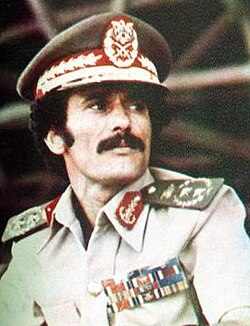
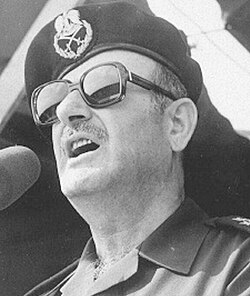
The 1950s and 60s were marked by numerous coups in Iraq, Syria, and Yemen. In Syria, a series of power struggles within the Ba'athist military committee ended in 1970 when General Hafez al-Assad established a surveillance state characterized by intense militarism. Similar patterns were seen in Libya under Muammar Gaddafi.
East and Southeast Asia
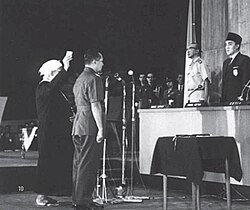
South Korea was ruled by military dictators from 1961 until democratization in 1987. Indonesia saw the "New Order" under Suharto from 1966 to 1998, a period of relative stability that ended during the 1997 Asian financial crisis. Myanmar is noted as one of the most durable military regimes worldwide, with multiple periods of direct and indirect rule, including a third seizure of power in 2021.
Latin America's Cold War Era
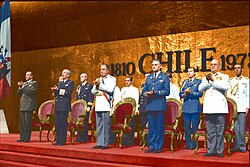
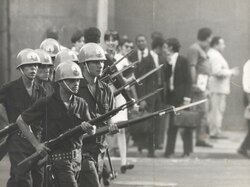
The 1960s and 70s saw a surge of juntas in Latin America, fueled by economic instability and Cold War polarization. Between 1967 and 1991, 12 countries faced at least one coup. Argentina was particularly unstable, with ten different military dictators across four regimes between 1943 and 1983. Brazil's military rule was unique for lasting nearly 20 years while allowing some competing political parties.
The Path to Democratization
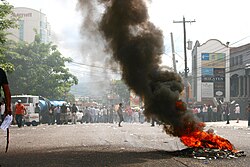
A global shift toward civilian rule began in the 1970s and 80s. In Latin America, pressure from the United States (specifically the Carter administration) helped end several regimes. By the end of the Cold War, military dictatorships had virtually disappeared from the region, making the 2009 Honduran coup a rare anomaly.
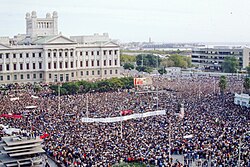
In Africa, pro-democracy protests in the 1980s led to a wave of democratization, with roughly half of the continent's nations becoming democracies by 1995. Despite this, Africa remains the only continent where military coups still occur regularly in the 21st century.
Summary of Regional Military Rule
| Region | Key Characteristics | Notable Examples/Figures | Primary Era of Prevalence |
|---|---|---|---|
| Latin America | Caudillos, Cold War polarization, foreign aid influence | Augusto Pinochet, Brazil's New Order | 19th Century & 1960s-1980s |
| Africa | High coup frequency, "guardian" mentality, socialist messaging | Idi Amin, Nigeria's various regimes | 1960s-1990s (Ongoing) |
| Asia | Long-term durability, integration with political parties | Suharto (Indonesia), Myanmar Military | Mid-20th Century to Present |
| Arab World | Intra-party struggles, surveillance states | Hafez al-Assad (Syria), Muammar Gaddafi | 1950s-1970s |
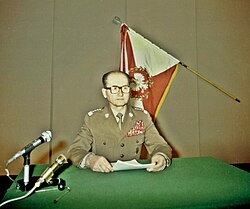
| Europe | Response to external threats, martial law | Józef Piłsudski, Wojciech Jaruzelski | Post-WWI & Cold War |
Frequently Asked Questions
What is the difference between a military dictator and a military junta?
A military dictator is a single individual, often the commander-in-chief, who holds supreme power. A military junta is a committee or group of military leaders who collectively exercise control over the government.
Why do military coups often happen during times of instability?
Militaries often justify seizing power by claiming that the civilian government has failed to maintain order, has become too corrupt, or is unable to handle domestic unrest, positioning themselves as the only force capable of restoring stability.
How did the Cold War affect military dictatorships?
The Cold War created intense political polarization and provided foreign aid to military regimes that aligned with either the Western or Eastern blocs, which incentivized and sustained authoritarian military rule in many regions.
Which region currently sees the most military coups?
As of 2023, Africa is the only continent that continues to experience regular military coups, although Myanmar in Asia is a notable recent exception.
What were the "caudillos" of Latin America?
Caudillos were personalist military dictators who rose to power in 19th-century Latin America. Their rule was typically characterized by a mix of military force and public pageantry, and they often manipulated constitutions to maintain power.