Authoritarianism: Defining the Mechanics of Centralized Power
In the study of political science and organizational structures, authoritarianism represents a system of governance defined by the rejection of political plurality. Unlike democratic systems that distribute power across various branches and institutions, authoritarian regimes utilize strong central power to preserve the political status quo. This often results in the reduction of civil liberties, the erosion of the rule of law, and the weakening of the separation of powers.
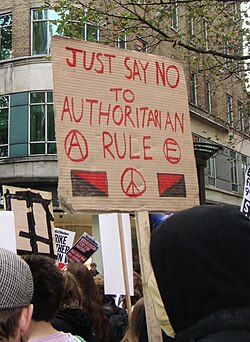
Authoritarianism is not a monolithic concept. Regimes may be autocratic, where power is concentrated in a single individual, or oligarchic, where power is held by a small, elite group. These systems can be driven by a single political party, the military, or a specific ruling family. In some instances, the lines between democracy and authoritarianism become blurred, leading to the classification of "hybrid regimes" or "competitive authoritarian" states.
Key Facts
- Core Characteristics: Rejection of political plurality and use of strong central power to maintain the status quo.
- Regime Variations: Can manifest as autocracies, oligarchies, military juntas, or absolute monarchies.
- Hybrid Regimes: States that exist in the gray area between democracy and authoritarianism.
- Totalitarianism vs. Authoritarianism: Totalitarian regimes seek total control over public and private life through official ideology, whereas authoritarian regimes may allow limited pluralism.
- Historical Trends: Data from V-Dem indicates a shift in global trends, with a significant increase in countries becoming more authoritarian since the late 1990s.
Defining Characteristics and Typologies
Political scientist Juan Linz, in his influential 1964 work An Authoritarian Regime: Spain, identified specific qualities that define these systems. To understand how these regimes function, researchers often categorize them into different typologies. For example, Brian Lai and Dan Slater proposed a classification system based on how power is organized:
- Machine: Oligarchic party dictatorships.
- Bossism: Autocratic party dictatorships.
- Juntas: Oligarchic military dictatorships.
![Benito Mussolini, the founder of Italian fascism, called his regime the "Totalitarian State": "Everything in the State, nothing outside the State, nothing against the State."[299]](/images/f2/33/f2338ac9da8fc88c73cb5148e71630fb63a9028321fad73b5a6c6d12aa59d964.webp)
Authoritarianism vs. Totalitarianism
While the terms are often used interchangeably in casual conversation, they represent different levels of state control. Totalitarianism is an extreme form of authoritarianism characterized by high levels of charisma in leadership, a pervasive official ideology, and an attempt to control both public and private life. In contrast, standard authoritarianism may have lower levels of charisma, lack a single official ideology, and permit a degree of limited pluralism.
| Feature | Authoritarianism | Totalitarianism |
|---|---|---|
| Charisma | Low | High |
| Role Conception | Leader as individual | Leader as function |
| Ends of Power | Private | Public |
| Corruption | High | Low |
| Official Ideology | No | Yes |
| Pluralism | Limited | None |
| Legitimacy | No | Yes |
Global Perspectives and Historical Context
The landscape of global governance is constantly shifting. Modern indices, such as the Democracy Index by the Economist Intelligence Unit and the V-Dem Democracy Indices, provide visual and statistical representations of where countries fall on the spectrum from democracy to authoritarianism.
![Democracy Index by the Economist Intelligence Unit, 2024.[259] Blue countries are democratic, yellow are hybrid regimes, and brown are authoritarian governments.](/images/89/1b/891b2b3d72c0f7b1fabeaeeea83d5d26e6121d115f2c23ddee8d0aded7bd3b2d.webp)
![V-Dem Democracy Indices for 2025[260] with blue more democratic and brown more authoritarian](/images/4c/26/4c26620056c2b1f16c7ef529f3af1283a8b39d7d83631aaa39eecd8acc8b1f8a.webp)
Historically, many nations have transitioned through various forms of authoritarian rule. This includes absolute monarchies, such as the House of Saud in Saudi Arabia or the House of Khalifa in Bahrain, and military dictatorships, such as the Tatmadaw in Myanmar. Some regimes have been defined by a single-party system, like the Chinese Communist Party in China or the Workers' Party of Korea in North Korea.


Frequently Asked Questions
What is the difference between an autocracy and authoritarianism?
An autocracy refers specifically to a form of government where power is held by a single individual. Authoritarianism is a broader term describing a political system characterized by centralized power and the rejection of political plurality, which can be held by an individual, a party, or a military group.
What are hybrid regimes?
Hybrid regimes are states that possess blurred boundaries between democracy and authoritarianism. They often feature elements of both, such as holding elections that may not be fully free or fair, or having democratic institutions that are undermined by authoritarian practices.
How does totalitarianism differ from standard authoritarianism?
Totalitarianism is a more intensive form of control. While authoritarian regimes focus on maintaining political power and may allow some private or social autonomy, totalitarian regimes seek to control almost every aspect of public and private life through a single, all-encompassing ideology.
What are some common ways authoritarian power is maintained?
Authoritarian regimes may maintain power through various means, including the control of political parties, military dominance, the concentration of power in a single leader, or the use of state institutions to suppress political opposition and limit civil liberties.
Is authoritarianism always based on a single leader?
No. While many authoritarian regimes are led by a single person (autocracy), others are based on the rule of a political party, a military junta, or an oligarchy (a small group of elites).