Coup d'État: Mechanics, History, and Political Impact
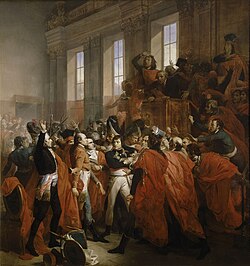
A coup d'état (French for "stroke of state"), often shortened to a coup, is an illegal and overt attempt by military organizations or government elites to remove an incumbent leader or leadership from power. Unlike a broad revolution, a coup is typically a concentrated effort by those already within the state apparatus to seize control.
While many associate coups exclusively with the military, they can take various forms depending on who initiates the action and the methods used. In some cases, a leader who attained power legally may attempt to maintain that power through illegal means—a phenomenon known as a self-coup.
Key Facts
- Frequency: Between 1950 and 2010, there were approximately 457 coup attempts, with a success rate of roughly 50%.
- Trends: Coup attempts peaked in the mid-1960s, with subsequent waves in the mid-1970s and early 1990s.
- The Coup Trap: A historical pattern where a high cumulative number of past coups serves as a strong predictor for future ones.
- Outcomes: While most coups perpetuate authoritarianism, post-Cold War coups have shown a higher likelihood of resulting in democratic systems.
Types of Coups
Political science distinguishes between several variations of the coup, categorized by the actors involved and the legal frameworks exploited.
Military and Elite Coups
- Military Coup: The most common form, where the armed forces seize control of the state.
- Palace Coup: A seizure of power by members of the inner circle or the royal court.
- Putsch: A sudden, often violent, attempt to overthrow a government.
- Pronunciamiento and Cuartelazo: Specific regional terms for military proclamations or barracks-led uprisings.
Specialized and Non-Traditional Coups
- Constitutional Coup: An attempt to seize power by exploiting loopholes or ambiguities within the existing constitution.
- Medical Coup: Occurs when leaders are declared incapacitated by medical professionals to justify a transfer of power, as seen in Tunisia in 1987.
- Soft Coup: A less violent transition of power that may use legal or political pressure rather than overt force.
- Counter-coup: A coup specifically designed to repeal the results of a previous coup.
Predictors and Mechanics of Success
The success of a coup is often driven by the plotters' ability to convince other power-holders that the takeover is inevitable. According to academic reviews, several structural and personal factors influence the risk of a coup.
Risk Factors
Factors that increase the likelihood of a coup include economic decline, domestic political crises, and personal or organizational grievances within the military. External influences, such as collusion with foreign military powers or contagion from regional coups, also play a significant role. Additionally, non-inclusive institutions and a colonial legacy can create environments prone to instability.
The Role of the Military
The military's size, its national security doctrine, and the political culture of its officers are critical. When the military enjoys high popularity or possesses strong attitudinal cohesiveness, the risk of a successful overthrow increases.
Historical Prevalence and Outcomes
The nature of coups shifted significantly between the Cold War and the modern era. During the Cold War, coups were more frequent and often reinforced autocratic regimes.
| Time Period | Initial Regime Type | % Facing Coups | Avg. Attempts/Year | Success Rate (Approx) |
|---|---|---|---|---|
| 1950–1990 (Cold War) | Autocracies | 49% | 5.575 | 56% (New Autocracy) |
| 1950–1990 (Cold War) | Democracies | 35% | 5.575 | 12% (Democratization) |
| 1990–2015 | Autocracies | 12% | 1.96 | 50% (New Autocracy) |
| 1990–2015 | Democracies | 12% | 1.96 | 40% (Democratization) |
Modern Examples of Coup Leaders
Coups continue to shape the leadership of various nations across Asia and Africa. Recent examples include the 2021 Burmese coup led by Min Aung Hlaing and the 2023 Nigerien coup led by Abdourahamane Tchiani. In Africa, several leaders have assumed power through these means, including Abdel Fattah el-Sisi in Egypt (2013) and Emmerson Mnangagwa in Zimbabwe (2017).
Frequently Asked Questions
What is the difference between a coup and a revolution?
A coup is typically a sudden seizure of power by a small group of elites or military officers already within the state system, whereas a revolution usually involves a mass movement of the general population to fundamentally change the social and political order.
What is a "coup trap"?
The coup trap is a phenomenon where a country's history of frequent coups becomes a predictor for future ones, creating a cycle of instability that is difficult to break.
Can a coup actually lead to democracy?
Yes. While many coups result in new dictatorships, some are termed "democratic coups" if they result in the ousting of a dictatorship and the subsequent establishment of a democratic system. This has been more common in the post-Cold War period.
What is coup-proofing?
Coup-proofing refers to the strategies used by leaders to prevent the military from overthrowing them, which may include creating competing security agencies or restructuring the military to ensure loyalty.