Bonapartism: The Ideology of the House of Bonaparte
Bonapartism is a political ideology that emerged from the legacy of Napoleon Bonaparte and was carried forward by his followers and successors. While it began as a movement centered on the personal prestige of a single man, it evolved into a complex political framework that influenced French governance and global political theory for over a century.
In its narrowest sense, Bonapartism refers to the desire to restore the House of Bonaparte to power and reinstate their specific style of imperial government. This movement first appeared in 1814 following the first fall of Napoleon, though it did not achieve true doctrinal cohesion and clarity until the 1840s.
Over time, the term expanded into a broader political definition. Today, it is often used to describe political movements that advocate for a centralised authoritarian state led by a charismatic military strongman who maintains a relatively traditionalist ideology.
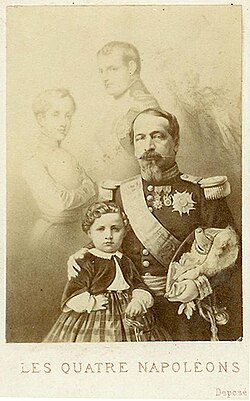
Key Facts
- Origin: Emerged in 1814 after the first exile of Napoleon I.
- Core Structure: Advocates for a strong, centralized executive and a charismatic leader.
- Marxist View: Defined as a mechanism where military officers seize power to mask the interests of a ruling class.
- Key Figures: Napoleon I, Napoleon III, and various claimants to the French throne.
- Evolution: Shifted from a specific dynastic goal to a general model of authoritarian leadership.
The Marxist Interpretation of Bonapartism
The vocabulary of modern political science owes much to the analysis provided by Karl Marx, a student of Jacobinism and the French Revolution. Marx developed his theory of Bonapartism while acting as a contemporary critic of the Second Republic and the Second Empire.
In his 1852 work, The Eighteenth Brumaire of Louis Bonaparte, Marx used the rise of Napoleon III (the nephew of Napoleon I) to describe a specific political phenomenon. According to Marx, Bonapartism occurs when counter-revolutionary military officers seize power from revolutionaries. These leaders use selective reformism to co-opt the radicalism of the masses, effectively preserving the power of a narrow ruling class while masking it behind a facade of popular support.
Marx believed that both Napoleon I and Napoleon III corrupted French revolutions in this manner. This analysis led to one of his most famous observations regarding the repetitive nature of history: "History repeats itself, first as tragedy, second as farce."
Claimants to the French Throne
Since 1814, several members of the Bonaparte family have claimed the right to the French throne. These claimants represent the dynastic wing of Bonapartism, seeking to maintain the imperial legacy established by Napoleon I.
| Claimant | Period of Claim | Relationship/Note | Death |
|---|---|---|---|
| Napoleon I* | 1814–1821 | Founder of the Empire | 1821 |
| Napoleon II* | 1811–1832 | Son of Napoleon I | 1832 |
| Joseph Bonaparte | 1832–1844 | Brother of Napoleon I | 1844 |
| Louis Bonaparte | 1844–1846 | Brother of Napoleon I | 1846 |
| Napoleon III* | 1846–1873 | Son of Louis Bonaparte | 1873 |
| Prince Imperial (Napoleon IV) | 1873–1879 | Son of Napoleon III | 1879 |
| Prince Napoléon-Jérôme | 1879–1891 | Disputed claim | 1891 |
| Victor, Prince Napoléon | 1879–1926 | Disputed until 1891 | 1926 |
| Louis, Prince Napoléon | 1926–1997 | Son of Victor | 1997 |
| Charles, Prince Napoléon | 1997–Present | Disputed | N/A |
| Jean-Christophe, Prince Napoléon | 1997–Present | Disputed | N/A |
* Indicates those who actually ruled as Emperor.
Frequently Asked Questions
What is the difference between narrow and broad Bonapartism?
Narrow Bonapartism refers specifically to the political faction that sought to restore the House of Bonaparte to the French throne. Broad Bonapartism refers to any political system characterized by a centralized authoritarian state led by a charismatic military leader.
How did Karl Marx define Bonapartism?
Marx defined it as a situation where military officers seize power from revolutionaries and use selective reforms to appease the masses, thereby protecting the interests of the ruling class while appearing to represent the people.
Who was Napoleon III in the context of Bonapartism?
Napoleon III was the nephew of Napoleon I. He served as the President of France from 1848 to 1852 before becoming the Emperor of the French until 1870, embodying the transition from republic to empire.
Why is the phrase "first as tragedy, second as farce" associated with this topic?
This phrase was written by Karl Marx in The Eighteenth Brumaire of Louis Bonaparte to describe how the rise of Napoleon III mirrored the rise of Napoleon I, but in a way that Marx viewed as a diminished, almost absurd repetition of the original event.
Who are the current claimants to the Bonapartist legacy?
The current claims are disputed between Charles, Prince Napoléon, and Jean-Christophe, Prince Napoléon.