Louisiana Purchase: The Land Deal That Doubled the United States
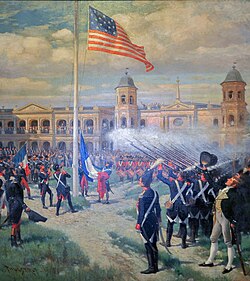
In 1803, the United States engaged in one of the most significant real estate transactions in human history: the Louisiana Purchase. By acquiring a vast expanse of territory from the French First Republic, the U.S. nearly doubled its nominal size, extending its sovereignty across the Mississippi River and securing a strategic foothold in the heart of North America.
While the purchase is often remembered as a simple sale of land, it was actually a complex geopolitical maneuver. The United States paid 15 million dollars for approximately 828,000 square miles of land. However, France's actual control over this region was limited; much of the territory was inhabited by Native Americans. In essence, the U.S. purchased the preemptive right to acquire these lands through future treaties or conquest, effectively locking out other European colonial powers.
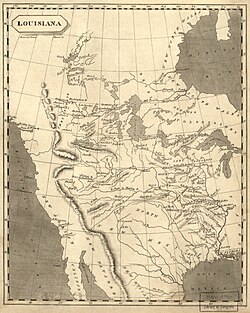
Key Facts
- Date: Treaty signed April 30, 1803; formal transfer completed December 20, 1803.
- Cost: $15 million (approximately 18 cents per acre or $380 million in 2024 dollars).
- Size: Roughly 828,000 square miles, representing over 26% of the contiguous United States.
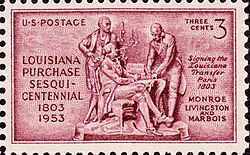
- Key Figures: Napoleon Bonaparte (France), Thomas Jefferson, Robert Livingston, and James Monroe (USA).
- Scope: Land spanning 15 current U.S. states and two Canadian provinces.
The Road to the Sale: French and Spanish Interests
The history of the Louisiana territory is a story of shifting European alliances. France originally controlled the region from 1682 until 1762, when it was ceded to Spain. By 1800, Napoleon Bonaparte, the First Consul of the French Republic, regained ownership through the secret Third Treaty of San Ildefonso, aiming to rebuild a French empire in North America.
However, Napoleon's colonial ambitions were thwarted by two major factors: the failure to suppress a revolt in Saint-Domingue (modern-day Haiti) and the looming threat of renewed war with the United Kingdom. Realizing that Louisiana would be an easy target for British invasion, Napoleon decided to sell the territory to the United States to fund his European campaigns.
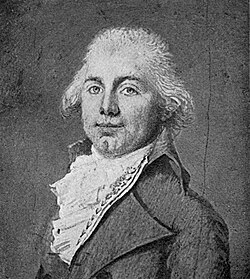
Negotiating the Deal
The United States, under President Thomas Jefferson, was primarily interested in New Orleans to ensure American farmers could use the Mississippi River for trade. Jefferson had authorized Robert Livingston to spend up to $10 million specifically for New Orleans and its surrounding area.
On April 11, 1803, French Treasury Minister François Barbé-Marbois stunned the American envoys by offering the entire Louisiana territory for $15 million. Fearing that Napoleon might withdraw the offer and leave the U.S. without New Orleans, Livingston and James Monroe signed the treaty on April 30, 1803.
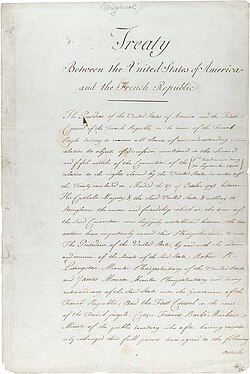
Financing the Purchase
The $15 million price tag was handled through a combination of cash and credit. The U.S. assumed 20 million francs (about $3.75 million) of French debts owed to American citizens. The remaining 60 million francs ($11.25 million) were financed via government bonds with 6% interest. These bonds were acquired by banking houses Barings and Hopes. By the time the final payments were made in 1823, the total cost including interest reached $23,313,567.73.
![Share issued by Hope & Co. in 1804 to finance the Louisiana Purchase[48]](/images/c9/b1/c9b13a14c2d17a303074759e24bd394874aad62448ff5badc0c7c17710044512.jpg)
Territorial Scope and Boundaries
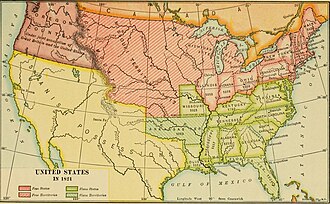
The purchase encompassed a massive area from the Gulf of Mexico to Rupert's Land in the north, and from the Mississippi River to the Rocky Mountains in the west. This included all or parts of the following modern regions:
- Entirely: Arkansas, Missouri, Iowa, Oklahoma, Kansas, and Nebraska.
- Partially: North Dakota, South Dakota, Montana, Wyoming, Colorado, Minnesota, New Mexico, Texas, and Louisiana.
- International: Small portions of Alberta and Saskatchewan in Canada.
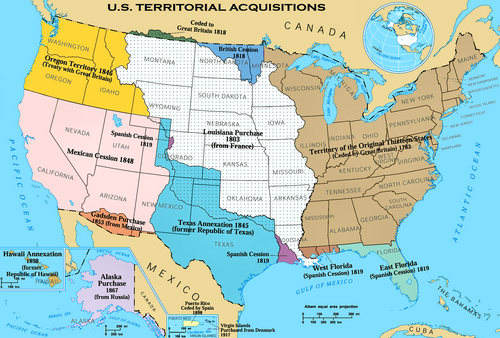
Because the boundaries were poorly defined in the original treaties, the U.S. faced disputes with Spain and Britain. The 1819 Adams–Onís Treaty eventually settled the western and southern borders with Spain, while the Treaty of 1818 adjusted the northern borders with the British.
Mapping the Wilderness
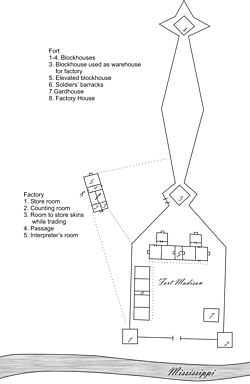
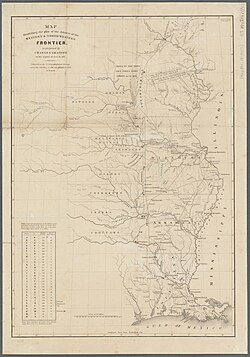
To understand and secure this new land, President Jefferson organized four major exploration missions. The most famous was the Lewis and Clark Expedition (1804), which traveled up the Missouri River. Other efforts included the Red River Expedition (1806), the Pike Expedition (1806), and the Dunbar and Hunter Expedition (1804–1805).
The Human Cost and Legacy
At the time of the transfer, the non-native population was roughly 60,000 people, half of whom were enslaved Africans. The expansion of the U.S. into this territory intensified national debates over the spread of slavery, eventually leading to political compromises like the Missouri Compromise of 1820.
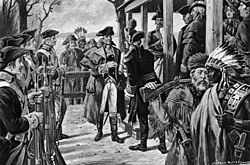
The purchase also had a profound impact on Native Americans. While the U.S. paid France for the land, the actual acquisition of the territory involved decades of treaties and conquests. By 2012, the total cost of subsequent financial settlements and treaties with indigenous tribes was estimated at $2.6 billion (approximately $11.4 billion in 2024 dollars). This means the original $15 million paid to Napoleon represented only about 3.5% of the total amount paid for the land.
| Category | Details |
|---|---|
| Nominal Area | 828,000 sq mi (2,140,000 km²) |
| Purchase Price | $15 million |
| Price per Acre | Less than 3 cents |
| Primary Motivations | US: Control of New Orleans; France: War funds and strategic retreat |
| Key Treaties | Louisiana Purchase Treaty (1803), Adams-Onís Treaty (1819), Treaty of 1818 |
Frequently Asked Questions
Why did Napoleon sell Louisiana to the United States?
Napoleon faced a failed revolt in Saint-Domingue and the threat of renewed war with Great Britain. He feared the British would simply seize the territory, so he sold it to the U.S. to raise funds for his military campaigns in Europe.
Did the United States actually get all the land for $15 million?
Nominally, yes, but in reality, France only controlled a small portion of the land. The U.S. essentially bought the exclusive right to acquire the land from the Native Americans who actually lived there, which cost billions of dollars in subsequent treaties and settlements.
Which current U.S. states were part of the purchase?
The purchase included all of Arkansas, Missouri, Iowa, Oklahoma, Kansas, and Nebraska, as well as large parts of North Dakota, South Dakota, Montana, Wyoming, Colorado, Minnesota, New Mexico, Texas, and Louisiana.
How did the purchase affect the size of the United States?
The acquisition nearly doubled the nominal size of the country, adding over 800,000 square miles and extending U.S. sovereignty from the Mississippi River to the Rocky Mountains.
Who were the primary negotiators for the United States?
The primary negotiators were Robert Livingston and James Monroe, who signed the treaty in Paris on April 30, 1803.