Mileva Marić: The Life and Legacy of a Serbian Mathematician
Mileva Marić was a pioneering Serbian mathematician whose life was inextricably linked with one of the greatest minds in history. As a student at the Zurich Polytechnic and the first wife of Albert Einstein, Marić navigated a world of academic rigor and personal turmoil during a period when women were rarely granted access to higher scientific education.
Born into a wealthy family in Titel, Austria-Hungary (modern-day Serbia), Marić displayed an early aptitude for the exact sciences. Her journey took her to Switzerland, where she would become a trailblazer for women in STEM (Science, Technology, Engineering, and Mathematics).
Key Facts
- Academic Pioneer: She was the only woman in her group of six students at the Zurich Polytechnic.
- Scientific Background: Studied differential and integral calculus, theoretical physics, and astronomy.
- Family Life: Married Albert Einstein in 1903; they had three children: Lieserl, Hans Albert, and Eduard.
- Financial Legacy: Received the monetary award of Albert Einstein's 1922 Nobel Prize as part of their divorce agreement.
- Final Years: Dedicated her later life and resources to the care of her son Eduard, who suffered from schizophrenia.
Academic Journey and Early Challenges
In the fall of 1896, Marić enrolled in the diploma course for secondary school physics and mathematics teaching at the Zurich Polytechnic (now known as ETH Zurich). She entered the program with a strong foundation, having passed her mathematics entrance exam with an average grade of 4.25 on a scale of 1 to 6.
During her studies, Marić was a contemporary and close friend of Albert Einstein. Her curriculum was exhaustive, covering mechanics, applied physics, experimental physics, and projective geometry. In 1897, she further expanded her knowledge as an auditor at Heidelberg University before returning to Zurich.
Despite her capabilities, Marić faced significant hurdles. While she achieved a physics grade of 5.5 in her intermediate examinations—matching Einstein's score—she failed her final teaching diploma examinations in 1900, specifically struggling with the theory of functions in the mathematics component.
The Debate Over Scientific Collaboration
One of the most enduring historical discussions regarding Mileva Marić is the extent of her contribution to Albert Einstein's early work. Historians and researchers have debated whether she collaborated on the annus mirabilis papers—the groundbreaking series of publications from 1905 that revolutionized modern physics.
This debate often centers on the personal letters exchanged between the couple and their known intellectual interactions during their time as study colleagues. While some argue she provided essential mathematical support, others maintain that the theoretical breakthroughs were Einstein's alone.
Marriage, Family, and Separation
Marić and Einstein married in 1903 in Bern, Switzerland. Their early years were marked by frequent moves as Einstein's career progressed through positions in Bern, Zurich, and Prague. The couple had three children: a daughter, Lieserl, born in 1902 (who likely died of scarlet fever at eighteen months), and two sons, Hans Albert and Eduard.
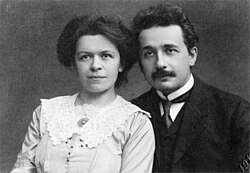
By 1912, the marriage had become strained. The tension peaked in 1913 when Einstein relocated to Berlin and began an affair with his cousin, Elsa Einstein. Despite attempts to maintain the family unit, including a visit to Marić's parents near Novi Sad, the separation became permanent in July 1914, coinciding with the start of World War I.
The couple officially divorced on February 14, 1919. A unique clause in their divorce agreement stipulated that if Einstein were to win a Nobel Prize, the prize money would be transferred to Marić to be held in trust for their sons.
Later Life and Final Years
When Einstein was awarded the Nobel Prize in 1922, the funds were transferred to Marić. She invested this money into three apartment buildings in Zurich to secure a steady income. However, her later years were clouded by tragedy; her son Eduard was diagnosed with schizophrenia around age 20.
The escalating costs of Eduard's care at the "Burghölzli" psychiatric clinic eventually exhausted Marić's finances. She sold two of her investment properties and eventually transferred ownership of her primary residence to Einstein to prevent its loss, though she retained power of attorney.
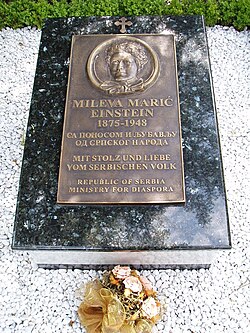
Mileva Marić died following a severe stroke on August 4, 1948, at the age of 72. She was interred at the Nordheim Cemetery in Zurich.
Honors and Recognition
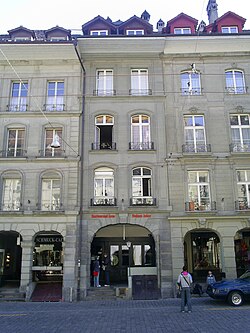
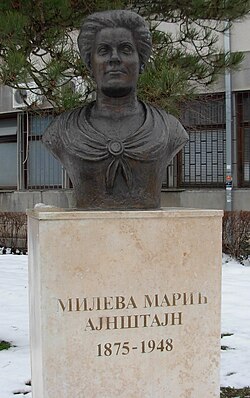
In recent decades, there has been a concerted effort to recognize Marić's role and struggles. In 2005, ETH Zurich and the Gesellschaft zu Fraumünster honored her with a memorial plaque at her former residence. Additionally, busts of Marić have been placed in Sremska Mitrovica and at the University of Novi Sad.
| Category | Details |
|---|---|
| Born | December 19, 1875 (Titel, Austria-Hungary) |
| Died | August 4, 1948 (Zurich, Switzerland) |
| Education | Zurich Polytechnic (ETH) |
| Spouse | Albert Einstein (1903–1919) |
| Children | Lieserl, Hans Albert, Eduard |
| Key Achievement | First woman in her physics/math section at Zurich Polytechnic |
Frequently Asked Questions
Did Mileva Marić help Albert Einstein with the Theory of Relativity?
This is a subject of ongoing historical debate. Some researchers point to their letters and shared studies as evidence of collaboration, while others believe the scientific contributions were solely Einstein's.
What happened to the Nobel Prize money?
Per their divorce agreement, the money was given to Marić to be held in trust for their sons. She used the funds to purchase three apartment buildings in Zurich to generate income.
Why did Mileva Marić and Albert Einstein divorce?
Their marriage became strained around 1912, exacerbated by Einstein's relocation to Berlin and his affair with his cousin, Elsa. They separated in 1914 and officially divorced in 1919.
What was Mileva Marić's academic background?
She was a trained mathematician and physicist who studied at the Zurich Polytechnic and Heidelberg University, specializing in calculus, mechanics, and theoretical physics.
How is Mileva Marić remembered today?
She is honored with memorial plaques and busts in Zurich and Serbia, and a high school in her birthplace of Titel is named in her honor.