Middle East Airlines: The History and Evolution of Lebanon's Flag Carrier
Middle East Airlines (MEA) serves as the flag carrier of Lebanon, operating as a vital link between Beirut and the rest of the world. With a history spanning over eight decades, MEA has evolved from a small regional operator into a sophisticated international carrier and a key member of the SkyTeam alliance. Headquartered in Beirut and majority-owned by the central bank of Lebanon, Banque du Liban, the airline is a symbol of Lebanese resilience and connectivity.
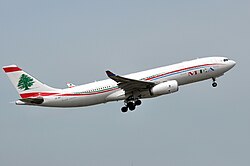
Today, MEA operates a modern, all-Airbus commercial fleet, connecting its primary hub at Beirut–Rafic Hariri International Airport to 33 destinations across Europe, Africa, Asia, and the Middle East.
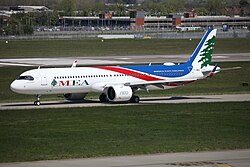
Key Facts
- Founded: May 31, 1945; commenced operations on January 1, 1946.
- Alliance: Member of SkyTeam since June 28, 2012.
- Ownership: 99.50% owned by Banque du Liban.
- Fleet: 23 aircraft (21 commercial airliners and 2 private jets).
- Hub: Beirut–Rafic Hariri International Airport.
- Financials: Reported a profit of US$ 88,800,000 in 2023.
- Workforce: Over 5,000 employees across the airline group.
A Legacy of Resilience: The History of MEA
MEA was founded on May 31, 1945, by Saeb Salam and Fawzi El-Hoss, receiving early technical support from BOAC. The airline began its journey on January 1, 1946, utilizing three de Havilland DH.89A Dragon Rapides for flights between Beirut and Nicosia, later expanding to Egypt, Iraq, and Syria.
The mid-20th century saw various strategic partnerships. Pan American World Airways held a management contract starting in 1949, followed by BOAC acquiring a 49% stake in 1955. In 1963, the airline merged with Air Liban and took over Lebanese International Airways, adopting its current name in November 1965.
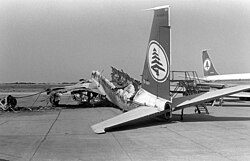
The airline's history has been marked by significant challenges. During the 1968 Israeli raid on Beirut Airport, MEA suffered the loss of several aircraft, including Comet 4Cs, Caravelles, and a Boeing 707. The airline recovered by introducing the Convair 990A in 1969.
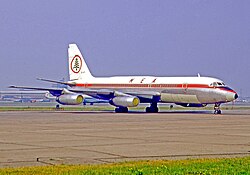
Throughout the Lebanese Civil War (1975–1991), MEA continued to operate despite frequent closures of its base. In the following decades, the airline modernized its fleet, introducing Airbus A310s in the 1990s and A330-200s in 2003. A significant milestone occurred on June 28, 2012, when MEA became the 17th member of the SkyTeam alliance.
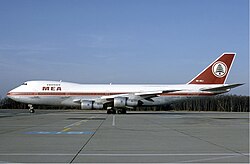
Fleet and Future Development
MEA currently maintains an all-Airbus commercial fleet, focusing on efficiency and capacity. The airline has integrated the A321neo, with one specific aircraft (MSN 10,000) marking a production milestone for the Airbus A320 family.
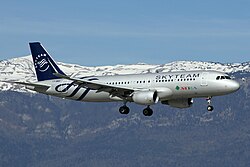
Looking forward, MEA is expanding its capabilities. The airline has ordered Airbus A330-900s and A321XLRs, the latter designed for long-haul routes to Asia and Africa. Furthermore, Chairman Mohamad El Hout announced the launch of Fly Beirut, a low-cost subsidiary expected to begin operations in 2027 from Rene Mouawad Airport in North Lebanon with a fleet of six aircraft.
Corporate Structure and Subsidiaries
Beyond commercial flights, MEA operates several specialized subsidiaries that support the aviation ecosystem in Lebanon:
- Cedar Executive: A private jet service founded in 2016, operating Embraer Legacy 500s.
- Middle East Airlines Ground Handling (MEAG): The primary ground agent at Beirut International Airport, handling approximately 80% of traffic.
- Mideast Aircraft Services Company (MASCO): An EASA-approved Maintenance, Repair, and Overhaul (MRO) provider specializing in the Airbus A300, A310, A320, and A330 families.
- Middle East Airports Services (MEAS): Providing essential airport services.
- Lebanese Beirut Airport Catering Company (LBACC): In which MEA holds a 77.5% stake.
Operational Overview
The following table summarizes the current commercial fleet and capacity as of August 2025.
| Aircraft Type | In Service | Orders | Total Seats | Notes |
|---|---|---|---|---|
| Airbus A320-200 | 7 | 1 | 126 | Includes MSN 5,000 |
| Airbus A321neo | 10 | 1 | 160 | Includes MSN 10,000 |
| Airbus A321XLR | 0 | 4 | 150 | Upcoming long-haul |
| Airbus A330-200 | 4 | 0 | 244 | Wide-body capacity |
| Airbus A330-900 | 0 | 4 | 280 | Expected delivery 2026 |
Safety and Incidents
Like many long-standing carriers, MEA has faced various incidents. These include a mid-air collision in Ankara in 1963 and a tragic bombing in 1976 that killed 81 people. The airline also suffered significant losses during the 1982 Israeli attacks on Beirut Airport, where several Boeing 707 and 720 aircraft were destroyed.
Frequently Asked Questions
Who owns Middle East Airlines?
Middle East Airlines is majority-owned by the central bank of Lebanon, Banque du Liban, which holds a 99.50% stake.
What is Fly Beirut?
Fly Beirut is a planned low-cost subsidiary of MEA. It is scheduled to begin operations in 2027, based at Rene Mouawad Airport in North Lebanon with an initial fleet of six aircraft.
Which airline alliance does MEA belong to?
MEA is a member of the SkyTeam alliance, having officially joined on June 28, 2012.
What is Cedar Executive?
Cedar Executive is MEA's private jet subsidiary, founded in 2016. It provides business flights across Europe and the Middle East using Embraer Legacy 500 aircraft.
What is the purpose of MASCO?
MASCO (Mideast Aircraft Services Company) is the only full-fledged aircraft maintenance, repair, and overhaul (MRO) provider at Beirut International Airport, certified for various Airbus families.