Beirut-Rafic Hariri International Airport
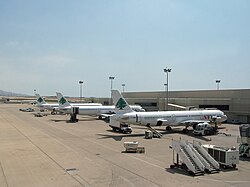
Serving as the primary gateway to Lebanon, the Beirut-Rafic Hariri International Airport (BEY) is a vital hub for regional and international travel. Operated by the Directorate General of Civil Aviation (DGCA), the airport is the primary hub for Middle East Airlines and connects the Lebanese capital to a vast network of global destinations.
From its mid-century beginnings as a modern marvel to its role as a symbol of national resilience, the airport has navigated decades of geopolitical challenges while continuing to expand its infrastructure and capacity.
Key Facts
- IATA Code: BEY | ICAO Code: OLBA
- Elevation: 27 meters (89 ft) above mean sea level (AMSL).
- Primary Hub: Middle East Airlines.
- 2023 Traffic: 7,127,649 total passengers and 57,159 aircraft movements.
- Infrastructure: Three concrete and asphalt runways.
Historical Evolution
Early Years and Modernization
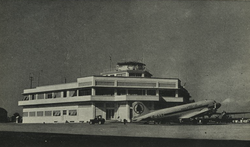
The airport officially opened on April 23, 1954, replacing the smaller Bir Hassan Airfield. At its inception, the facility was considered highly modern, featuring a café and a dedicated terrace for aviation enthusiasts. The original layout consisted of two asphalt runways: Runway 18/36 (3,250 meters) primarily for landings and Runway 03/21 (3,180 meters) primarily for take-offs.
Conflict and Devastation
The airport's history has been deeply impacted by regional conflict. In December 1968, an Israeli raid destroyed 14 civilian aircraft from Lebanese carriers, including Middle East Airlines (MEA), Trans Mediterranean Airways, and Lebanese International Airways. While MEA recovered, Lebanese International Airways was forced into bankruptcy.
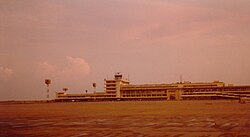
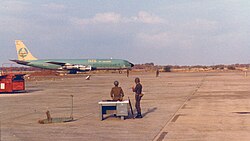
The Lebanese Civil War, which began in April 1975, further diminished the airport's status as a premier Middle Eastern hub. Most international services ceased, leaving only MEA and Trans Mediterranean Airways to operate during periods when the airport remained open. Despite a renovation in 1977, the terminal suffered severe damage during the 1982 Israeli invasion. Additionally, the airport was the site of the 1983 Beirut barracks bombing, resulting in the deaths of 241 American servicemen.
Recovery and 21st Century Challenges
The airport underwent runway renovations in 1982 and 1984 to maintain operations. However, during the 2006 Lebanon War, the Israeli Air Force targeted all three runways with missile strikes, claiming the site was being used for weapons shipments by Hezbollah. This rendered the airport inoperative for a period, leading to a sharp decline in passenger and cargo traffic that year.
Modern Infrastructure and Expansion
Runway Specifications
The airport currently operates three runways to handle diverse aircraft types and weather conditions:
| Direction | Length (m) | Length (ft) | Surface |
|---|---|---|---|
| 03/21 | 3,800 | 12,467 | Concrete |
| 16/34 | 3,395 | 11,138 | Concrete |
| 17/35 | 3,250 | 10,663 | Asphalt |
Recent Developments
In March 2018, the airport achieved a milestone when Emirates operated a trial flight using an Airbus A380, proving the facility's capability to handle the world's largest passenger aircraft at Gate 1.
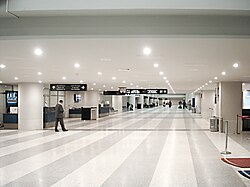
Looking toward the future, the Lebanese Minister of Transportation announced in March 2023 the development of a second terminal. This expansion, operated by a leading Irish airport company, is expected to bring $122 million in investment and increase annual capacity by 3.5 million passengers.
Aviation Services and Connectivity
The airport serves as a critical link between Lebanon and the world, with a diverse array of passenger and cargo airlines. Major destinations include Paris, Istanbul, Dubai, Cairo, and Doha. Cargo operations are supported by global leaders such as DHL Aviation, Emirates SkyCargo, and Qatar Airways Cargo.
Safety Record and Incidents
The airport has seen several tragic aviation incidents over the decades. Notable events include the 1959 crash of Ariana Afghan Airlines Flight 202 and the 1975 crash of Malév Flight 240. In 1977, a LOT Polish Airlines cargo plane crashed due to communication failures between the Polish crew and Lebanese controllers. Most recently, in January 2010, Ethiopian Airlines Flight 409 crashed into the Mediterranean Sea shortly after take-off, resulting in the loss of all 90 people on board.
Frequently Asked Questions
Who operates the Beirut-Rafic Hariri International Airport?
The airport is owned and operated by the Directorate General of Civil Aviation (DGCA) of Lebanon.
Which airline uses BEY as its primary hub?
Middle East Airlines (MEA) is the primary hub carrier for the airport.
Can the airport handle the Airbus A380?
Yes, the airport has the capability to handle the Airbus A380, as demonstrated by a successful trial flight by Emirates in 2018.
What are the plans for future expansion?
The airport is planning the construction of a second terminal, which is expected to attract $122 million in investment and handle an additional 3.5 million passengers annually.
How many passengers did the airport serve in 2023?
In 2023, the airport recorded a total of 7,127,649 passengers.