Mesoamerican Classic Period: Culture, Urbanism, and Power
The Mesoamerican Classic Period, spanning roughly from 200 to 900 A.D., represents a peak of cultural flourishing in ancient Mexico and Central America. While the exact chronology varies across different cultural regions, this era was defined by a transition from the late Preclassic Period (around 400 B.C.), where advancements in agricultural efficiency triggered significant demographic growth, a more complex division of labor, and the expansion of trade networks.
Central to this growth was the implementation of sophisticated irrigation systems by the Maya, Zapotecs, and Teotihuacans. Despite these technological leaps, maize remained the staple crop that sustained these expanding populations.
Key Facts
- Timeline: Generally established between 200 and 900 A.D.
- Agricultural Base: Maize remained the primary crop, supported by new irrigation techniques.
- Major Powers: Key civilizations included the Maya, Teotihuacan, and the Zapotecs at Monte Albán.
- Urbanism: Cities served as planned administrative, religious, and commercial hubs.
- Social Structure: The clergy likely monopolized knowledge of mathematics, astronomy, and writing.
Cultural Divergence and Intellectual Achievement
During this era, a distinct bifurcation of traditions emerged between central Mexico and the northern Maya cities. This differentiation is most evident in the development of calendars and writing systems. While shared across the region, these intellectual tools reached their maximum complexity within the Maya civilization.
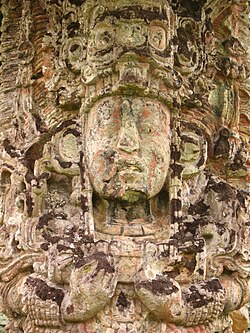
The Maya script, a complex system used for chronological, astronomical, and historical records, is still being deciphered by scholars today. These texts, often found in sculpted and painted forms, provide a glimpse into a society where religion and political power were deeply intertwined.
Warfare and Political Hegemony
Contrary to earlier historical interpretations, the Classic Period was characterized by frequent conflict. In the Maya region, various city-states were often hostile toward one another, a reality documented in iconographic representations and steles found at sites like Toniná.
In central Mexico, Teotihuacan rose as a dominant political and economic center. Evidence suggests that the city utilized force to establish its hegemony, though its sheer scale eventually shielded it from the hostilities that plagued smaller competing states. Similarly, the Zapotecs at Monte Albán maintained dominance over the central valleys of Oaxaca through warfare, as recorded on the steles of Building J.
Urbanism, Trade, and Resource Management
Urban planning was a hallmark of the Classic Period. Cities were not merely residential areas but were carefully constructed as productive commercial nodes and religious centers. Teotihuacan, in particular, served as a vital trading hub that provided cohesion across Mesoamerica. When Teotihuacan eventually collapsed, the broader trade network decayed, allowing smaller regional centers to rise.
Recent archaeological advancements have shed new light on how these societies managed their environment. Using Lidar (Light Detection and Ranging), scientists discovered evidence of quarrying at the Yaxnohcah site on the Guatemalan border. The Maya extracted limestone for weapons, decoration, and building materials. Interestingly, the Maya repurposed the resulting quarry holes to capture and preserve water, suggesting that water management was not exclusively controlled by the elites.
Other sites, such as Xunantunich, further illustrate the complexity of the late Classic period, showcasing temples, pyramids, and common areas for elites that reflect a growing network of alliances and trades.
| Civilization/Site | Key Characteristics | Primary Contributions/Evidence |
|---|---|---|
| Maya | City-states, advanced writing | Complex script, Lidar-detected water management |
| Teotihuacan | Economic and political hub | Centralized trade network, urban planning |
| Monte Albán | Regional power in Oaxaca | Military dominance (Building J steles) |
| Zapotecs | Early agricultural innovators | Implementation of irrigation systems |
Frequently Asked Questions
When did the Mesoamerican Classic Period occur?
The period is generally dated from 200 to 900 A.D., although the specific chronology can vary depending on the cultural area being studied.
What was the primary food source during this time?
Maize remained the staple crop for the civilizations of the Classic Period, supported by the development of irrigation systems.
Was the Classic Period a time of peace?
No. Evidence from steles and iconography at sites like Toniná and Monte Albán indicates that warfare was a central element of political life for both the Maya and the cultures of central Mexico.
What role did the clergy play in society?
The clergy held significant power, acting as auxiliaries to political leaders and monopolizing specialized knowledge in astronomy, mathematics, writing, politics, and commerce.
How did the Maya manage their water resources?
Beyond elite-controlled systems, the Maya demonstrated practical engineering by reusing limestone quarry holes to capture and store water, as evidenced by Lidar findings at Yaxnohcah.