Mercedes-Benz: A Legacy of Automotive Innovation and Luxury
Mercedes-Benz is a global symbol of prestige, engineering excellence, and luxury. Headquartered in Stuttgart, Germany, the company operates as a subsidiary of the Mercedes-Benz Group, with Ola Källenius serving as the Chairman of the Board of Management and CEO. Guided by the ambitious tagline "The best or nothing," the brand has evolved from the very birth of the automobile into a diversified powerhouse producing passenger cars, light commercial vehicles, and high-performance machinery.
The brand's identity is built upon a foundation of pioneering spirit, blending the legacies of automotive giants to create a worldwide presence. Today, Mercedes-Benz serves markets globally, producing millions of vehicles annually—including over 2.1 million cars in 2020 alone.
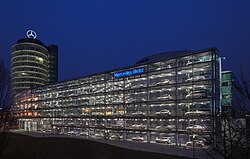
Key Facts
- Founded: The modern brand was introduced on June 28, 1926.
- Core Brands: Mercedes-Benz, Mercedes-EQ, and Mercedes-Maybach.
- Key Subsidiaries: Mercedes-AMG and a 50% stake in Smart Automobile.
- Global Reach: Manufacturing and assembly operations span across Europe, Asia, Africa, and the Americas.
- Innovation Milestone: Produced the world's first diesel production car in 1936.
The History of the Silver Star
The story of Mercedes-Benz is essentially the story of the automobile itself. The journey began with Carl Benz, who created the 1886 Benz Patent Motorwagen, widely recognized as the first automobile in history.
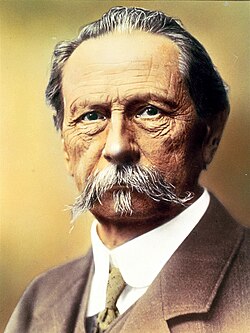
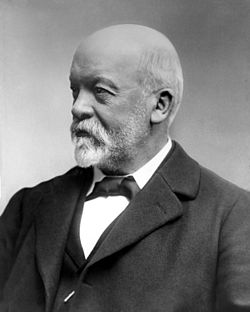
Parallel to Benz, Gottlieb Daimler and Wilhelm Maybach were pushing the boundaries of internal combustion. Daimler founded the Daimler Motoren Gesellschaft (DMG), and the eventual merger of these pioneering efforts led to the formal introduction of the Mercedes-Benz brand in 1926.
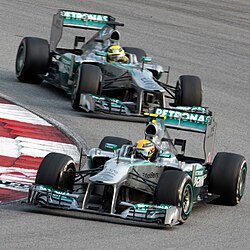
Over the decades, the company has introduced legendary models that defined eras of transport. From the 1930s state cars and the iconic 300SL "Gullwing" of 1954 to the introduction of the S-Class in 1965, Mercedes-Benz has consistently set the benchmark for safety and luxury. The company also ventured into high-performance racing with the "Silver Arrows," cementing its reputation for speed and reliability.
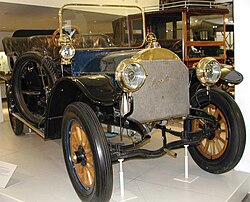
Diverse Product Portfolio
Mercedes-Benz categorizes its offerings into several distinct segments to meet varying consumer needs, ranging from compact city cars to ultra-luxury limousines and heavy-duty commercial vehicles.
Passenger Automobiles
The current lineup is organized by segments, including the A-Class (C-segment), the E-Class (E-segment), and the flagship S-Class (F-segment). For those seeking versatility, the brand offers a wide array of SUVs and crossovers, such as the GLA, GLC, GLE, and the rugged G-Class off-road vehicle.
Electric and Future Mobility
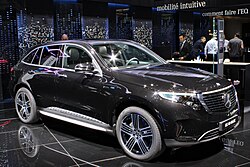
Under the Mercedes-EQ sub-brand, the company is transitioning toward an electric future. This range includes the EQA, EQB, EQE, and EQS, alongside electric MPVs like the EQT and EQV.
Commercial Vehicles and Specialized Machinery
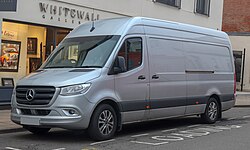
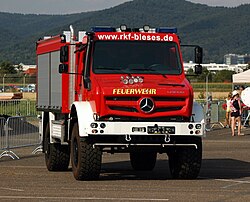
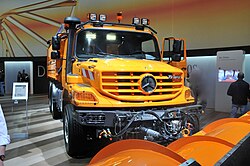
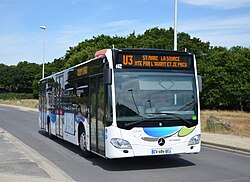
Beyond luxury cars, the brand is a leader in utility. This includes the Sprinter van for light commercial use, the Unimog all-round vehicle, and the Zetros for heavy-duty tasks like snowplowing. The company also produces a comprehensive range of buses, including the Citaro.
Performance and Luxury Sub-Brands
To target specific market niches, Mercedes-Benz utilizes two primary high-end subsidiaries:
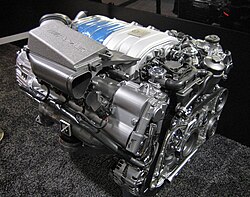
- Mercedes-AMG: The performance arm focusing on power and sportiness, producing the AMG GT and the hyper-car AMG ONE.
- Mercedes-Maybach: The pinnacle of luxury, offering extreme exclusivity and individuality.
Understanding Model Nomenclature
Since 2015, Mercedes-Benz has used a structured naming system to help customers identify vehicle types and drive systems at a glance.
| Segment | Nomenclature Logic | Example |
|---|---|---|
| Core Models | A, B, C, E, or S | E-Class |
| SUVs / Off-road | "GL" + Core equivalent | GLE |
| 4-Door Coupés | "CL" + Core equivalent | CLE |
| Roadsters | Core equivalent + "L" | SL |
| Electric Vehicles | "EQ" + Core equivalent | EQE |
Additionally, suffixes indicate the powertrain: "d" for diesel, "e" for electric, "h" for hybrid, and "f" for fuel cell. The term 4MATIC is used to denote all-wheel-drive capabilities.
Global Presence and Influence
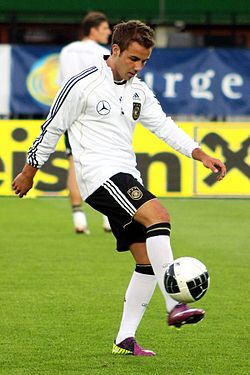
Mercedes-Benz maintains a massive global footprint with assembly plants and operations in numerous countries. In the Americas, they have significant presences in the United States, Canada, Brazil, and Argentina. In Asia, they operate in China, India, Indonesia, and Vietnam. Their influence extends beyond the road into sports, notably sponsoring the Germany national football team and dominating Formula One racing.
Frequently Asked Questions
Who invented the first Mercedes-Benz car?
While the brand was formed later, Carl Benz is credited with creating the 1886 Benz Patent Motorwagen, which is widely regarded as the first automobile.
What does the "EQ" in Mercedes-EQ stand for?
The "EQ" prefix is used to designate the brand's line of all-electric vehicles, such as the EQS and EQE.
What is the difference between Mercedes-Benz and Mercedes-AMG?
Mercedes-Benz focuses on luxury and general passenger transport, while Mercedes-AMG is the high-performance division that specializes in sports-tuned engines and aggressive styling.
Where is Mercedes-Benz headquartered?
The company is headquartered in Stuttgart, Germany.
What is the meaning of the 4MATIC designation?
4MATIC is the brand's terminology for its all-wheel-drive system.