Menorah Symbolism in Judaism and Christianity
The menorah, a lampstand of profound spiritual significance, serves as a powerful emblem of light, wisdom, and divine presence. While most commonly associated with Jewish tradition, its symbolism extends into mystical teachings and Christian theology, representing the journey from darkness toward universal enlightenment.
The Seven-Branched Menorah in Judaism
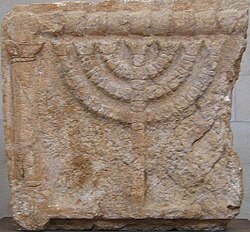
In Jewish tradition, the seven-branched menorah is a symbol of universal enlightenment. The Talmud highlights its connection to wisdom, noting that those seeking knowledge should incline toward the south during prayer, as the menorah was positioned on the southern side of the Temple.
The structure of the lampstand carries deep meaning: the six outer lamps represent the various branches of human knowledge, which are symbolically guided by the central lamp, representing the light of God. Additionally, the seven lamps allude to the seven days of creation, with the center light specifically symbolizing the Sabbath.
The Hanukkah Menorah (Hanukkiah)
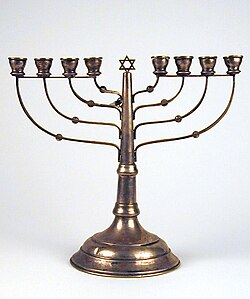
Distinct from the Temple menorah is the nine-branched lampstand used during the holiday of Hanukkah, known in Modern Hebrew as a hanukkiah. This tradition stems from a miracle recorded in the Talmud: after the Seleucid desecration of the Temple in Jerusalem, only enough consecrated olive oil for one day remained. Miraculously, this oil burned for eight days, providing enough time to prepare new pure oil.
Because the Talmud prohibits the use of a seven-lamp menorah outside of the Temple, the hanukkiah features eight main branches. A ninth lamp, called the shamash (servant), is set apart to kindle the others. While the term shamash appears in the Mishnah (c. 200 C.E.) and Talmud (c. 500 C.E.), it only became specifically associated with Hanukkah in the 16th century.
Kabbalah and the Mysticism of Light
In Kabbalah (Jewish mysticism), light is central to the process of Tikkun (rectification). The concept of Or Panim ("the light of the Face") represents the manifestation of divine light intended to penetrate the "valley of the deepest darkness." In this context, darkness is viewed as a negative element that conceals the depth of the gaze and hinders complete devotion.
The spiritual effort to awaken from this darkness is referred to in Chassidut as Avodah (service). During Hanukkah, the victory of Kedushah (holiness) is celebrated as the triumph of divine light. The Kohen Gadol (High Priest) emphasized the need to awaken distant souls and direct them with Kavanah (spiritual intention) toward the fulfillment of Mitzvot (commandments), based on the belief that the Torah is the light and the Mitzvah is a lamp.
The Menorah in Christian Tradition
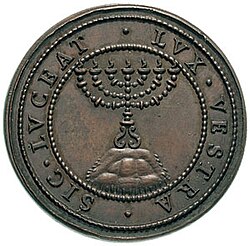
The menorah also appears in Christian contexts, both symbolically and liturgically. In the New Testament Book of Revelation, seven golden lampstands represent seven churches. These messages are interpreted in four ways: as local messages to specific cities, as universal messages to all churches, as a prophetic timeline of church history, and as personal applications for individual believers.
Historically, Philo Judaeus and Clement of Alexandria suggested that the seven lamps represented the seven classical planets: the Moon, Mercury, Venus, the Sun, Mars, Jupiter, and Saturn. Others view the menorah as a symbol of the burning bush encountered by Moses on Mount Horeb.
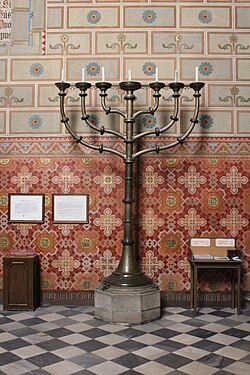
Some scholars, such as Kevin Conner, find biblical numerology in the menorah's design described in Exodus 25. By counting the decorative "cups" (almond blossoms, bulbs, and flowers), Conner identifies 66 total units—matching the number of books in the Protestant canon. He notes that the shaft and three branches total 39 units (Old Testament), while the remaining three branches total 27 units (New Testament), linking this to scriptures that describe God's word as a lamp.
In the Byzantine Rite, the seven-lamp menorah is preserved in the sanctuary, typically standing on or behind the altar. While candles are sometimes used, olive oil remains the traditional fuel. Depending on the service, all seven lamps or only the three central ones are lit; the center lamp may serve as an eternal flame if no separate sanctuary lamp exists.
Key Facts
- Temple Menorah: Seven branches symbolizing divine guidance over human knowledge and the seven days of creation.
- Hanukkiah: Nine branches (eight for the miracle of the oil, one shamash) used specifically for Hanukkah.
- Shamash: The "servant" light used to light the other eight lamps of the hanukkiah.
- Or Panim: A Kabbalistic concept meaning "light of the Face," essential for the process of Tikkun.
- Byzantine Rite: Maintains the use of a seven-lamp olive oil lampstand behind the altar.
| Feature | Temple Menorah | Hanukkiah |
|---|---|---|
| Number of Branches | 7 | 9 (8 + 1 shamash) |
| Primary Symbolism | Universal enlightenment / Creation | Miracle of the oil / Hanukkah |
| Permitted Use | Historically restricted to the Temple | Used in homes and synagogues |
| Central Theme | Divine wisdom and guidance | Faith and spiritual awakening |
Frequently Asked Questions
What is the difference between a menorah and a hanukkiah?
A traditional Temple menorah has seven branches and symbolizes divine wisdom and creation. A hanukkiah has nine branches—eight to commemorate the miracle of the oil during Hanukkah and one "shamash" light used to light the others.
Why is the shamash lamp separate from the others?
The shamash, meaning "servant," is used to kindle the other eight lights. This ensures that the eight primary lamps remain dedicated to the miracle of Hanukkah.
How does Kabbalah interpret the symbol of light?
Kabbalah views light (specifically Or Panim) as a divine force that descends into darkness to heal and correct the soul, a process known as Tikkun.
Is the menorah used in Christian churches?
Yes, particularly in the Byzantine Rite, where a seven-lamp lampstand is placed in the sanctuary and traditionally fueled with olive oil.
What is the significance of the number 66 in relation to the menorah?
Scholar Kevin Conner suggests that the decorative units (blossoms, bulbs, and flowers) on the menorah described in Exodus 25 total 66, which he correlates to the 66 books of the Protestant Bible canon.