Meiningen: A Cultural Gem of Thuringia
Nestled in the scenic valley of the Werra river, between the Thuringian Forest and the Rhön Mountains, lies Meiningen. This historic town in the southern part of Thuringia, located within the Franconia region, serves as the capital and largest town of the Schmalkalden-Meiningen district. With a population of approximately 25,000 to 26,000, Meiningen is far more than a regional administrative center; it is a sanctuary of European arts, music, and architectural heritage.
From its origins as a medieval trade hub to its tenure as the capital of the Duchy of Saxe-Meiningen (1680–1918), the town has evolved through periods of economic boom and wartime devastation to become a modern center of culture and education.
Key Facts
- Location: Southern Thuringia, Germany, in the Werra river valley.
- Historical Status: Former capital of the Duchy of Saxe-Meiningen (1680–1918).
- Cultural Significance: Home to the Staatstheater Meiningen and one of Europe's oldest court orchestras.
- Key Landmarks: Schloss Elisabethenburg and the Gothic Revival Stadtkirche.
- Economy: A hub for small to medium enterprises, with the Klinikum Meiningen as the largest employer.
A Journey Through History
Medieval and Early Modern Eras
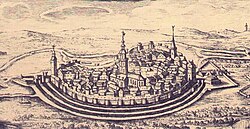
By 1450, Meiningen was a modest town of 2,000 inhabitants. Despite suffering devastating fires at the end of the 15th century, the town recovered, with Bishop Lorenz von Bibra constructing a new castle between 1509 and 1511. The town's economy flourished through textiles, metalworking, and trade. By the early 17th century, a boom in fustian and linen weaving pushed the population to 5,000, with master craftsmen trading cloth across Europe.
This prosperity was interrupted by the Thirty Years' War, specifically in 1634 when Croatian troops plundered the town, and again in 1641 during a Swedish siege, leading to significant loss of life and population.
The Ducal Residence and the "Theatre Duke"
Meiningen entered a golden age between 1680 and 1918 as the capital of the Duchy of Saxe-Meiningen. This era saw the construction of the baroque Schloss Elisabethenburg (1682–1692) and the creation of the Court Orchestra in 1690. The town's layout was further enhanced by the creation of the Englischer Garten, an English landscape garden, starting in 1782.
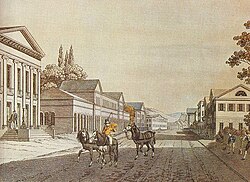
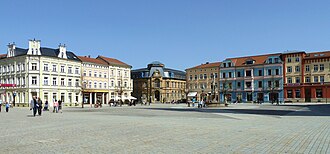
The town's international reputation was cemented by Georg II, Duke of Saxe-Meiningen, known as the "Theatre Duke." His patronage led to the opening of the first Meiningen Court Theatre in 1831. Despite a major fire in 1874 that destroyed a third of the town, Meiningen was rebuilt in the elegant Neoclassical style, which still defines much of the town center today.
The 20th Century to the Present
Following the abolition of the Duchy in 1918, Meiningen became the capital of the Free State of Saxe-Meiningen before joining the state of Thuringia in 1920. The town witnessed the landing of the legendary airship LZ 127 Graf Zeppelin in 1931. During World War II, Meiningen suffered a heavy USAAF air raid on February 23, 1945, resulting in 208 deaths and extensive property damage.
After 1945, the town became part of the German Democratic Republic (DDR). A notable addition during this period was the Jerusalem district (1967–1983), built to house workers for the Robotron microelectronics plant. Since German reunification in 1990, Meiningen has seen a construction boom, the establishment of a new hospital, and the opening of the Kammerspiele theater in 2008.
Arts, Culture, and Landmarks
The Performing Arts
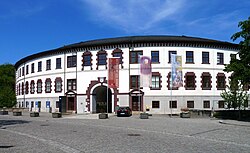
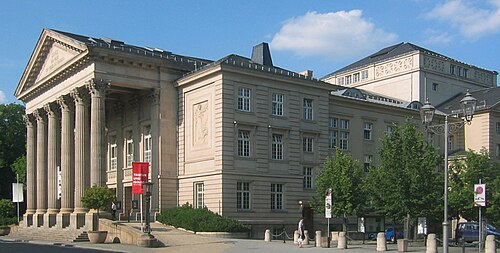
The Staatstheater Meiningen is a cornerstone of the town's identity, offering opera, ballet, and symphony concerts. The current building, a Neoclassical structure completed in 1909, replaced the original theater destroyed by fire in 1908.
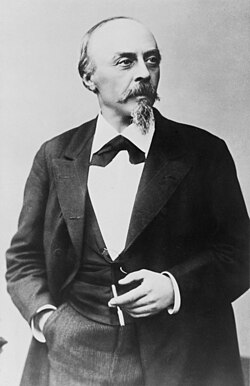
Complementing the theater is the Meiningen Court Orchestra, one of Europe's oldest. Under the direction of Hans von Bülow in 1880, it became an elite ensemble, attracting the collaboration of Johannes Brahms. Other legendary conductors, including Richard Strauss and Kirill Petrenko, have led the orchestra.
Architectural Highlights
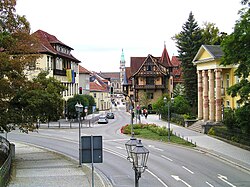
The townscape is a blend of historical styles. The old town retains parts of its 12th and 13th-century walls and moats. The Stadtkirche (town church), with foundations dating back to the year 1000, was transformed into its current Gothic Revival form between 1884 and 1889.
Visitors can explore the Kunsthaus (art house) and various museums, including the Theatre Museum and the Literary museum Baumbachhaus. The town also honors its musical legacy with a monument to Johannes Brahms, the first of its kind in Germany.
Geography and Infrastructure
Meiningen's location in a sheltered valley provides a mild regional climate. The average annual temperature is 9.1 °C, with annual rainfall averaging 656 millimeters. The town is well-connected via the Bundesautobahn 71 and serves as a railway node with direct services to Erfurt, Eisenach, Sonneberg, and Schweinfurt.
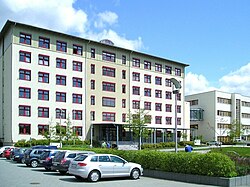
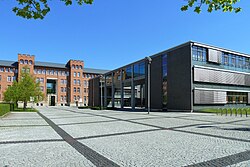
In terms of education, the town is a center for law enforcement training, hosting the Thuringian Police academy and a Police Hochschule (tertiary police college) that trains approximately 500 officers.
| Category | Details |
|---|---|
| Population | ~25,000 (2021) / 25,002 (2024) |
| Area | 123.03 km² |
| Elevation | 287 m |
| District | Schmalkalden-Meiningen |
| Key Industry | Healthcare (Klinikum Meiningen), Culture, Administration |
Frequently Asked Questions
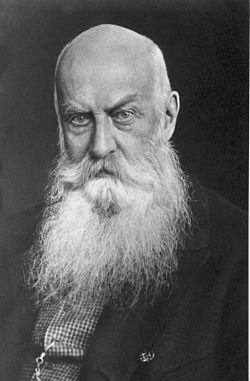
Who was the "Theatre Duke" of Meiningen?
Georg II, Duke of Saxe-Meiningen (1826–1914), was a great patron of theatrical arts whose support helped the Meiningen Court Theatre achieve international celebrity.
What is the significance of the Meiningen Court Orchestra?
Founded in 1690, it is one of the oldest orchestras in Europe and reached a peak of elite status under Hans von Bülow, collaborating with composers like Johannes Brahms.
What architectural styles can be found in Meiningen?
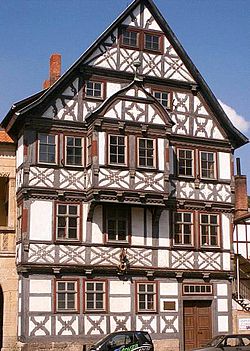
The town features a mix of 16th-17th century half-timbered houses, 18th-19th century mansions, Gothic Revival (Stadtkirche), and Neoclassical buildings resulting from the reconstruction after the 1874 fire.
How is Meiningen connected to the rest of Germany?
It is accessible via the Bundesautobahn 71 and is a railway node with connections to Erfurt, Eisenach, Sonneberg, and Schweinfurt.
What is the Jerusalem district?
Created between 1967 and 1983, Jerusalem is a residential district built to accommodate workers for the Robotron microelectronics plant during the DDR era.