Franconia: The Cultural and Historical Heart of Germany
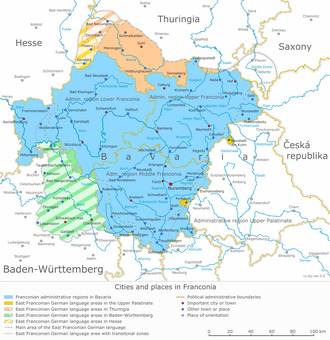
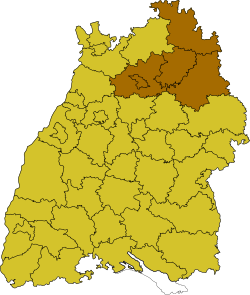
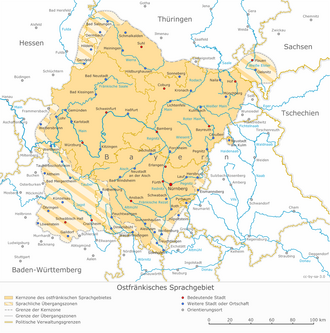
Franconia (German: Franken) is a distinguished cultural region in Germany, renowned for its rich history, diverse landscapes, and deep-rooted traditions. While primarily associated with the Free State of Bavaria, the region's influence extends into Baden-Württemberg, Thuringia, and Hesse. With a population of approximately 5 million people, Franconia serves as a bridge between various German states, maintaining a unique identity through its dialect, architecture, and heritage.
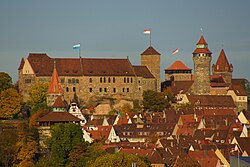
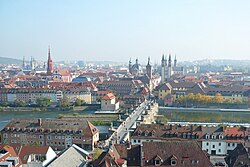
From the imperial grandeur of Nuremberg to the rolling vineyards of Würzburg, Franconia is a land of contrasts, where medieval fortresses coexist with modern industrial hubs.
Key Facts
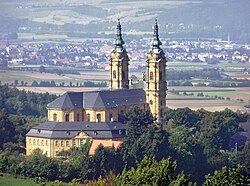
- Major Cities: Nuremberg, Fürth, Würzburg, Erlangen, and Bamberg.
- Population: Approximately 5,000,000.
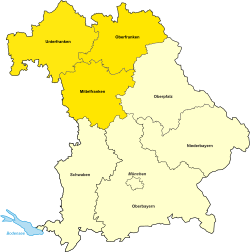
- Administrative Hubs: Divided primarily into Upper, Middle, and Lower Franconia within Bavaria.
- Cultural Symbols: The "Franconian Rake" (coat of arms) and the "Frankenlied" (anthem).
- Largest City: Nuremberg, with over 500,000 inhabitants.
Geography and Natural Landscape
The geography of Franconia is characterized by a varied terrain that includes plains, hills, and significant river systems. The region is defined by its water bodies and geological diversity, which have shaped both its economy and its natural beauty.
Geology and Fossils
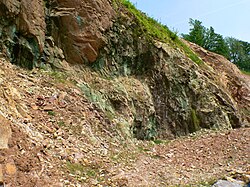
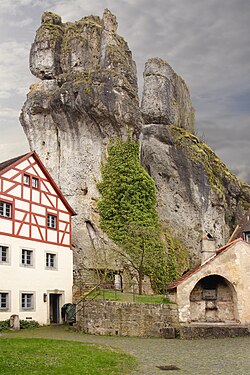
The region is a treasure trove for geologists. It features crystalline rock (igneous or metamorphic rock) in the Spessart area, as well as layers of bunter sandstone from the Lower Triassic period. The northern Franconian Jura is particularly famous for its Corallian Limestone tower-like rocks.

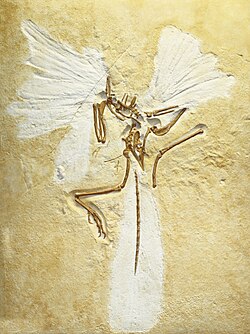
Franconia is globally recognized for its paleontological significance. The region has yielded critical fossils, including the Plateosaurus engelhardti and the world-famous Archaeopteryx, a transitional fossil between non-avian dinosaurs and birds found in the Langenaltheim Quarry.

Historical Evolution
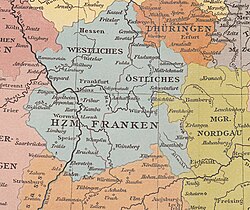
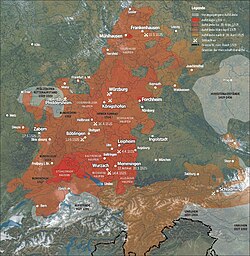
The history of Franconia is inextricably linked to the Frankish people. In the early 10th century, the Duchy of Franconia was established within East Francia, encompassing areas that now include modern Hesse, the Palatinate, and parts of Baden-Württemberg.
From Duchy to Imperial Circle
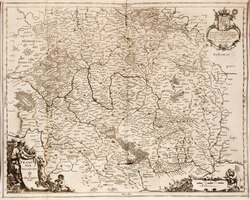
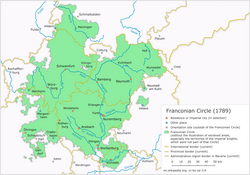
Following the dissolution of the stem duchy, the Holy Roman Emperors created the Franconian Circle (Fränkischer Reichskreis) in 1500. This administrative entity grouped the principalities of the eastern half of the former duchy, roughly mirroring the boundaries of modern Franconia. The title of Duke of Franconia remained a point of prestige, claimed by the bishops of Würzburg until 1803 and later by the kings of Bavaria until 1918.
Medieval and Early Modern Era
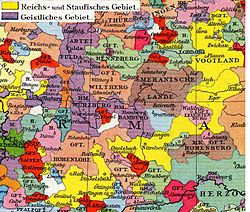
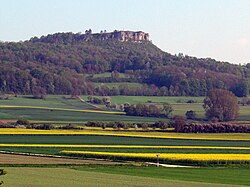
By the 13th century, the region had fragmented into numerous smaller states, including the Bishoprics of Würzburg and Bamberg, and various counties such as Hohenlohe, Henneberg, and Rieneck. This period saw the rise of powerful city-states and the construction of massive fortifications, such as the Celtic fortress of Menosgada on the Staffelberg.
Modern Transitions and Reforms
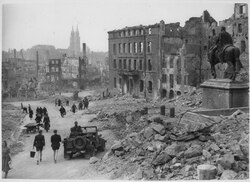
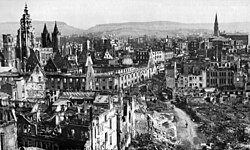
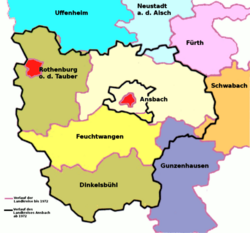
The 20th century brought significant upheaval, particularly during World War II, which left cities like Nuremberg and Heilbronn in ruins. Post-war recovery was followed by a major administrative reform in Bavaria between 1971 and 1980. This reform aimed to increase efficiency by reducing the number of municipalities by one-third and counties by nearly half, which included the transfer of the Eichstätt county to Upper Bavaria.
Demographics and Urban Centers
The population of Franconia is concentrated heavily in the Bavarian regions. The metropolitan area of Nuremberg—comprising Nuremberg, Fürth, Erlangen, and Schwabach—is a densely populated urban core with approximately 1.4 million residents.
Major Cities Comparison
| City | State | Population (2022) | Growth (2000–2020) |
|---|---|---|---|
| Nuremberg | Bavaria | 523,026 | +5.6% |
| Fürth | Bavaria | 131,433 | +16.1% |
| Würzburg | Bavaria | 127,810 | -0.8% |
| Erlangen | Bavaria | 116,562 | +11.5% |
| Bamberg | Bavaria | 79,935 | +11.1% |
While the majority of large towns are in Bavaria, other areas like Schwäbisch Hall in Baden-Württemberg and Suhl in Thuringia also maintain strong Franconian ties.
Culture and Tourism
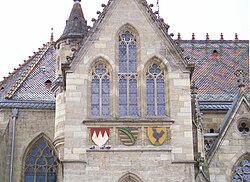
Franconian culture is defined by its distinct dialect, East Franconian, and a strong sense of regional pride. This is often symbolized by the "Franconian Rake," a heraldic symbol used to identify Franconian territories.
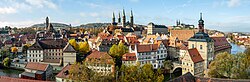
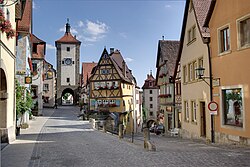
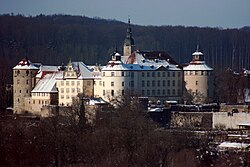
Tourism in the region is driven by historic towns like Rothenburg ob der Tauber and the scenic "Castle Road," which features landmarks such as Schloss Langenburg. Visitors are also drawn to the region's culinary specialties, including Nuremberger Bratwürste (small sausages) and the famous Rauchbier (smoked beer) of Bamberg.
Frequently Asked Questions
What is the "Franconian Rake"?
The Franconian Rake is a heraldic symbol (coat of arms) that serves as a visual indicator of whether a place is part of the Franconia region.
Which is the largest city in Franconia?
Nuremberg is the largest city in Franconia, with a population of 523,026 as of 2022, making it the second-largest city in Bavaria.
Is Franconia only in Bavaria?
No. While the majority of the region and its largest cities are within the Free State of Bavaria, Franconian cultural and language areas also extend into Baden-Württemberg, Thuringia, and Hesse.
What are some famous fossils found in Franconia?
Franconia is famous for the Archaeopteryx, found in the Langenaltheim Quarry, and the Plateosaurus engelhardti.
What happened during the Bavarian administrative reform of 1971-1980?
The reform aimed to create more efficient municipalities and counties, resulting in the number of municipalities being reduced by a third and counties by about half.