Mauricio Macri: The Political Journey of Argentina's 56th President
Mauricio Macri is a prominent Argentine politician and civil engineer who served as the 56th President of Argentina from December 10, 2015, to December 10, 2019. His trajectory is marked by a transition from the world of sports management and business to the highest levels of government, representing a shift toward center-right politics in a country long defined by Peronism.
Key Facts
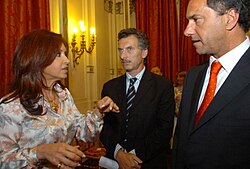
- Presidency: Served as President of Argentina (2015–2019).
- Local Governance: Former Chief of Government of Buenos Aires (2007–2015).
- Political Party: Founder and leader of the Republican Proposal (PRO).
- Education: Studied at the Pontifical Catholic University of Argentina and Columbia University.
- International Role: Served as President pro tempore of the Union of South American Nations (2017–2018).
Early Life and Professional Foundations
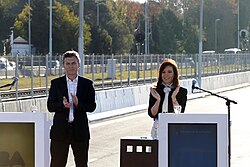
Born on February 8, 1959, in Tandil, Buenos Aires, Mauricio Macri is the son of Franco Macri. He pursued a career in civil engineering, receiving education from the Pontifical Catholic University of Argentina and Columbia University. Before entering the political arena, Macri gained significant public visibility through his leadership of Boca Juniors, one of Argentina's most famous football clubs.
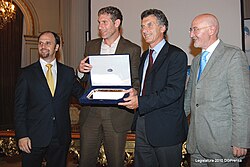
Rise in Local Politics
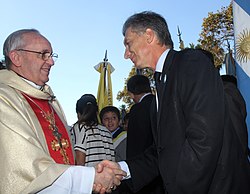
Macri's formal political ascent began in the mid-2000s. He served as a National Deputy for the City of Buenos Aires from 2005 to 2007. In 2007, he was elected as the 5th Chief of Government of Buenos Aires, a position he held for two terms until 2015.
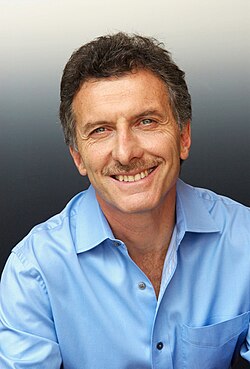
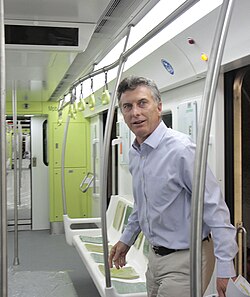
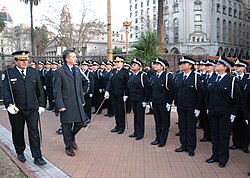
During his administration in the capital, Macri focused on urban modernization and infrastructure. Key initiatives included the overhaul of public transport and the creation of the Metropolitan Police to enhance city security.
The Path to the Presidency
After establishing a strong base in Buenos Aires, Macri expanded his influence nationally. He formed the Republican Proposal (PRO) party in 2008 and later led the Cambiemos (Let's Change) coalition. In the 2015 general election, Macri faced a runoff against Daniel Scioli, eventually winning with 51.34% of the vote.
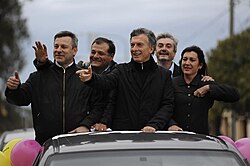
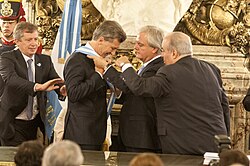
His inauguration on December 10, 2015, marked the end of twelve years of Kirchnerism, as he succeeded Cristina Fernández de Kirchner.
Presidential Term (2015–2019)
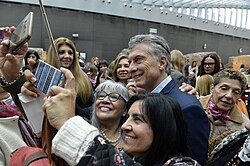
Macri's presidency was characterized by an effort to reintegrate Argentina into the global economy and shift away from the protectionist policies of his predecessor.
Economic and Energy Policy
Upon taking office, Macri moved to lift capital controls and scrap export quotas on corn and wheat. He sought to attract foreign investment, notably announcing deals for the Vaca Muerta shale deposit in Patagonia to boost energy independence.
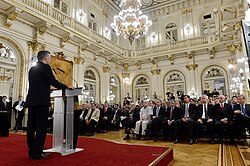
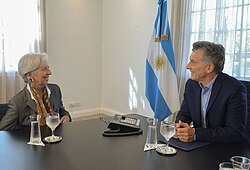
To stabilize the economy, his administration negotiated a significant loan with the International Monetary Fund (IMF), led by Managing Director Christine Lagarde.
Foreign Relations and Diplomacy
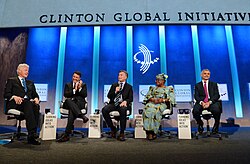
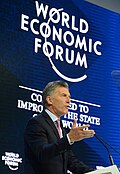
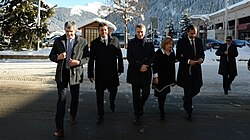
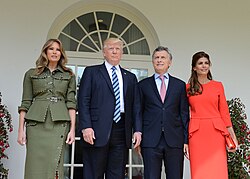
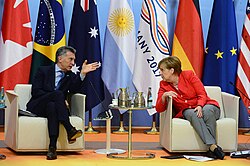
Macri pursued a pro-Western foreign policy, strengthening ties with the United States and Europe. He returned Argentina to the World Economic Forum in Davos after an 11-year absence and maintained close relations with leaders such as Donald Trump and Angela Merkel.
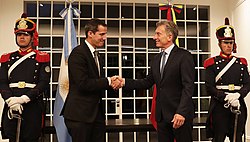
On the regional stage, Macri took a firm stance against the Venezuelan government, acknowledging Juan Guaidó as the legitimate president during the 2019 crisis.
Challenges and Controversies
Despite his diplomatic successes, Macri's term faced significant domestic hurdles. His administration was hit by economic volatility, including a plummeting peso that forced the government to raise interest rates to 40% in 2018.
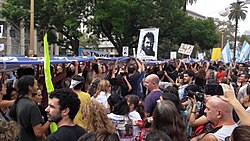
He also faced several legal and social controversies, including mentions in the Panama Papers regarding offshore links and the high-profile case involving the death of Santiago Maldonado.
Summary of Political Career
The following table summarizes the key electoral milestones of Mauricio Macri's career.
| Year | Office | Coalition/Party | Result |
|---|---|---|---|
| 2005 | National Deputy | Republican Proposal | Elected |
| 2007 | Chief of Government of Buenos Aires | Republican Proposal | Elected |
| 2011 | Chief of Government of Buenos Aires | Republican Proposal | Re-elected |
| 2015 | President of Argentina | Cambiemos | Elected |
| 2019 | President of Argentina | Juntos por el Cambio | Not elected |
Frequently Asked Questions
What was Mauricio Macri's role before entering politics?
Before his political career, Mauricio Macri was a civil engineer and the president of Boca Juniors, one of Argentina's most prominent football clubs.
Which political party did Mauricio Macri lead?
He founded and led the Republican Proposal (PRO) and later headed the Cambiemos and Juntos por el Cambio coalitions.
What were the main economic goals of his presidency?
His main goals included lifting capital controls, removing export quotas on agricultural products, and attracting foreign investment to sectors like the Vaca Muerta shale deposits.
Who succeeded Mauricio Macri as President of Argentina?
Mauricio Macri was succeeded by Alberto Fernández on December 10, 2019.
How did Macri handle foreign relations?
Macri shifted Argentina toward a more globalist approach, strengthening ties with the US and EU, and returning the country to the World Economic Forum in Davos.