Mathematics History: From Ancient Civilizations to Modern Theory
The history of mathematics is a global chronicle of human discovery, tracing the evolution of how we quantify the world and reason through abstract patterns. Long before the modern era, early civilizations independently developed mathematical methods to solve practical problems of survival, governance, and spirituality. From the river valleys of Mesopotamia and Egypt to the philosophical schools of Greece and the courts of India and China, mathematics has evolved from a tool for taxation and trade into a rigorous, demonstrative discipline.
Key Facts
- Earliest Records: Mathematical texts date back to 3000 BC in Mesopotamia, Egypt, and Ebla.
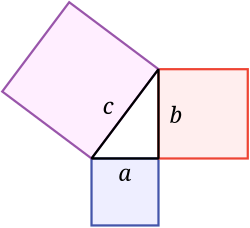
- Ancient Foundations: The Pythagorean theorem is among the most ancient and widespread developments, appearing in early Babylonian and Egyptian texts.
- Greek Innovation: The Greeks introduced deductive reasoning and mathematical rigor, transforming math into a "demonstrative discipline."
- Global Contributions: China pioneered place value systems and negative numbers, while the Maya independently developed the concept of zero.
- The Great Synthesis: The Hindu-Arabic numeral system, developed in India, reached the West via Islamic scholars like Khwārizmī.
- Modern Era: The 17th century marked a turning point with the invention of infinitesimal calculus by Newton and Leibniz.
Ancient Foundations: Mesopotamia and Egypt

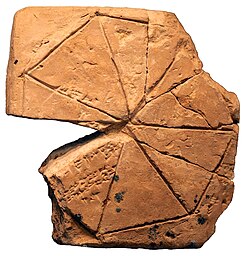
Around 3000 BC, the Mesopotamian states of Sumer, Akkad, and Assyria, along with Ancient Egypt and Ebla, began utilizing arithmetic, algebra, and geometry. These tools were essential for commerce, trade, taxation, and astronomy, specifically for formulating calendars and recording time.
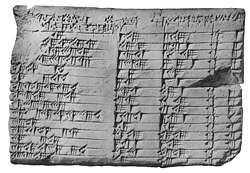
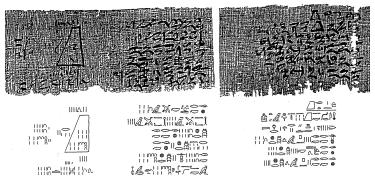
Some of the most significant early artifacts include the Babylonian Plimpton 322 (c. 2000–1900 BC), the Egyptian Rhind Mathematical Papyrus (c. 1800 BC), and the Moscow Mathematical Papyrus (c. 1890 BC). Notably, these texts reference Pythagorean triples, suggesting that the relationship between the sides of a right triangle was understood long before the formal proofs of the Greek era.
The Greek Revolution and the Birth of Rigor
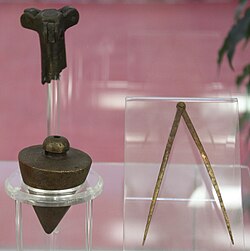
In the 6th century BC, the Pythagoreans shifted the focus of mathematics from practical application to a "demonstrative discipline." They coined the term "mathematics" from the Greek mathema, meaning "subject of instruction." This era introduced deductive reasoning—the process of arriving at a logical conclusion based on established premises—and a demand for rigorous proofs.
Plato played a pivotal role by establishing the Platonic Academy in Athens, which became the world's mathematical center in the 4th century BC. He refined fundamental definitions, such as describing a line as "breadthless length." Later, Euclid's Elements became perhaps the most influential textbook in history, systematizing geometry and number theory.
![A proof from Euclid's Elements (c. 300 BC), considered the most influential textbook of all time[1]](/images/2c/c8/2cc88c78902b24a8c37c18a5d7bc6d07c16aec331c231491910750274403eff9.jpg)
![One of the oldest surviving fragments of Euclid's Elements, found at Oxyrhynchus and dated to circa AD 100. The diagram accompanies Book II, Proposition 5.[61]](/images/aa/e0/aae0670932b90f82f8e1e45f7f828a73f63e5815f2a252456ac7eeef32594639.jpg)
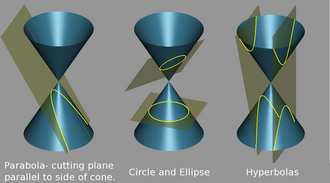
Other Greek giants included Archimedes, who used the method of exhaustion (a precursor to integration) to approximate pi, and Apollonius of Perga, who advanced the study of conic sections.

Global Developments: Asia and the Americas
![Nicole Oresme (1323–82), shown in this contemporary illuminated manuscript with an armillary sphere, was the first to offer a mathematical proof for the divergence of the harmonic series.[184]](/images/ac/63/ac63ee4657126ea9ba64eeb505deeca54f117db2f86f8109ce0882a90c78ea05.jpg)
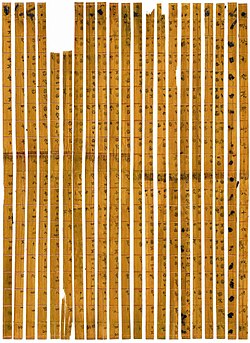
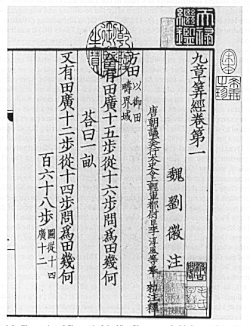
While Greece refined logic, other civilizations made groundbreaking strides in notation and calculation. Chinese mathematics introduced a place value system and the first use of negative numbers. The Nine Chapters on the Mathematical Art stands as one of the earliest surviving texts from this tradition.

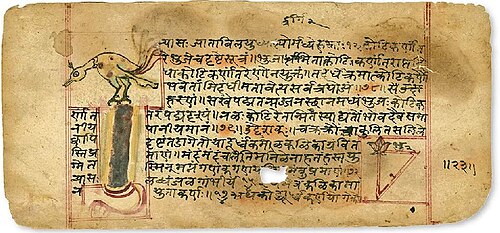
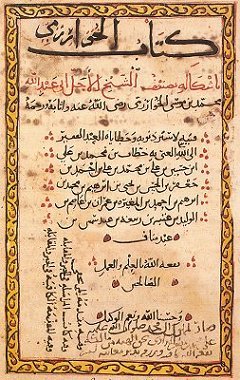
In India, the first millennium AD saw the evolution of the Hindu-Arabic numeral system, which provides the basis for modern global mathematics. This system, along with advanced operations, was transmitted to the West through the work of Islamic mathematicians, most notably Muhammad ibn Mūsā al-Khwārizmī, whose work on "completion and balancing" helped shape the field of algebra.


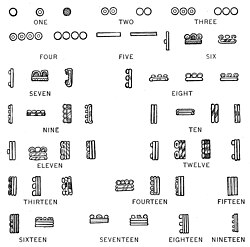
Independently, the Maya civilization in Mexico and Central America developed a sophisticated system that included a standard symbol for zero, a concept critical for advanced computation.
From the Renaissance to the Modern Era
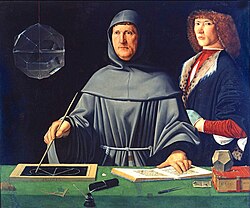
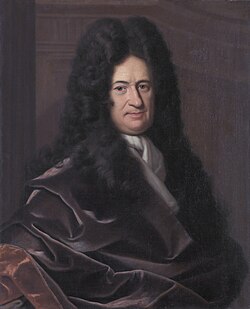
After periods of stagnation in Medieval Europe, the Renaissance sparked a surge of discovery. The 17th century witnessed a paradigm shift with the independent development of infinitesimal calculus by Isaac Newton and Gottfried Wilhelm Leibniz, allowing for the study of continuous change.

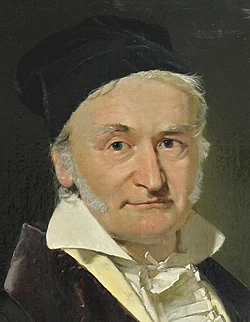
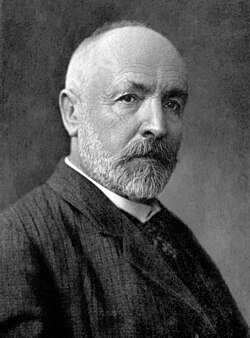
The 18th and 19th centuries saw the rise of mathematicians like Leonhard Euler and Carl Friedrich Gauss, who expanded the boundaries of number theory and analysis. By the 20th century, figures such as Georg Cantor explored the nature of infinity, and the development of non-Euclidean geometries challenged the long-held axioms of the Greek tradition.


Modern mathematics continues to evolve, applying these ancient foundations to complex fields like relativity, quantum mechanics, and computer science.
Summary of Mathematical Milestones

| Era/Civilization | Key Contribution | Notable Example/Figure |
|---|---|---|
| Mesopotamia/Egypt | Practical arithmetic, Pythagorean triples | Plimpton 322, Rhind Papyrus |
| Ancient Greece | Deductive reasoning, formal proofs | Euclid, Pythagoras, Archimedes |
| Ancient China | Negative numbers, place value | Nine Chapters on the Mathematical Art |
| India/Islamic World | Hindu-Arabic numerals, Algebra | Al-Khwārizmī |
| Maya | Concept of zero | Maya numerals |
| Scientific Revolution | Infinitesimal Calculus | Newton, Leibniz |
Frequently Asked Questions
Who first developed the concept of zero?
While several cultures had notions of emptiness, the Maya civilization of Mexico and Central America is noted for giving the concept of zero a standard symbol in their numeral system.
What is the significance of Euclid's Elements?
Euclid's Elements is considered one of the most influential textbooks of all time because it systematized mathematical knowledge and established the standard for rigorous deductive proof.
How did the Hindu-Arabic numeral system reach Europe?
The system evolved in India during the first millennium AD and was transmitted to the Western world via Islamic mathematics, specifically through the influential works of scholars like al-Khwārizmī.
What is the difference between ancient and Greek mathematics?
Ancient Mesopotamian and Egyptian mathematics were primarily applied and practical (used for trade and taxation), whereas Greek mathematics introduced the concept of a "demonstrative discipline," focusing on theoretical proofs and deductive reasoning.
Who invented calculus?
Infinitesimal calculus was developed independently in the 17th century by two mathematicians: Isaac Newton and Gottfried Wilhelm Leibniz.