Euclidean Geometry: The Foundations of Mathematical Space
Euclidean Geometry: The Foundations of Mathematical Space Euclidean geometry is a mathematical system attributed to the ancient Greek mathematician Euclid. Detailed in his seminal textboo...
Euclidean Geometry: The Foundations of Mathematical Space
Euclidean geometry is a mathematical system attributed to the ancient Greek mathematician Euclid. Detailed in his seminal textbook, Elements, this system established the standard for logical rigor in mathematics. Rather than relying on scattered observations, Euclid organized geometric knowledge into a structured system, starting with a small set of intuitively appealing axioms (postulates) and using them to deduce a vast array of theorems (propositions).
For over two millennia, this system was considered the absolute truth of physical space. It was only with the advent of modern physics and advanced mathematics that we discovered other self-consistent geometries, revealing that Euclid's work is a specific case of a much broader mathematical landscape.
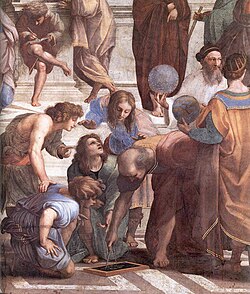
Detail from Raphael's The School of Athens featuring a Greek mathematician – perhaps representing Euclid or Archimedes – using a compass to draw a geometric construction.
Key Facts
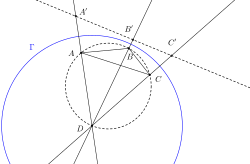
Construction used in the proof of Ptolemy's theorem.
The Elements: A 13-book collection that organizes plane and solid geometry, as well as early number theory.
Axiomatic Method: The process of proving complex theorems from a few basic, accepted truths.
Parallel Postulate: The most debated axiom, which describes the behavior of parallel lines on a flat plane.
Platonic Solids: Five regular convex polyhedra (tetrahedron, cube, octahedron, dodecahedron, and icosahedron) classified in Book XIII.
Physical Space: While Euclidean geometry is a great approximation for short distances, general relativity shows that gravity bends space, making it non-Euclidean.
The Structure of the Elements
U-Tube Shell and Tube Heat Exchanger
The Elements begins with plane geometry—the study of two-dimensional shapes—which remains the primary introduction to axiomatic systems in secondary education today. It then progresses to solid geometry in three dimensions and explores concepts now categorized as algebra and number theory, though Euclid expressed these using geometric language.
The Parallel Postulate
Among Euclid's postulates, the parallel postulate (Postulate 5) is the most famous. It states that if two lines intersect a third line such that the sum of the inner angles on one side is less than two right angles, the two lines must eventually intersect on that side if extended far enough.
The parallel postulate (Postulate 5): If two lines intersect a third in such a way that the sum of the inner angles on one side is less than two right angles, then the two lines inevitably must intersect each other on that side if extended far enough.
Methods of Proof and Construction
Euclid utilized a rigorous method of proof, often employing a compass and straightedge for constructions. For example, one of the earliest proofs demonstrates how to construct an equilateral triangle using two intersecting circles centered at the endpoints of a line segment.
A proof from Euclid's Elements that, given a line segment, one may construct an equilateral triangle that includes the segment as one of its sides: an equilateral triangle ΑΒΓ is made by drawing circles Δ and Ε centered on the points Α and Β, and taking one intersection of the circles as the third vertex of the triangle.
Fundamental Theorems and Results
Types of Lenses
Euclidean geometry provides the basis for many well-known mathematical laws. These include the Pythagorean theorem, Thales' theorem, and Ptolemy's theorem.
Congruence of Triangles
Two triangles are considered congruent (identical in shape and size) if they satisfy any of the following criteria:
SSS: All three sides are equal.
SAS: Two sides and the included angle are equal.
ASA: Two angles and the included side are equal.
The Platonic Solids
In the final book of the Elements, Euclid classifies the five Platonic solids. These are convex polyhedra where every face is a congruent regular polygon and the same number of faces meet at every vertex. Euclid proved that no other convex regular polyhedra can exist.
Applications in Engineering and Science
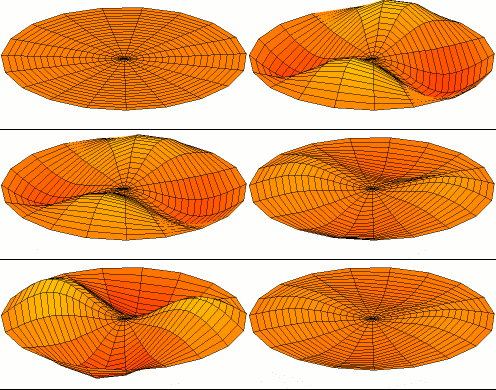
Vibration - oscillations
Euclidean geometry is not merely a theoretical exercise; it is the backbone of modern engineering and design. Its principles are applied across various technical fields:
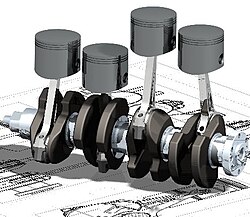
Design and Analysis: Used in the creation of 3D CAD (Computer-Aided Design) models. 3D CAD model
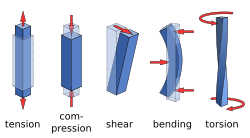
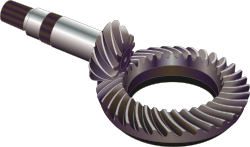
Mechanical Engineering: Essential for calculating mechanical stress Mechanical Stress and designing gears Gear.
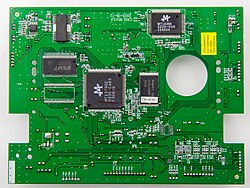
Electronics: Applied in the layout of printed circuit boards (PCBs) PCB of a DVD player.
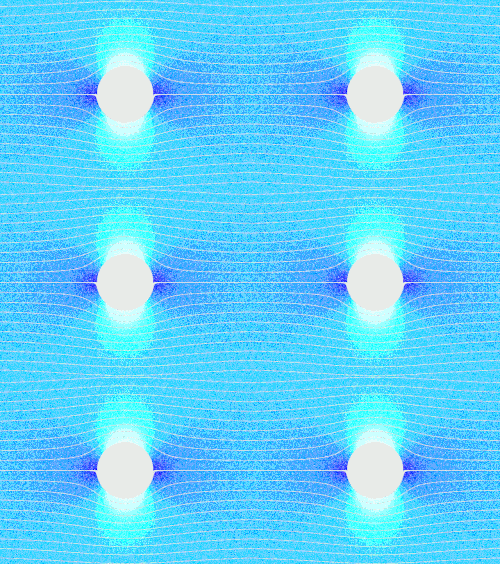
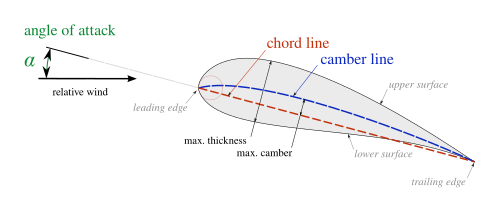
Physics: Used to model fluid flow fields Potential flow around a source without circulation and the nomenclature of airfoils Airfoil nomenclature.
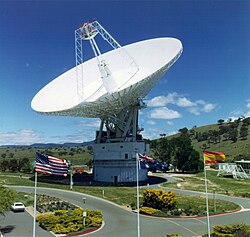
Communications: Fundamental to the design of high-gain antennas, such as the NASA Cassegrain NASA Cassegrain, extremely high gain ~70 dBi..
The Evolution of Geometry
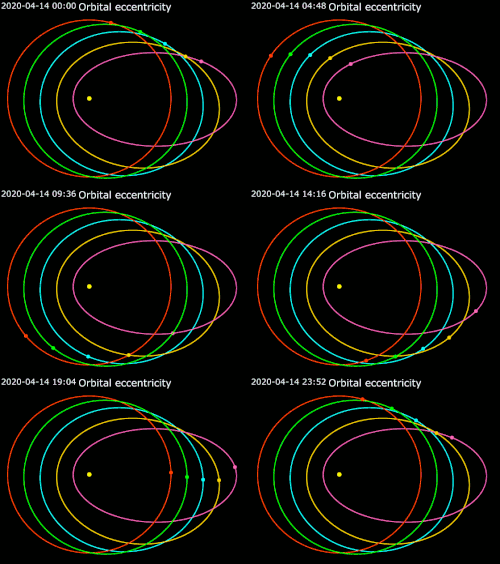
Animation of orbit by eccentricity
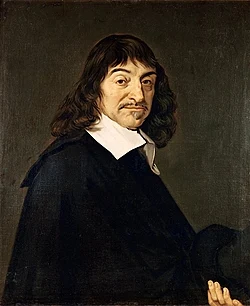
As mathematics progressed, the boundaries of the Euclidean system were challenged. In the 17th century, René Descartes developed analytic geometry, which translated geometric shapes into algebraic equations, creating a bridge between the two disciplines.
René Descartes. Portrait after Frans Hals, 1648.
Higher Dimensions and Non-Euclidean Space
In the 19th century, mathematicians like William Rowan Hamilton and Ludwig Schläfli extended Euclidean concepts into higher dimensions. Schläfli identified regular convex 4-polytopes, such as the 5-cell and the 120-cell, though his work was not widely recognized until the 20th century.
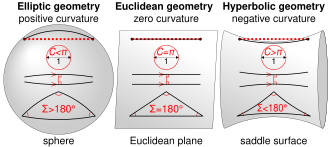
Simultaneously, the discovery of hyperbolic and elliptic geometries proved that the parallel postulate could be replaced, creating self-consistent systems where the rules of flat space do not apply.
Comparison of elliptic, Euclidean and hyperbolic geometries in two dimensions
General Relativity and Physical Space
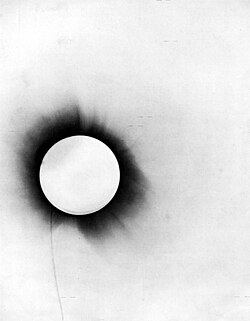
Albert Einstein's theory of general relativity revealed that physical space is not strictly Euclidean. Gravity causes the curvature of space-time, meaning that light rays bend and the angles of a triangle formed by light may not sum to 180 degrees. This was famously verified during a solar eclipse in 1919.
A disproof of Euclidean geometry as a description of physical space. In a 1919 test of the general theory of relativity, stars (marked with short horizontal lines) were photographed during a solar eclipse. The rays of starlight were bent by the Sun's gravity on their way to Earth. This is interpreted as evidence in favor of Einstein's prediction that gravity would cause deviations from Euclidean geometry.
Summary of Geometric Systems
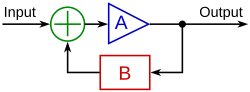
Basic feedback loop.
System
Key Characteristic
Physical Application
Euclidean
Flat space; parallel lines never meet.
Architecture, local engineering, CAD.
Hyperbolic
Constant negative curvature.
Specialized mathematical modeling.
Elliptic
Constant positive curvature.
Global navigation, spherical geometry.
General Relativity
Dynamic curvature based on mass/energy.
GPS systems, astrophysics, cosmology.
Frequently Asked Questions
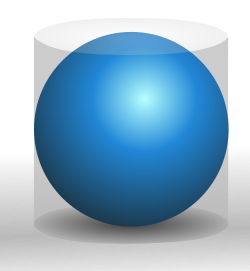
A sphere has 2/3 the volume and surface area of its circumscribing cylinder. A sphere and cylinder were placed on the tomb of Archimedes at his request.
What is the difference between an axiom and a theorem?
An axiom (or postulate) is a starting assumption that is accepted as true without proof. A theorem is a proposition that must be logically proven using axioms or previously established theorems.
Why is the parallel postulate so important?
The parallel postulate defines the "flatness" of a space. By changing or removing this postulate, mathematicians discovered non-Euclidean geometries, which are essential for understanding the curved nature of the universe.
How does Euclidean geometry affect modern technology?
It is used in everything from the design of microchips and mechanical parts to the software used in 3D modeling. However, for high-precision systems like GPS, corrections based on non-Euclidean relativity are required.
What are the Platonic solids?
They are the five regular convex polyhedra: the tetrahedron, cube, octahedron, dodecahedron, and icosahedron. They are unique because every face is the same regular polygon and every vertex is identical.
Can a circle be squared using Euclidean tools?
No. While it was a long-standing challenge, it was proven in 1882 that "squaring the circle" (constructing a square with the same area as a given circle) is impossible using only a finite number of steps with a compass and straightedge.
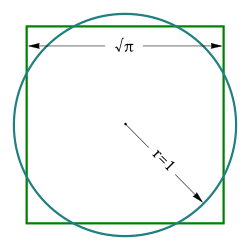
Squaring the circle: the areas of this square and this circle are equal. In 1882, it was proven that this figure cannot be constructed in a finite number of steps with an idealized compass and straightedge.