Marxism: Philosophy, Class Struggle, and Socioeconomic Analysis
Marxism is a comprehensive political philosophy and method of socioeconomic analysis that seeks to understand social conflict and class relations. Developed in the 19th century by German philosophers Karl Marx and Friedrich Engels, it posits that the central driving force of historical change is the struggle between different social classes.
At its core, Marxism employs dialectical materialism—a method of interpreting historical development—to argue that the way a society produces its material goods determines its social structure. This approach, known as historical materialism, suggests that the economic foundation of society shapes its political and intellectual life.
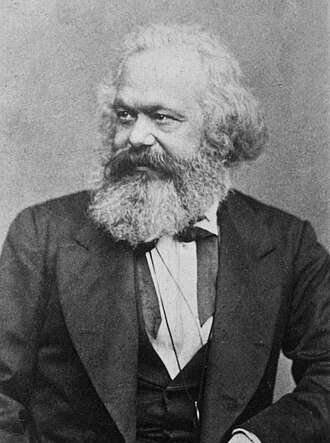
The Base and Superstructure Model
A fundamental concept in Marxist analysis is the base and superstructure model. In this framework, the economic mode of production (the base) consists of the means of production and the relations of production. This base serves as the foundation for the superstructure, which includes a society's laws, politics, religion, and culture.
Marxists argue that the superstructure exists to justify and maintain the power of the ruling class, ensuring that the economic base remains intact.
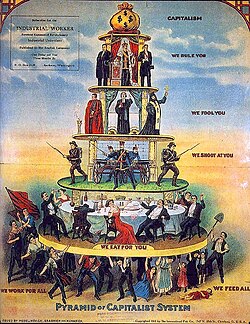
Critique of Capitalism
Marxism provides a rigorous critique of capitalism, focusing on the inherent conflict between two primary classes:
- The Bourgeoisie: The ruling class who own the means of production (factories, land, and resources).
- The Proletariat: The working class who do not own the means of production and must sell their labour power to survive.
According to Marx, the bourgeoisie systematically exploit the proletariat. This relationship leads to alienation—a state where workers feel disconnected from the products of their labour and their own human potential. Marx theorized that this exploitation creates internal contradictions and periodic economic crises, which eventually fuel a proletarian revolution.

From Socialism to Communism
Marx envisioned a historical progression where the overthrow of capitalism would lead to the establishment of a socialist mode of production. In this transitional phase, the means of production are shifted from private ownership to social ownership.
The ultimate goal of this process is the creation of a communist society: a classless and stateless society where the exploitation of man by man has ceased, and resources are distributed based on need.
Key Facts
- Founders: Karl Marx and Friedrich Engels.
- Core Driver: Class struggle is viewed as the primary engine of historical change.
- Economic Theory: The "base" (economy) determines the "superstructure" (culture/politics).
- Class Conflict: The central tension exists between the bourgeoisie (owners) and the proletariat (workers).
- Ultimate Goal: A stateless, classless society known as communism.
Evolution of Marxist Thought
Following the death of Karl Marx, his theories were adapted into various schools of thought to fit different political and academic contexts.
Marxism-Leninism
Developed after the death of Vladimir Lenin, Marxism-Leninism became the official state ideology of the Soviet Union and other Marxist states. It emphasized the role of a vanguard party to lead the revolution.
Academic and Dissident Traditions
Other branches emerged that were often critical of state socialism, focusing instead on individual liberty, culture, and philosophy. These include:
- Western Marxism: Focuses on culture and philosophy over strict economic determinism.
- Marxist Humanism: Emphasizes the human element and individual agency.
- Marxist Feminism: Analyzes the intersection of class struggle and gender oppression.
- Libertarian Marxism: Critical of centralized state control.
Marxism Across Disciplines
Marxist analysis has extended far beyond politics into various academic fields:
- Archaeology: Using materialist interpretations to understand ancient social structures.
- Sociology: Analyzing social stratification and class dynamics.
- Education: Examining the role of fixed capital in education and the pedagogical functions of political parties.
- Literary Criticism and Aesthetics: Analyzing how art and literature reflect the class struggles of their time.
Global Impact and Modern Context
Throughout the 20th and 21st centuries, Marxism has influenced numerous revolutions and governments. From the Russian and Chinese Revolutions to modern political discourse in various nations, its impact remains significant.
| Concept | Definition | Role in Theory |
|---|---|---|
| Historical Materialism | Analysis of history through material conditions | Explains how societies evolve |
| Bourgeoisie | Owners of the means of production | The ruling/exploiting class |
| Proletariat | Wage laborers | The exploited class destined for revolution |
| Base and Superstructure | Economy vs. Culture/Politics | Shows how economics shape society |
| Alienation | Estrangement of workers from their labor | A psychological result of capitalism |
Frequently Asked Questions
What is the difference between socialism and communism in Marxism?
In Marxist theory, socialism is a transitional phase where the means of production are socially owned, while communism is the final stage—a classless, stateless society where the state has withered away.
What is the "base and superstructure"?
The base refers to the economic system (means and relations of production), while the superstructure refers to the legal, political, and cultural institutions that grow out of and support that economic base.
Who are the bourgeoisie and the proletariat?
The bourgeoisie are the capitalists who own the factories and land, while the proletariat are the workers who must sell their labor for a wage to survive.
What is historical materialism?
Historical materialism is the Marxist method of analyzing history by focusing on the material conditions and economic modes of production as the primary drivers of social change.
Is there only one type of Marxism?
No. While classical Marxism is based on the works of Marx and Engels, many schools of thought have emerged, including Marxism-Leninism, Western Marxism, and Marxist Humanism, each with different interpretations.