Martin Persson Nilsson: Pioneer of Greek and Minoan-Mycenaean Religious Studies
Martin Persson Nilsson (1874–1967) was a distinguished Swedish philologist (a scholar of language in written historical sources) and mythographer (a scholar who studies myths) who fundamentally reshaped our understanding of ancient spiritual life. His work focused on the complex religious systems of the Greek, Hellenistic, and Roman worlds.
Nilsson was renowned for his interdisciplinary approach. Rather than relying solely on texts, he combined literary evidence with archaeological findings. This methodology allowed him to bridge the gap between historic and prehistoric records, tracing the evolution of Greek mythological cycles from their earliest roots.
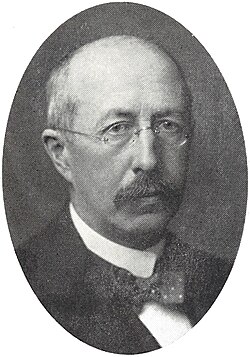
Key Facts
- Full Name: Martin Persson Nilsson.
- Lifespan: July 12, 1874 – April 7, 1967.
- Primary Expertise: Greek, Hellenistic, and Roman religious systems.
- Academic Base: University of Lund, Sweden.
- Core Methodology: Integration of literary and archaeological evidence.
- Major Contribution: Research on the survival of Minoan-Mycenaean religion within later Greek traditions.
Academic Career and Professional Honors
Nilsson's academic journey began in 1900 as a tutor at the University of Lund. His career quickly expanded into international fieldwork; by 1905, he was appointed Secretary to the Swedish Archaeological Commission in Rhodes.
In 1909, he achieved a prestigious appointment as Professor of Ancient Greek, Classical Archaeology, and Ancient History at Lund. His influence extended far beyond the classroom, serving as Secretary of the Royal Society of Letters in Lund and as an Associate of the Royal Swedish Academy of Letters, History and Antiquities in Stockholm.
His global reputation was cemented through several high-profile memberships:
- Corresponding member of the Prussian Academy of Sciences (1924).
- International Member of the American Philosophical Society (1939).
- International Honorary Member of the American Academy of Arts and Sciences.
Major Works and Contributions
Nilsson was a prolific author whose works were translated into multiple languages, reflecting his international impact. One of his most influential contributions was Geschichte der griechischen Religion (History of Greek Religion), originally published in Swedish in 1922 as Den grekiska religionens historia.
In the English-speaking world, he is most frequently cited for Minoan-Mycenaean Religion, and Its Survival in Greek Religion. This work, along with The Mycenaean Origin of Greek Mythology (1932), explored the prehistoric foundations of Greek belief systems.
Summary of Key Publications
| Year | Title | Focus/Context |
|---|---|---|
| 1920 | Primitive Time-Reckoning | Origins of counting time in early cultures |
| 1922 | Den grekiska religionens historia | Comprehensive history of Greek religion |
| 1932 | The Mycenaean Origin of Greek Mythology | Based on the Sather Classical Lectures |
| 1933 | Homer and Mycenae | Connection between epic poetry and archaeology |
| 1940 | Greek Popular Religion | Study of folk beliefs and practices |
| 1950 | Minoan-Mycenaean Religion (2nd Ed) | Survival of early religion in later Greek culture |
Beyond his books, Nilsson contributed significant research to academic journals, such as the Harvard Theological Review, where he explored early Orphism and the Bacchic Mysteries in the Roman age. He also lectured on the historical Hellenistic background of the New Testament and the role of politics in ancient Greek oracles.
Frequently Asked Questions
What was Martin Persson Nilsson's primary contribution to archaeology?
Nilsson is best known for linking literary evidence with archaeological data to explain how Greek mythological cycles evolved from prehistoric Minoan and Mycenaean roots.
Where did Martin Persson Nilsson spend most of his academic career?
He spent the majority of his career at the University of Lund in Sweden, where he served as a professor of Ancient Greek, Classical Archaeology, and Ancient History.
Which of his works is most cited in English?
His most frequently quoted English work is Minoan-Mycenaean Religion, and Its Survival in Greek Religion.
What other ancient cultures did he study besides the Greeks?
Nilsson also conducted extensive research into Roman religious systems, the Hellenistic period, and the early culture peoples' methods of time-reckoning.
Was he recognized internationally?
Yes, he was an international member of the American Philosophical Society and the American Academy of Arts and Sciences, and a corresponding member of the Prussian Academy of Sciences.