Marranos and Crypto-Jews: The Secret History of Iberian Conversos
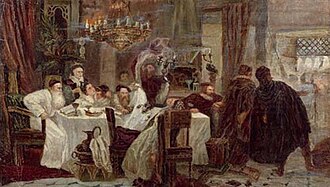
During the fifteenth and sixteenth centuries, the Iberian Peninsula became the stage for a complex struggle of faith, survival, and identity. Thousands of Jews in Spain, Portugal, and Navarre found themselves forced to navigate a dangerous social landscape where their ancestral religion was prohibited by law. This gave rise to the Marranos—individuals who converted to Christianity, often under royal coercion, but continued to practice Judaism in secret.
In modern scholarly work, the term crypto-Jew is increasingly preferred over "Marrano." To understand this history, it is essential to distinguish between three overlapping terms: Conversos referred to the broader population of Jewish converts to Catholicism; New Christians was a general term for converts from either Judaism or Islam; and crypto-Jews specifically described those who maintained their Jewish rites in private.
Key Facts
- The Alhambra Decree (1492): This Spanish decree prohibited the practice of Judaism, forcing Jews to either convert to Catholicism or leave the country.
- Scale of Conversion: It is estimated that 200,000 Jews converted to save their lives, while roughly 100,000 remained openly Jewish.
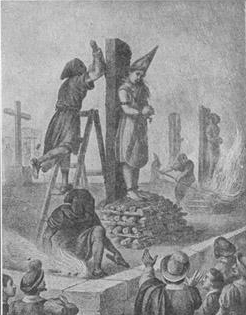
- The Inquisition: Both the Spanish (est. 1478) and Portuguese (est. 1536) Inquisitions surveilled New Christians to ensure their conversions were sincere.
- Genetic Legacy: A 2008 study suggested that up to 20% of the tested Iberian population carries haplogroups consistent with Sephardi ancestry.
- Global Diaspora: Crypto-Jews migrated to Flanders, Italy, North Africa, Turkey, and the Americas to escape persecution.
The Rise of the Conversos in Spain
The pressure to convert began long before the official expulsion. Following the Massacre of 1391, hundreds of thousands of Jews had already converted to Catholicism. By the time the Alhambra Decree was issued in 1492, the population of Conversos was substantial, yet they remained targets of suspicion by "Old Christians."
Violence against New Christians was widespread. In 1473 and 1474, mobs attacked Conversos in cities such as Andújar, Úbeda, and Segovia. In some locations, such as Carmona, reports indicated that virtually no Conversos were left alive. Despite this, some regions offered temporary sanctuary; for example, Tudela in Navarre became a haven where locals fiercely resisted the entry of inquisitors.
Persecution and Survival in Portugal
In Portugal, King Manuel I enforced a forced conversion in 1497. The Portuguese Inquisition, established in 1536, eventually adopted the same rigors as the Spanish model. A turning point occurred in 1579 when the Inquisition gained the "Power of Confiscation," a tool that devastated the wealth of New Christian families.
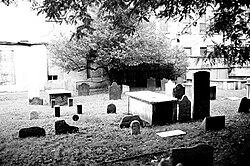
Despite the danger, some communities survived in total isolation. Historian Samuel Schwartz identified crypto-Jewish communities in northeastern Portugal—specifically in Belmonte, Bragança, Miranda, and Chaves—that survived for over four centuries without fully assimilating. The Belmonte community officially returned to Judaism in the 1970s and opened a synagogue in 1996.
The Global Migration of New Christians
While many remained in Iberia, a steady trickle of crypto-Jews sought more liberal environments. International figures like the banker Gracia Mendes Nasi helped facilitate these migrations. Many fled to Flanders (Antwerp and Brussels), Hamburg, Altona, and as far as Scotland.
The diaspora extended to the Estado da India (Portuguese India). In Goa, records show a significant influx of recently baptized Jews. However, discrimination persisted; by 1519, legislation prohibited New Christians from holding positions as judges or town councillors in Goa.
In the Americas, the struggle continued. The execution of Mariana de Carabajal in Mexico in 1601 serves as a stark reminder of the risks faced by those suspected of practicing Judaism in the New World.
Summary of Iberian Jewish Experience
| Term | Definition | Religious Status |
|---|---|---|
| Converso | Jewish convert to Catholicism | Publicly Catholic; privately varied |
| Crypto-Jew | Secret practitioner of Judaism | Publicly Catholic; privately Jewish |
| New Christian | Convert from Judaism or Islam | Publicly Catholic |
| Old Christian | Individuals with no recent convert ancestry | Catholic |
Frequently Asked Questions
What is the difference between a Marrano and a Converso?
A Converso was any Jew who converted to Catholicism, regardless of their private beliefs. A Marrano (or crypto-Jew) was a Converso who continued to practice Judaism in secret.
What was the Alhambra Decree?
Issued in 1492, the Alhambra Decree was a mandate by the Spanish monarchy that prohibited the practice of Judaism in Spain, requiring all Jews to either convert to Catholicism or leave the country.
How did the Inquisition detect crypto-Jews?
The Inquisition used surveillance and interrogation to find evidence of Jewish rites. For example, in 1506 Lisbon, officials discovered Conversos possessing unleavened bread and bitter herbs used for the Passover festival.
Where did crypto-Jews migrate to escape persecution?
Many migrated to the Ottoman Empire (such as Salonika), North Africa, Italy, Flanders, and later to the Americas, Brazil, and England.
Is there genetic evidence of this history today?
Yes, a 2008 phylogeographic study of Y-chromosome DNA haplogroups found that approximately 20% of the tested Iberian population had markers consistent with Sephardi ancestry, though researchers note this could also stem from other Near Eastern migrations.