Conversos: The History and Legacy of Jewish Converts in Iberia
The term converso (from the Latin conversus, meaning "converted" or "turned around") refers to Jews in Spain and Portugal who converted to Catholicism, primarily during the 14th and 15th centuries, as well as their descendants. These individuals, often called "New Christians," occupied a complex social and religious space, caught between their ancestral heritage and the demands of a dominant Catholic society.
The experience of the conversos was defined by a tension between outward assimilation and internal identity. While many fully integrated into Christian life, others became Crypto-Jews—individuals who secretly maintained Jewish practices while publicly professing the Catholic faith to avoid persecution.
Key Facts
- Mass Conversions: Following the Alhambra Decree of 1492, over 200,000 Jews converted to Catholicism to avoid expulsion from Spain.
- The Inquisition: The Holy Office of the Inquisition was established in Spain in 1478 specifically to monitor the religious sincerity of New Christians.
- Genetic Legacy: Studies suggest modern Spaniards and Portuguese have an average of 19.8% Near Eastern ancestry, including Jewish roots.
- Cultural Impact: Conversos were pivotal figures in the Spanish Golden Age, contributing significantly to literature, philosophy, and the arts.
- Global Diaspora: Persecution led many conversos to migrate to the Netherlands, Italy, and the New World (Latin America).
The Rise of Forced Conversions
The shift toward mass conversion began in earnest in 1378 with Ferrand Martínez, the Archdeacon of Écija. Over a 13-year campaign, Martínez used provocative sermons to incite anti-Jewish sentiment, culminating in widespread violence on June 4, 1391. During these riots, synagogues in Seville were burned and replaced by churches, forcing many Jews to flee, be sold to Muslims, or convert to Christianity out of fear.
These early converts initially enjoyed the privileges of full citizenship, allowing them to compete effectively in the economic sphere. However, their success sparked a new wave of racial antisemitism. "Old Christians" began to target "New Christians," leading to riots in Toledo in 1449 and the eventual creation of the Spanish Inquisition in 1478 to ensure that conversos were not secretly practicing Judaism.
Expulsion and the Alhambra Decree
The climax of this persecution occurred in 1492. Following the Reconquista (the Christian reconquest of the Iberian Peninsula), King Ferdinand and Queen Isabella issued the Alhambra Decree. This mandate expelled all openly practicing Jews from Spain. While between 40,000 and 100,000 Jews chose exile, over 200,000 opted for conversion to remain in their homeland.
Cultural and Intellectual Contributions
Despite the risks, conversos were instrumental in the Spanish Golden Age. Their intellectual influence was evident long before the period's peak, most notably in the 1499 work La Celestina by Fernando de Rojas, which is regarded as the first modern play in any language. Conversos contributed extensively to poetry, fiction, historical chronicles, and philosophical texts.
In cities like Burgos, some converso families, such as the influential Santa María family, were seen as devout Christians. In Toledo, conversos founded religious and charitable organizations, including the cofradía (confraternity) Santa María la Blanca in 1478, which consisted of merchants, physicians, and officials.
Genetic Legacy and Global Migration
The impact of the converso experience extends into modern genetics. A 2008 study in the American Journal of Human Genetics found that modern Iberians possess an average of 19.8% ancestry from the Near East (including Jews, Phoenicians, and Carthaginians). This figure may be as high as 23% in Latin American populations, likely due to conversos fleeing the Inquisition to settle in the New World.
Beyond the Americas, many conversos migrated to the Netherlands or Italy. In Italian cities like Florence, Ferrara, and Ancona, some conversos were eventually permitted to openly return to Judaism. In Florence, Duke Cosimo I de' Medici allowed Portuguese conversos to reside and trade, leading to a Jewish community of 453 people by 1705.
Regional Persistence: The Chuetas of Mallorca
In the Balearic Islands, descendants of Jewish converts became known as Chuetas (or Xuetas). This group faced long-term social stigmatization. Traditionally, they utilized the church of Saint Eulalia and the church of Montesión in Palma de Mallorca.
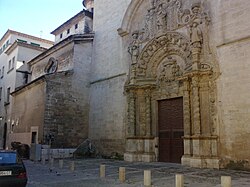
The social divide persisted well into the modern era. A 2001 survey by the University of the Balearic Islands revealed that 30% of Mallorcans would never marry a Chueta, and 5% did not wish to have them as friends, though secularism has reduced these pressures in the 21st century.
Summary of Converso History
| Period/Event | Key Action/Outcome | Impact |
|---|---|---|
| 1391 Riots | Mass violence led by Ferrand Martínez | First major wave of forced conversions |
| 1478 | Establishment of the Inquisition | Systematic surveillance of New Christians |
| 1492 | Alhambra Decree | Expulsion of Jews or forced conversion |
| Spanish Golden Age | Literary and artistic contributions | Shaping of modern Spanish culture |
| Modern Era | Genetic DNA tracing | Confirmation of widespread Jewish ancestry |
Notable Conversos and Descendants
- First Generation: Abraham Senior (Crown rabbi of Castile), Alfonso de Cartagena (Bishop and diplomat), and Paul of Burgos (Archbishop).
- Later Generations: Fernando de Rojas (Dramatist), Luis de León (Poet and scholar), and Saint Teresa of Ávila.
- Debated Ancestry: Some historians suggest Christopher Columbus and Miguel de Cervantes may have had converso roots.
Frequently Asked Questions
What is the difference between a Converso and a Crypto-Jew?
A converso is any Jew who converted to Catholicism or a descendant of such a convert. A Crypto-Jew is a specific type of converso who secretly continued to practice Judaism while publicly appearing to be Catholic.
Why was the Spanish Inquisition created?
The Inquisition was established in 1478 to ensure that New Christians (conversos) were sincere in their conversion and were not secretly practicing Jewish rites, which was viewed as heresy.
How did the Alhambra Decree affect the Jewish population?
The 1492 decree forced Jews to either leave Spain or convert to Catholicism. This resulted in approximately 40,000 to 100,000 expulsions and over 200,000 conversions.
Who are the Chuetas?
The Chuetas are descendants of Jewish converts in the Balearic Islands, particularly Mallorca, who faced social stigmatization and discrimination for centuries despite their conversion to Christianity.
Is there evidence of Converso ancestry in Latin America?
Yes. Genetic studies published in Nature Communications suggest that up to 23% of Latin Americans may have Near Eastern/Jewish ancestry, likely due to conversos migrating to the New World to escape the Inquisition.