Marine Life: The Biological Diversity of Earth's Oceans
Marine life encompasses all organisms inhabiting salt water environments. This vast biological network includes aquatic animals, plants, algae, fungi, protists, single-celled microorganisms, and viruses. These organisms thrive in a variety of saline habitats, ranging from the open oceans and marginal seas to the brackish waters of estuaries, lagoons, and coastal wetlands.
As of 2023, scientists have documented more than 242,000 marine species, though estimates suggest up to two million species remain undiscovered. With an average of 2,300 new species described annually, the study of these organisms is a dynamic intersection of marine biology and biological oceanography.
By volume, the oceans provide approximately 90% of the living space on Earth. They have served as the cradle of life and vital sanctuaries throughout geological history.
![Killer whales (orcas) are highly visible marine apex predators that hunt many large species. However, most marine activity takes place among microscopic organisms that cannot be seen individually with the naked eye, such as marine bacteria and phytoplankton.[1]](/images/32/0b/320b47280c6ff25ef81e4ba289731741fb378b07ff7dde6a724a26980c9d1ed8.jpg)
Key Facts
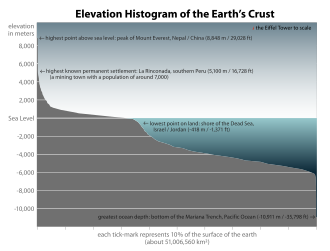
- Living Space: Oceans account for about 90% of the habitable volume on Earth.
- Biomass: Marine microorganisms are estimated to constitute between 70% and 90% of total marine biomass.
- Species Count: Over 242,000 species are documented, with millions more potentially awaiting discovery.
- Size Range: Organisms range from phytoplankton (0.02 micrometers) to the blue whale (up to 33 meters).
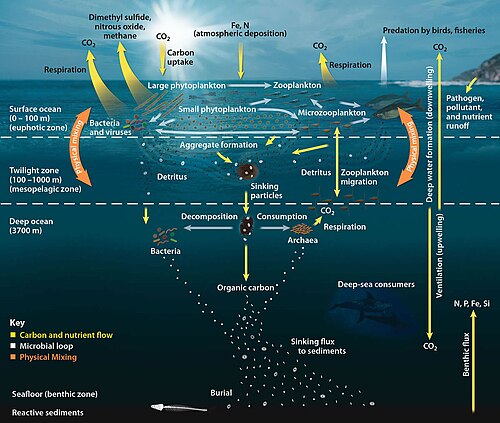
- Climate Impact: Primary producers like cyanobacteria sequester carbon and produce oxygen via photosynthesis.
The Evolution of Ocean Life
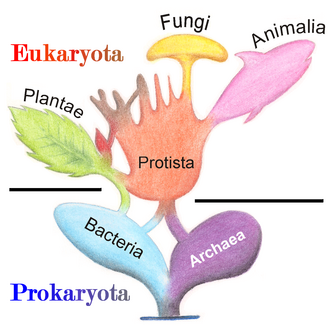
The earliest known life forms evolved as anaerobic prokaryotes (bacteria and archaea) around deep-sea hydrothermal vents during the Archean eon. These organisms lived without oxygen before the emergence of photoautotrophs, which allowed microbial mats to expand into shallow waters.
A pivotal moment occurred during the early Proterozoic with the Great Oxygenation Event. This shift in marine chemistry caused widespread extinction among anaerobes but facilitated the evolution of eukaryotes (organisms with complex cells) through symbiogenesis—a process where surviving anaerobes and aerobes merged.
![Evolutionary tree showing the divergence of modern species from their common ancestor in the centre.[58] The three domains are coloured, with bacteria blue, archaea green and eukaryotes red.](/images/5e/06/5e06f742cc8b3cbf35b3df77d77ebbb01bb18f66d00e2b43b32dd9ade66f6ec4.png)
From the Avalon to the Cambrian Explosion
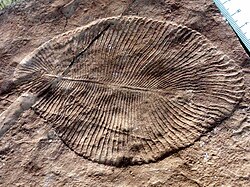
Complex life emerged from marine eukaryotes during the Neoproterozoic, leading to the Avalon Explosion, characterized by sessile (stationary) macrofauna. This was followed by the more prominent Cambrian Explosion in the early Phanerozoic, which saw the rise of actively moving eumetazoans.
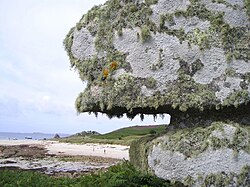
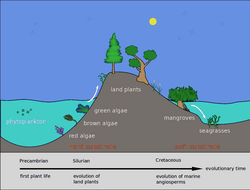
These marine pioneers eventually expanded into fresh waters. During the Ordovician, fungi and green algae washed ashore, and by the Silurian and Devonian periods, they expanded inland, creating the foundation for terrestrial ecosystems.
The Spectrum of Marine Organisms
Microorganisms and Cellular Life
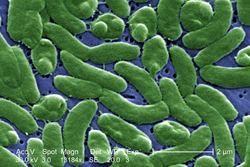
The ocean is dominated by microscopic life. This includes viruses, such as cyanophages that infect cyanobacteria, and prokaryotes like the giant bacterium Thiomargarita namibiensis and methane-producing archaea.
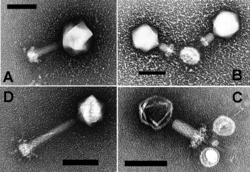
Protists represent a diverse group of eukaryotic microorganisms. They are categorized by how they obtain nutrients:
- Plant-like: Algae that use photosynthesis.
- Animal-like: Protozoans that consume other organisms.
- Fungus-like: Saprotrophic slime moulds that feed on decaying matter.
- Mixotropes: Organisms that combine multiple feeding strategies.

The Rise of Marine Animals
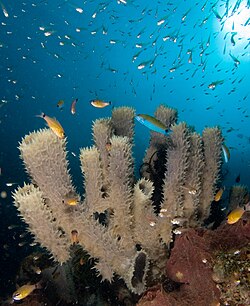
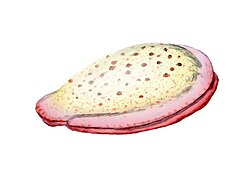
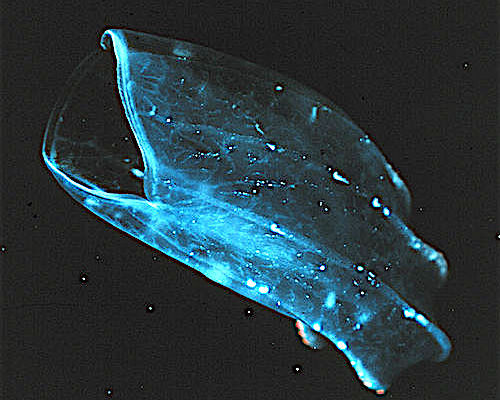
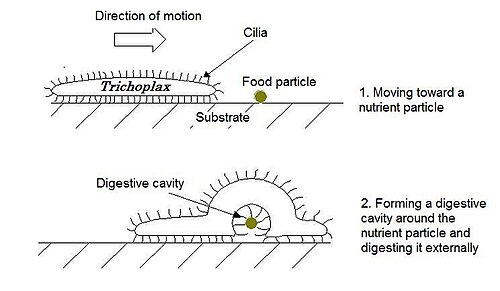
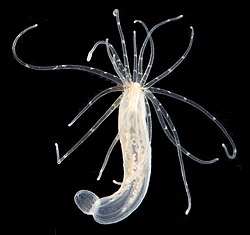
Animal evolution began with simple forms. Sponges are among the most basal animals, lacking nervous, digestive, or circulatory systems. Ctenophores (comb jellies) and cnidarians (such as sea anemones) followed, with cnidarians being the first to organize cells into tissues.
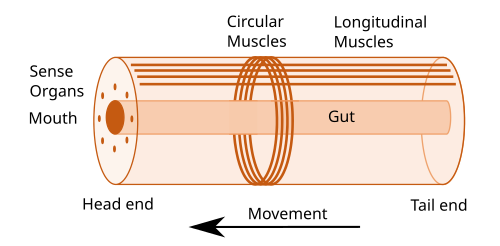
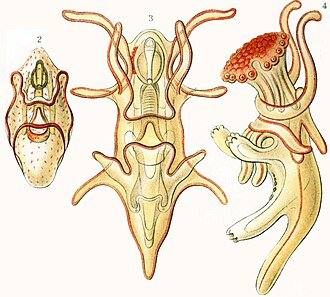
The evolution of the bilaterian body plan—characterized by a head, tail, and symmetrical sides—allowed for more complex movement and sensory development. This led to a vast array of phyla, including molluscs, arthropods, and echinoderms.
Vertebrates and Tetrapods
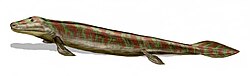
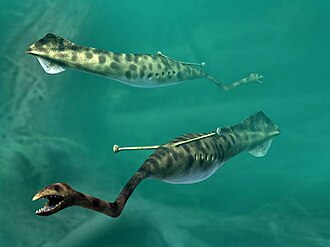
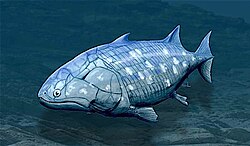
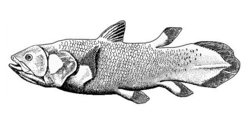
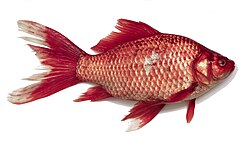
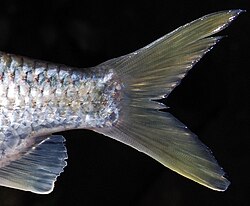
Chordates evolved from invertebrate ancestors, eventually leading to fish. This progression moved from jawless fish to cartilaginous fish (like manta rays) and bony fish. Some lobe-finned fish, such as Tiktaalik, developed limb-like fins that enabled the transition to land, paving the way for tetrapods.
Ecosystems and Trophic Interactions
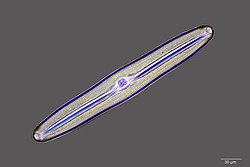
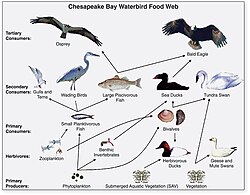
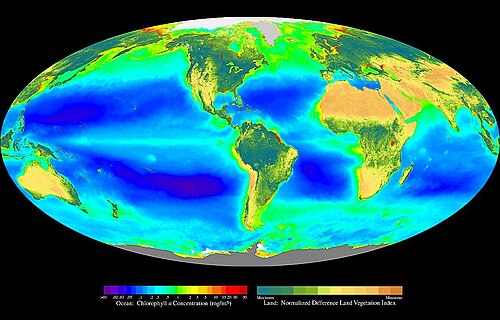
Marine life is organized into complex food webs. At the base are primary producers, mainly cyanobacteria and chloroplastic algae. Diatoms alone account for 50% of the ocean's primary production.
Plankton and the Pelagic Zone
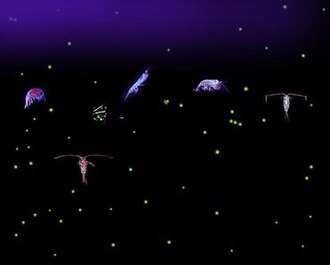
Plankton are organisms that drift with currents. They are divided into phytoplankton (photosynthetic) and zooplankton (animal-like). Some organisms, known as mixoplankton, can function as both.
Keystone Species and Productivity
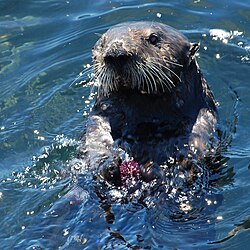
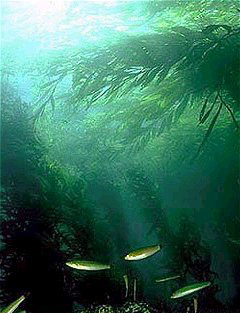
Certain species play a disproportionate role in their environment. For example, sea otters act as a keystone species by controlling sea urchin populations, which protects kelp forests—some of the most productive ecosystems on Earth.
Biogeochemical Contributions
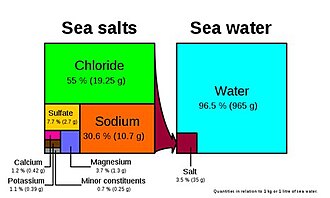
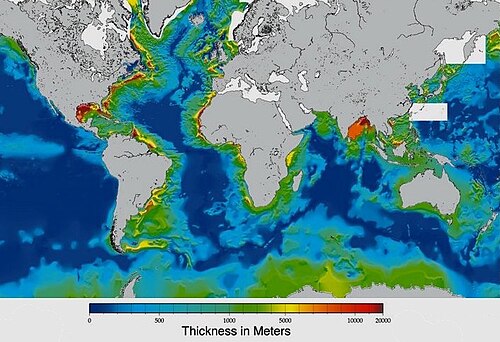
Marine life significantly influences the planet's chemistry. Through photosynthesis, marine organisms sequester carbon and release oxygen. Furthermore, the remains of microscopic organisms create biogenic ooze on the ocean floor, which eventually forms sedimentary rock.
| Ooze Type | Mineral Form | Responsible Protist | Skeleton Name |
|---|---|---|---|
| Siliceous | SiO2 (Quartz/Opal) | Diatoms, Radiolarians | Frustule / Skeleton |
| Calcareous | CaCO3 (Calcite/Aragonite) | Foraminiferans, Coccolithophores | Test / Coccolith |
Frequently Asked Questions
![Taxonomic biodiversity of accepted marine species, according to WoRMS, 18 October 2019.[198][199]](/images/5f/95/5f95b682434af77aea855f8e03929d3838568f013a5a4de7538f3796c6d54fa5.png)
![Ikaria wariootia, an early bilaterian[244]](/images/6f/13/6f136f3a6dc2c41608553c890e82baf9b18318bc60557a4c207e7bc174a42152.jpg)
![First known air-breathing animal to colonise land, the millipede Pneumodesmus newmani,[273] lived in the Early Devonian.[274]](/images/1c/6c/1c6cf579a68ff96581e5695bf0f81c5ffbfc892e05e617e5198c6a95e62a9534.jpg)
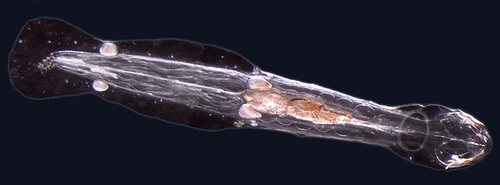
![The lancelet, like all cephalochordates, has a head. Adult lancelets retain the four key features of chordates: a notochord, a dorsal hollow nerve cord, pharyngeal slits, and a post-anal tail. Water from the mouth enters the pharyngeal slits, which filter out food particles. The filtered water then collects in the atrium and exits through the atriopore.[296]](/images/1f/22/1f227b09fb3e91e86544bebe3c48d350f44985c914929fac50581732528c2f0c.jpg)
![In chordates, the four above labelled common features appear at some point during development.[291]](/images/16/53/1653e2172ca00e839e3040f6a3524da2ffc0b0d8a52be4916a6f3e4ece028869.png)
![Marine food web: Mixoplankton paradigm[409]](/images/fc/2b/fc2b8c83f69e83893d425a1ca10dbc52e8b534943b616d76955f34a22b5e5ec3.jpg)
![Global cumulative human impact on the ocean[422]](/images/95/d7/95d71532cf858858ea1c62d58df222b4833c71e3ab197c82b9895c5f0b50ed68.png)
![Apparent marine fossil diversity during the Phanerozoic[424]](/images/0c/d4/0cd43d1f5eb36402afd36e264049f7745f562e7a95f0ab80befc32ce646def59.webp)
How much of Earth's living space is provided by the ocean?
Oceans provide approximately 90% of the total living space on Earth by volume.
What is the difference between phytoplankton and zooplankton?
Phytoplankton are primary producers that use photosynthesis to create energy, while zooplankton are heterotrophic organisms that consume other plankton or organic matter.
What was the Cambrian Explosion?
The Cambrian Explosion was a major evolutionary radiation event in the early Phanerozoic eon where actively moving eumetazoans (animals) became prevalent in the oceans.
What are keystone species in a marine context?
Keystone species are organisms that have a disproportionately large effect on their natural environment relative to their abundance, such as sea otters controlling urchin populations to maintain kelp forests.
How do marine organisms contribute to land formation?
Certain organisms, most notably reef-building corals, create massive calcium carbonate structures that accumulate over time to form reefs and, in some cases, new land.