Malay People: History, Culture, and the Legacy of the Malay World
Malay People: History, Culture, and the Legacy of the Malay World The Malay people are an Austronesian ethnic group with a profound historical presence across Southeast Asia. With a globa...
Malay People: History, Culture, and the Legacy of the Malay World
The Malay people are an Austronesian ethnic group with a profound historical presence across Southeast Asia. With a global population exceeding 30 million, they are primarily concentrated in the "Malay world," spanning Malaysia, Indonesia, Thailand, Singapore, and Brunei. Their identity is a rich tapestry woven from ancient maritime empires, spiritual transformations, and a resilient cultural heritage that continues to influence the sociocultural framework of the region today.
From the early civilizations of the Bujang Valley to the sophisticated courts of the Malacca Sultanate, the Malay experience is defined by its adaptability and its role as a bridge between diverse global civilizations.
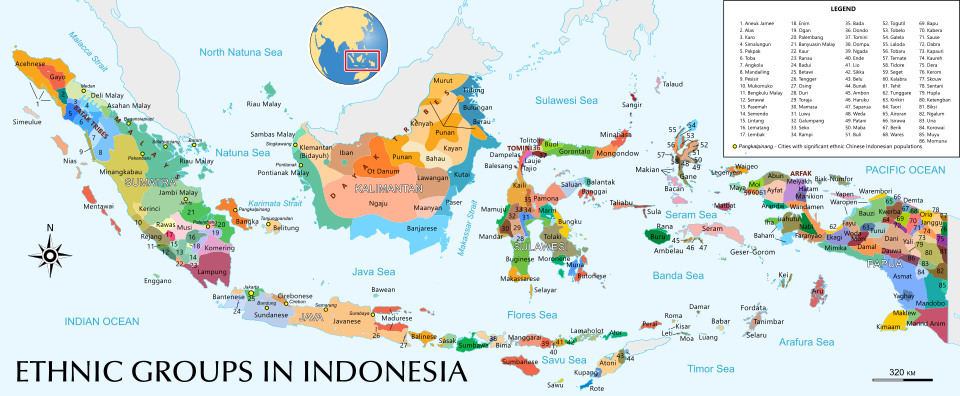
The realm of Malays is depicted in green and other related sub-ethnic groups are rendered in darker or lighter green.
Key Facts
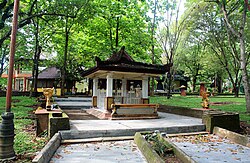
Bukit Seguntang in Palembang. According to Sejarah Melayu, the hill recorded the advent of Sang Sapurba, a legendary progenitor for various Malay royal houses in Sumatra, Malay Peninsula and Borneo.
Total Population: Over 30 million people globally.
Primary Regions: Malaysia (17.6 million), Indonesia (8.5 million), and Thailand (2.1 million).
Language: Native Malay (Bahasa Melayu) and Indonesian.
Religion: Predominantly Sunni Islam.
Core Identity: Historically linked to maritime trade and powerful sultanates.
Historical Evolution and Ancient Realms
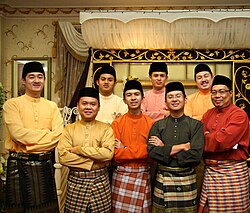
A group of men from Brunei Darussalam in the Cekak Musang type, worn together with the songket (far left) and kain sarong
The origins of the Malay people are linked to Austronesian migrations. Early historical records highlight the emergence of powerful Buddhist and Hindu-influenced kingdoms. One of the most significant was Srivijaya, a maritime empire based in Palembang that dominated trade between the 7th and 13th centuries.
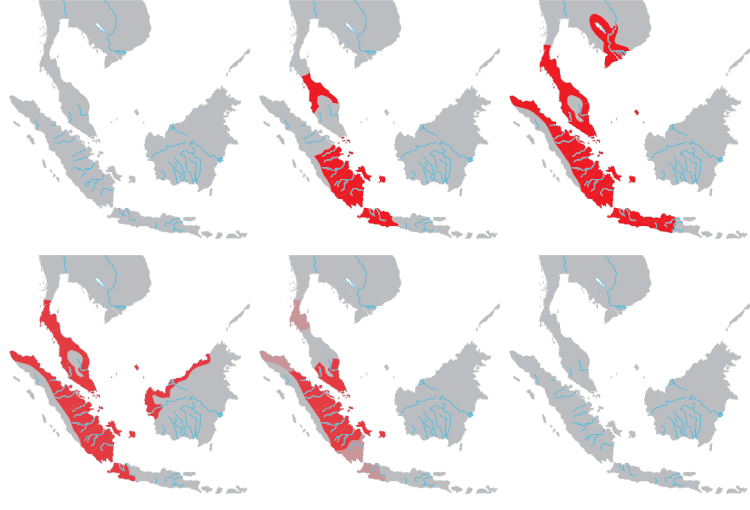
The timeline of Srivijayan expansion from Palembang between the 7th and 13th centuries; the state would subsequently be known as Melayu Kingdom before its demise. By the 14th century, a Palembangese-born prince, Parameswara, would later establish the Kingdom of Malacca, bringing the old Palembangese courts traditions and identity into the newfound state.
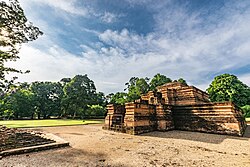
Following Srivijaya, the Melayu Kingdom rose to prominence. The Muaro Jambi Temple Compounds serve as a testament to the complex building systems developed during this era, reflecting the wealth and urban sophistication of the pre-Islamic period.
Muaro Jambi Temple Compounds in Jambi, historically linked to the pre-Islamic Melayu Kingdom. The Melayu-Srivijayans were known to construct complex building system in its capital, major cities and important urban centres.
The Rise of the Malacca Sultanate
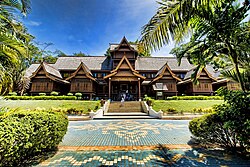
In the 15th century, the Kingdom of Malacca was established by Parameswara, a prince born in Palembang. Malacca became a pivotal center for trade and the spread of Islam, creating a sociocultural framework that remains influential in modern Malay states. The architecture of this era, characterized by grand palaces, is preserved in historical records like the Malay Annals.
Replica of the Malacca Sultanate's Palace, which was built from information and data obtained from the Malay Annals. This historical document had references to the construction and the architecture of palaces during the era of Sultan Mansur Shah, who ruled from 1458 to 1477.
Colonialism and Nationalism
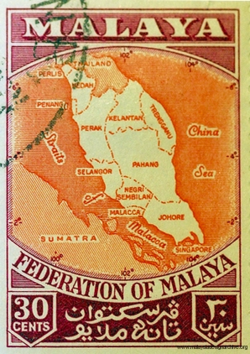
The Malay world eventually faced European expansion. Brunei defended its sovereignty during the Castilian War (1578–1580), while other regions fell under Dutch and British influence. This era of colonization sparked strong independence movements, such as those in the Riau-Lingga Sultanate and various Patani Malay kingdoms, eventually leading to the formation of the Federation of Malaya, which achieved independence in 1957.
Federation of Malaya's commemorative stamp issued in 1957. The semi-independent federation was formed in 1948 from nine Malay states and two British Straits Settlements. It achieved independence in 1957.
Cultural Heritage and Traditions
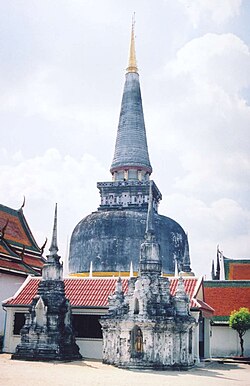
Chedi Phra Borommathat, a stupa located in Nakhon Si Thammarat, Thailand. The temple witnessed the rise and fall of Tambralinga, a powerful Buddhist kingdom that managed to conquer Jaffna kingdom in Sri Lanka.
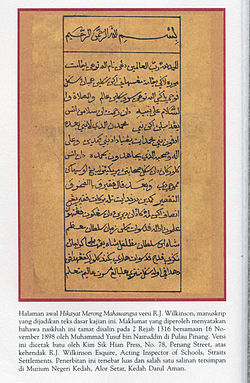
Malay culture is a synthesis of indigenous Austronesian roots, Indian influences, and Islamic values. This is most evident in their language, Bahasa Melayu, and their literature. Ancient texts like the Hikayat Merong Mahawangsa (Kedah Annals) chronicle the foundation of early states and royal bloodlines.
Hikayat Merong Mahawangsa in Jawi text. Also known as the Kedah Annals, it is an ancient Malay literature that chronicles the bloodline of Merong Mahawangsa and the foundation of Kedah.
Arts and Performing Arts
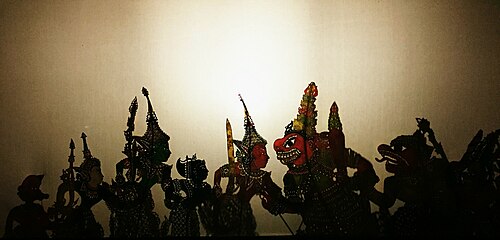
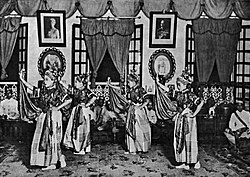
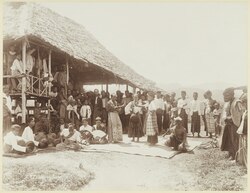
The Malays possess a diverse array of performing arts. Mak Yong, a traditional dance-drama, is recognized by UNESCO as a masterpiece of the oral and intangible heritage of humanity. Other notable traditions include Wayang Kulit (shadow play) and the rhythmic Joget Gamelan.
A troupe of Siamese Malay dancers performing the Mak Yong (c. 19th century). In 2005, it received recognition as being among the masterpieces of the oral and intangible heritage of humanity by UNESCO.
Traditional Attire and Craftsmanship
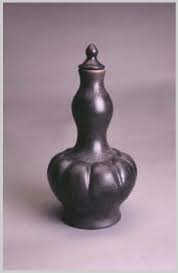
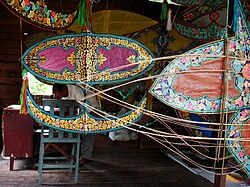
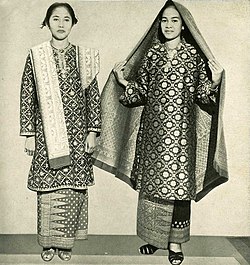
Traditional dress is a key marker of identity. Men typically wear the Baju Melayu with a songkok (cap) and songket (hand-woven fabric), while women wear the Baju Kurung. Craftsmanship is also highly valued, seen in the production of Labu Sayong (traditional pottery) and the intricate construction of Wau (traditional kites).
Ladies from Palembang clad in their traditional attire, known as Baju Kurung made from Songket. The dress is commonly associated with women of Malay extraction.
Martial Arts and Weaponry
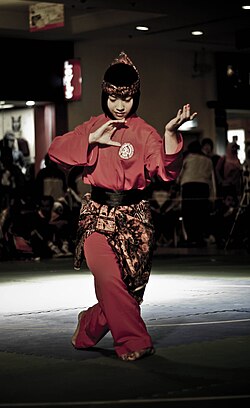
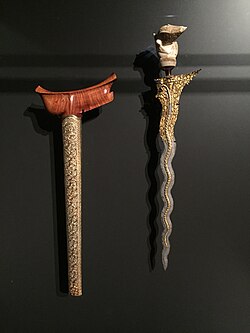
The Keris, an asymmetrical dagger, is more than a weapon; it is a symbol of social status and spiritual power. This is complemented by Silat, a traditional martial art practiced across the Malay world for self-defense and cultural expression.
A Malay Keris, with its sheath on the left. This particular dagger was historically belonged to a Malay aristocrat from Sumatra.
Regional Sub-Ethnic Groups
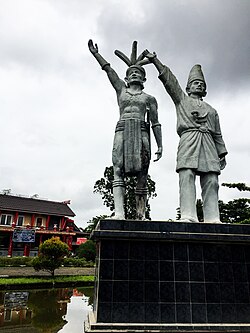
The "Dayak-Malay" brotherhood monument in West Kalimantan Provincial Museum, Pontianak, Indonesia
The Malay identity is not monolithic but consists of various sub-ethnic groups shaped by geography and assimilation. These include the Buginese-Malays, Javanese-Malays, and Minangkabau-Malays, as well as regional groups from Sarawak, Kedah, and Patani.
Significant Malay Sub-Ethnic Groups and Historical Realms
Ethnic Group
Key Historical Realms
Primary Regions
Palembang Malays
Srivijaya, Palembang Sultanate
South Sumatra
Malaccan Malays
Malacca Sultanate
Malacca
Bruneian Malays
Brunei Empire, Brunei Sultanate
Brunei, Sabah, Sarawak
Patani Malays
Pattani Sultanate, Reman Kingdom
Southern Thailand, Northern Malaysia
Johorean Malays
Johor Sultanate
Johor
West Kalimantan Malays
Pontianak Sultanate, Sambas Sultanate
West Kalimantan
Frequently Asked Questions
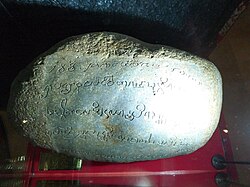
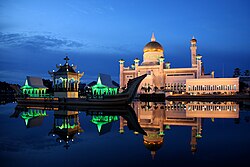
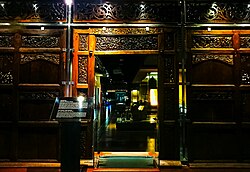
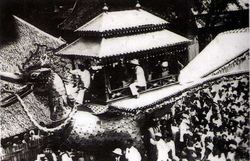
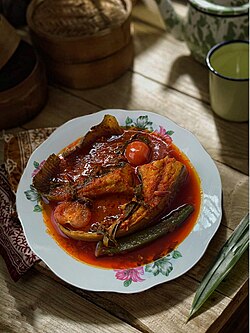
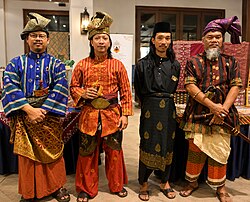
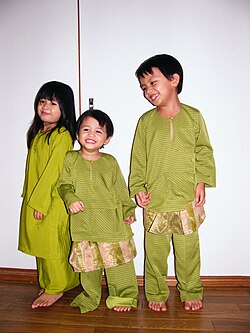
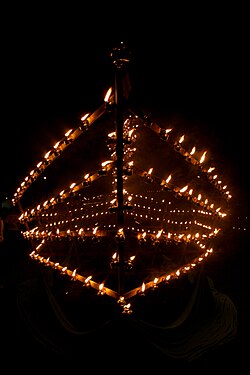
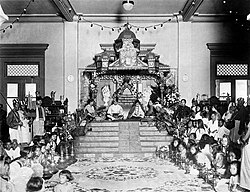
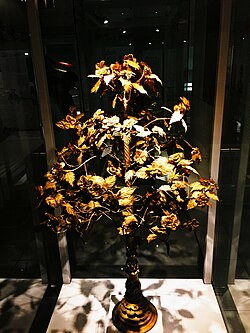
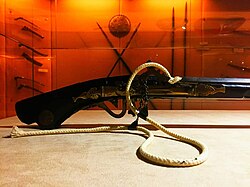
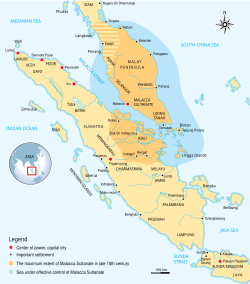
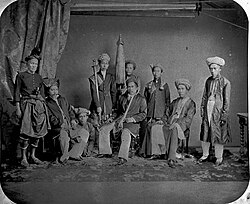
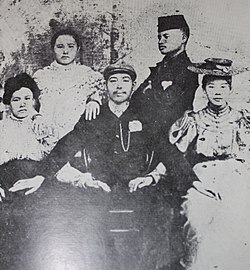
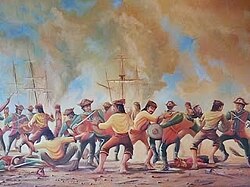
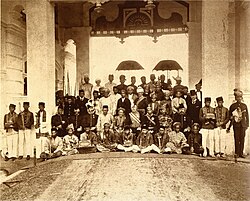
The extent of the Malaccan Sultanate in the 15th century, the legacy of the Malaccan court can be strongly witnessed in the construction of the Malay sociocultural framework until today.The reigning elite of the Riau-Lingga Sultanate in 1867, predominantly of Bugis-Malay descent. The sultanate would be abolished almost half a century later in 1911 by the Dutch powers, following its strong independence movement against the colonial government.Tuan Lebeh (seated, in the middle), the Long Raya or Raja Muda (crown prince) of the Kingdom of Reman in 1899. The State of Reman was abolished by the Rattanakosin Kingdom alongside various other Patani Malay kingdoms that revolted for independence in the early 1902 including Pattani, Saiburi, Nongchik, Yaring, Yala, Legeh and Teluban.Scene from the Castilian War (1578–1580) as Brunei defended its sovereignty against European expansionThe Malay Rulers and nobilities of Negeri Sembilan, Pahang, Perak and Selangor with British colonial officers during the first Durbar in Istana Negara, Kuala Kangsar, Perak, Federated Malay States, 1897The bronze mural of the legendary Malay warrior, Hang Tuah with his renowned quote Ta' Melayu Hilang Di-Dunia (Malay for "Never shall the Malays vanish from the face of the earth") written on the top. The quote is a famous rallying cry for Malay nationalism.[107][108]The Kedukan Bukit Inscription written in Pallava script. Dating back from 683, it is one of the oldest surviving Malay written artefact.A Kelantan-Patani styled Wayang Kulit (Shadow play) that narrated the heroic tale of Hikayat Seri RamaSultan Omar Ali Saifuddin Mosque in Brunei on the eve of Ramadhan. The wealthy kingdom adopted Melayu Islam Beraja (Malay Islamic Monarchy) as the national philosophy since its independence in 1984.A wall panel adorned with various floral motives from the Setul Mambang Segara palatial residence as seen in the Muzium Negara. Setul was a historical Malay kingdom that existed between 1808 and 1915 in the northern Malay Peninsula.Burung Petala Indra, a giant mythical bird constructed for the grand circumcision parade of the Kelantanese princeAn ebony-coloured Labu Sayong, a classic Malay jar from Kuala Kangsar, Perak, MalaysiaAsam pedas, a sour and spicy gulaiJoget Gamelan performance, 1937Malay men in busana Melayu, a traditional style of Malay attireMalay children wearing traditional dress during Eid al-FitrRows of Pelita (oil lamps) lighted during Malam Tujuh Likur (the 27th night of Ramadhan), the oil lamps are traditionally used to illuminate homes and the streets during the Ramadhan. Seen here in Muar, Johor, Malaysia.The coronation ceremony between Tengku Otteman, as the Tengku Mahkota (Crown Prince) of Deli Sultanate, Dutch East Indies; with his wife, Raja Amnah, a member of Perak Royalty as Tengku Puan Indera in 1925A female silat practitioner from SingaporeThe Bunga Mas, National Museum of Malaysia. The Bunga Mas was offered by the northern Malay states of Terengganu, Kelantan, Kedah, Pattani, Nong Chik, Yala, Rangae, Kubang Pasu and Setul to the King of Ayutthaya (Siam) as a symbol of allegiance.The trigger mechanism of an Istinggar, a classical Malay matchlock gun as displayed in Muzium Warisan Melayu (Malay Heritage Museum), Serdang, SelangorA Wau-maker's workshop in Kelantan, Malaysia. This peculiar type of kite can be found in the northeast coast of the Malay Peninsula.
What is the primary religion of the Malay people?
The Malay people are predominantly followers of Sunni Islam, which has deeply influenced their laws, customs, and social structures.
What is the significance of the Keris?
The Keris is a traditional asymmetrical dagger that serves as a symbol of heroism, nobility, and cultural identity within Malay society.
Which ancient empire is most closely linked to early Malay history?
Srivijaya, based in Palembang, was one of the most influential early empires, controlling maritime trade and spreading Buddhist and Hindu influences before the arrival of Islam.
What is the national philosophy of Brunei?
Brunei adopts the philosophy of Melayu Islam Beraja, which translates to Malay Islamic Monarchy.
How is the Malay language distributed?
The native language is Malay (Bahasa Melayu), which exists in various forms, including Indonesian in Indonesia, and is spoken across Malaysia, Singapore, and Brunei.
![The bronze mural of the legendary Malay warrior, Hang Tuah with his renowned quote Ta' Melayu Hilang Di-Dunia (Malay for "Never shall the Malays vanish from the face of the earth") written on the top. The quote is a famous rallying cry for Malay nationalism.[107][108]](/images/85/66/8566137954c851a681cd0df156ddf31600a8b9b3dbdfa52ca0901eb44c141aec.jpg)