Mainstream Jazz: Evolution and Influence of the Swing Era
The term mainstream jazz serves as a window into the shifting tastes of music listeners and the evolution of the genre. Originally coined in the 1950s by music journalist Stanley Dance, the term was used to categorize the popular jazz styles of the Swing Era. In Dance's original definition, mainstream jazz specifically excluded bebop, focusing instead on the accessible, rhythmic sounds that dominated the airwaves and dance halls.
Over time, the definition of what is considered "mainstream" has evolved. In a general sense, mainstream jazz refers to the styles that were most popular during a specific period. For instance, during the Swing era, big band music was the primary sound target audiences sought. While bebop—a more complex and experimental style of jazz—was introduced during this time, it took longer for general audiences to develop an ear for its intricacies.
Key Facts
- The term "mainstream jazz" was coined by journalist Stanley Dance in the 1950s.
- Originally, the term referred to Swing Era music and excluded bebop.
- Mainstream jazz is generally defined by the popularity of the style at a given time.
- During the 1950s and 1960s, jazz was a central element of popular culture, appearing frequently in radio, film, and television.
Influential Musicians of the Mainstream Era
Several key figures shaped the sound of mainstream jazz, either by defining the big band style or by bridging the gap between swing and later developments.
The Architects of Swing
Duke Ellington was a pivotal influence on mainstream jazz. His compositions during the swing era were celebrated for their sophistication and adherence to the musical standards of the time rather than breaking rules.
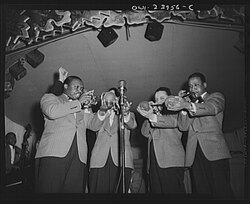
Other essential contributors included Benny Carter, who was a major influence on the big band style, and Johnny Hodges, a member of Duke Ellington's Orchestra whose distinct voice became a hallmark of the ensemble's sound.
Bridging the Gap to Bebop
Some musicians operated within the mainstream while paving the way for future innovations. Coleman Hawkins made significant contributions to big band music before eventually integrating bebop elements into his own style.
Similarly, Roy Eldridge is recognized as one of the most influential musicians of both the swing era and the development of bebop. A trumpet player influenced by Louis Armstrong, Eldridge's work served as a critical link between these two jazz epochs.
Mainstream Jazz in Popular Culture
During the 1950s and 1960s, jazz occupied a prominent place in the cultural zeitgeist. It was not merely a niche interest but a mainstream component of pop culture. This visibility was bolstered by the media of the era, as jazz was a staple on the radio and was frequently incorporated into Hollywood productions for both television and film.
| Musician | Primary Contribution/Influence |
|---|---|
| Duke Ellington | Pivotal influence on swing era mainstream jazz |
| Benny Carter | Major influence on the big band style |
| Johnny Hodges | Key voice within the Duke Ellington Orchestra |
| Coleman Hawkins | Big band contributor who later adopted bebop |
| Roy Eldridge | Influential in both swing and the rise of bebop |
Frequently Asked Questions
Who coined the term "mainstream jazz"?
The term was coined in the 1950s by music journalist Stanley Dance.
Did the original definition of mainstream jazz include bebop?
No, Stanley Dance's original definition specifically excluded the bebop style, focusing instead on the popular jazz of the Swing Era.
How has the definition of mainstream jazz changed over time?
The definition has evolved alongside the music itself. Generally, it now refers to whatever style of jazz was most popular with target audiences during a specific era.
How was jazz integrated into popular culture in the mid-20th century?
In the 1950s and 1960s, jazz was widely played on the radio and was frequently used by Hollywood in films and television shows.
Which trumpet player influenced Roy Eldridge?
Roy Eldridge's trumpet playing was influenced by Louis Armstrong.