Coleman Hawkins: The Father of the Jazz Tenor Saxophone
Before the 1920s, the tenor saxophone was rarely viewed as a serious instrument for jazz improvisation. While other musicians played it, the style was often described as "mooing" or lacking sophistication. This changed with the arrival of Coleman Randolph Hawkins, a virtuoso who transformed the instrument into a powerhouse of emotional expression and harmonic complexity.
Known by the nicknames "Hawk" and "Bean," Hawkins did not merely play the saxophone; he redefined how it was used in jazz. Rather than imitating the clarinet techniques common at the time, he developed a rich, vibrato-laden tonal style and a sophisticated approach to arpeggios that influenced nearly every tenor player who followed him.
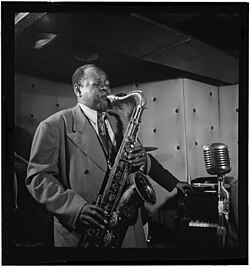
Key Facts
- Primary Instrument: Tenor saxophone (also played bass saxophone and clarinet).
- Musical Legacy: Credited with establishing the tenor saxophone as a primary jazz solo instrument.
- Genre Influence: A pivotal figure in both the Swing era and the early development of Bebop.
- Landmark Recording: His 1939 version of "Body and Soul" is considered a cornerstone of jazz improvisation.
- Active Years: 1921–1969.
Early Life and Musical Foundations
Born in Saint Joseph, Missouri, in 1904, Coleman Hawkins was immersed in music from a young age. He began studying piano at age four and the cello at age seven before switching to the saxophone at age nine. By fourteen, he was already performing across eastern Kansas.
Hawkins's formal education included high school in Chicago and Topeka, Kansas. He furthered his musical knowledge by studying harmony and composition for two years at Washburn College. This deep understanding of music theory likely contributed to his nickname "Bean," which some believe refers to his immense knowledge of chords.
The Rise of a Virtuoso (1921–1939)
Hawkins's professional journey began in 1921 with Mamie Smith's Jazz Hounds. However, his most significant early tenure was with the Fletcher Henderson Orchestra, where he remained until 1934. During this time, his style evolved significantly, particularly during Louis Armstrong's brief tenure with the band from 1924 to 1925.
In 1934, Hawkins moved to Europe, touring as a soloist and collaborating with legends like Django Reinhardt and Benny Carter in Paris. While he was abroad, other tenor players like Lester Young gained prominence in the U.S., but Hawkins returned in 1939 to reclaim his position at the forefront of the genre.
On October 11, 1939, Hawkins recorded "Body and Soul." In this landmark session, he largely ignored the original melody, instead utilizing upper chord intervals and passing chords. This approach is often cited as one of the early "tremors" of bebop—a complex, fast-tempo style of jazz that emerged in the 1940s.
Pioneering Bebop and Solo Artistry
Throughout the 1940s, Hawkins continued to push boundaries. On February 16, 1944, he led what is generally regarded as the first-ever bebop recording session, featuring innovators such as Dizzy Gillespie and Max Roach. He also collaborated with Thelonious Monk, showing a lifelong commitment to modern styles.
Driven by a love for classical music—specifically the works of Bach and Pablo Casals—Hawkins began exploring solo performances. He introduced unaccompanied introductions and codas to his songs, leading to his 1945 Solo Sessions. His innovative spirit earned him the title "the Picasso of Jazz" from producer Harry Lim.
Later Career and Final Years
In the 1950s and 60s, Hawkins remained a prolific collaborator. He recorded with Ben Webster, Sonny Rollins, and Duke Ellington. He also participated in Max Roach's We Insist! suite, which linked jazz with the burgeoning civil rights movement.
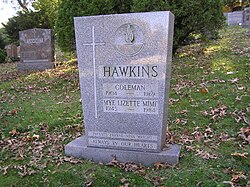
Despite his professional success, Hawkins's final years were marred by depression and heavy drinking. His recording output declined after 1963, and his final recording took place in 1967. He passed away from liver disease on May 19, 1969, in New York City.
Summary of Coleman Hawkins's Career
| Period | Key Affiliations / Milestones | Musical Contribution |
|---|---|---|
| 1921–1934 | Mamie Smith, Fletcher Henderson | Established tenor sax as a jazz solo instrument. |
| 1934–1939 | European Tour, Django Reinhardt | Expanded international influence and solo technique. |
| 1939–1944 | "Body and Soul", Early Bebop sessions | Shifted toward harmonic improvisation and bebop. |
| 1950s–1969 | Duke Ellington, Sonny Rollins, Thelonious Monk | Bridged traditional swing with modern jazz. |
Frequently Asked Questions
Why was Coleman Hawkins important to the saxophone?
Hawkins is credited with transforming the tenor saxophone from a novelty or accompaniment instrument into a primary jazz solo instrument. He moved away from imitating the clarinet and developed a unique, virtuosic approach based on arpeggios and a rich, emotional tone.
What is the significance of the recording "Body and Soul"?
Recorded in 1939, this track is a landmark of the swing era. Hawkins's decision to ignore the melody in favor of complex harmonic improvisation is seen as a precursor to the bebop movement.
What were the different nicknames for Coleman Hawkins?
He was most commonly known as "Hawk," but was also called "Bean." Theories for the latter nickname include his head shape, his frugality, or his extensive knowledge of musical chords.
Did Coleman Hawkins play instruments other than the tenor saxophone?
Yes. In his youth, he studied piano and cello. Professionally, he occasionally doubled on the clarinet and the bass saxophone.
How did he influence later jazz musicians?
His style influenced a vast generation of players, including Ben Webster and Don Byas, and subsequently impacted later musicians like Lucky Thompson and Paul Gonsalves. Even Miles Davis noted that hearing Hawkins taught him how to play ballads.