Charlie Parker: The Architect of Bebop Jazz
Charles Parker Jr., known globally by the nicknames Bird or Yardbird, was a transformative force in American music. As a virtuoso saxophonist, composer, and bandleader, Parker did not merely play jazz; he reinvented it. He was the primary architect of bebop, a sophisticated style of jazz defined by its rapid tempos, complex harmonies, and virtuosic technical demands.
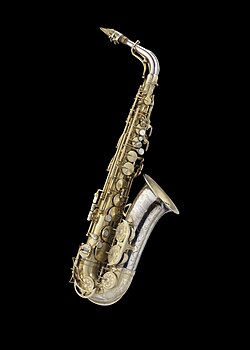
By introducing revolutionary concepts such as chord substitutions, new variants of altered chords, and rapid passing chords, Parker shifted jazz from the danceable rhythms of the swing era toward a more intellectual, listener-focused art form. While he played the tenor saxophone, he is most celebrated for his mastery of the alto saxophone.
Key Facts
- Full Name: Charles Parker Jr.
- Primary Instrument: Alto saxophone.
- Musical Contribution: Leading figure in the development of bebop.
- Active Years: 1937–1955.
- Major Collaborators: Dizzy Gillespie, Max Roach, and Miles Davis.
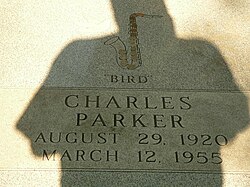
- Death: Passed away March 12, 1955, at the age of 34.
Early Life and Musical Foundations
Born on August 29, 1920, in Kansas City, Kansas, Parker was the son of Charles Parker Sr. and Adelaide "Addie" Bailey. His upbringing in Kansas City, Missouri, provided a rich cultural backdrop. His father, a Pullman waiter and chef, was also a pianist, singer, and dancer, providing early musical influence. His mother worked at a local Western Union office during the 1920s.
Parker's path to mastery was not immediate. After facing early setbacks in jam sessions, he committed himself to an intense period of "woodshedding"—a term for rigorous private practice. He reportedly practiced up to 15 hours a day for several years to master the art of improvisation.
The Rise of Bebop and Solo Career
Between 1939 and 1944, Parker developed the harmonic and rhythmic language that would define bebop. However, it was not until 1945, following the lift of the American Federation of Musicians' (AFM) recording ban, that his collaborations with musicians like Dizzy Gillespie and Max Roach reached a wider audience.
A pivotal moment occurred on June 22, 1945, during a concert at New York's Town Hall, which helped propel bebop into the mainstream of the jazz world. Throughout the late 1940s and early 1950s, Parker led influential quintets featuring legends such as Miles Davis and Bud Powell.
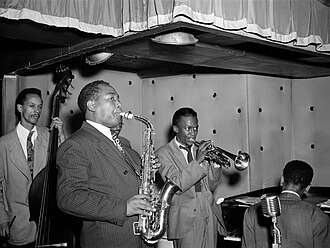
Despite his artistic success, Parker struggled with racial discrimination, which he felt limited his professional growth. His discography from this era is vast, spanning labels such as Savoy, Dial, Verve, and Mercury. Notable recordings include Bird and Diz (recorded with Gillespie and Thelonious Monk) and the acclaimed Charlie Parker with Strings.
Personal Struggles and Final Years
Parker's personal life was marked by turbulence and addiction. He was married twice—first to Rebecca Ruffin (1936–1939) and later to Doris June Sydnor (1948–1955)—and maintained a long-term partnership with Chan Berg, with whom he had two children.
The mid-1950s were a period of profound tragedy. The death of his daughter, Pree, from pneumonia in 1954 devastated him, leading to a suicide attempt after he was fired from the Birdland club in September of that year. His health continued to decline rapidly.
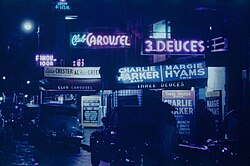
Parker's final performance took place on March 4, 1955, at Birdland, which ended in a heated argument among the musicians. He died a few days later on March 12, 1955, at the Stanhope Hotel in New York City. While the official causes of death were lobar pneumonia and a bleeding ulcer, he also suffered from advanced cirrhosis, a heart attack, and a seizure. His physical decline was so severe that the coroner mistakenly estimated his 34-year-old body to be between 50 and 60 years old.
Legacy and Honors
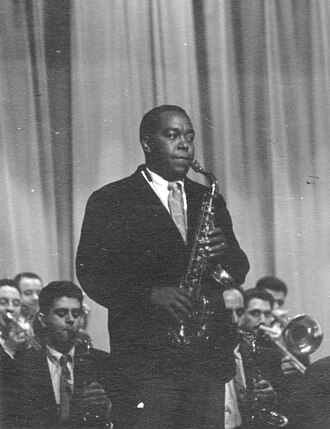
Charlie Parker's influence persists in nearly every facet of modern jazz. His residence at 151 Avenue B in Manhattan's East Village is now a New York City landmark and listed on the National Register of Historic Places. In his hometown of Kansas City, he is honored with the "Bird Lives" sculpture by Robert Graham.
!["Bird Lives" sculpture by Robert Graham in Kansas City, Missouri, dedicated March 1999[70]](/images/d4/49/d449d4348c5ddf5cbdb64abd1c8296c57c59b54617932c434f5d03cd3fb9ab04.jpg)
His artistic achievements have been recognized with a posthumous Grammy Award for Best Performance by a Soloist (1974) and inductions into the Grammy Hall of Fame and the Big Band and Jazz Hall of Fame. Literary critic Harold Bloom even included Parker's performances of "I Remember You" and "Parker's Mood" on his list of the greatest American art of the 20th century.
| Category | Details |
|---|---|
| Primary Genre | Bebop / Jazz |
| Key Instruments | Alto Saxophone, Tenor Saxophone |
| Major Labels | Savoy, Dial, Verve, Mercury, Esquire, Vogue, EMI Columbia |
| Notable Awards | Grammy Award (1974), Grammy Lifetime Achievement Award (1984) |
| Historic Site | 151 Avenue B, New York City |
Frequently Asked Questions
What is bebop and how did Charlie Parker influence it?
Bebop is a style of jazz characterized by fast tempos, virtuosic technique, and advanced harmonies. Charlie Parker influenced it by introducing revolutionary rhythmic and harmonic ideas, including chord substitutions and rapid passing chords, moving jazz away from dance music toward a complex art form.
Why was Charlie Parker nicknamed "Bird"?
He was commonly referred to as "Bird" or "Yardbird," nicknames that became synonymous with his identity as a jazz icon.
What were the causes of Charlie Parker's death?
The official causes of death were lobar pneumonia and a bleeding ulcer. However, he also suffered from advanced cirrhosis, a heart attack, and a seizure.
Which instruments did Charlie Parker play?
While he is most famous for his virtuosity on the alto saxophone, he also played the tenor saxophone.
Where can you find memorials to Charlie Parker today?
His former residence at 151 Avenue B is a New York City landmark. In Kansas City, Missouri, there is a 10-foot bronze head sculpture titled "Bird Lives" dedicated in 1999.