Magnetic Moment: Principles, Measurements, and Quantum Effects
In the study of electromagnetism, the magnetic moment is a fundamental physical quantity that characterizes the magnetic strength of small magnets. Whether dealing with a macroscopic current loop or a subatomic particle, the magnetic moment describes how an object interacts with an external magnetic field and the strength of the magnetic field it produces.
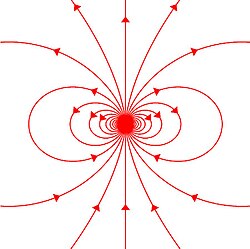
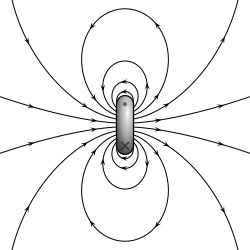
At its core, the magnetic moment expresses the magnetic force effect of a magnet. The magnetic field generated by a magnetic dipole is proportional to its magnetic dipole moment, and this field is symmetric about the direction of the moment. Notably, the strength of this field decreases as the inverse cube of the distance from the object.
Key Facts
- SI Unit: The standard unit is the Ampere-meter (A·m).
- Physical Nature: It is a vector quantity relating aligning torque to an external magnetic field.
- Field Decay: The magnetic field of a dipole decreases according to the inverse cube of the distance.
- Quantum Scale: On an atomic level, it is measured using the Bohr magneton or nuclear magneton.
- Sources: It arises from the motion of electric charges (currents) and the intrinsic spin of elementary particles.
Definition, Units, and Measurement
Defining the Magnetic Moment
The magnetic moment can be defined as a vector that relates the aligning torque (τ) acting on an object to the external magnetic field (B). Mathematically, this relationship is expressed as the torque being the cross product of the magnetic moment (m) and the magnetic field.
In thermodynamics, an alternative definition is used: the magnetic dipole moment is the negative gradient of the system's intrinsic energy (Uint) with respect to the external magnetic field. This intrinsic energy typically includes the system's self-field energy and internal workings, such as the kinetic and Coulomb potential energy of an electron in a hydrogen atom.
Units of Measurement
In the International System of Units (SI), the magnetic moment is measured in Ampere-meters (A·m). This is equivalent to other derived units such as Newton per Tesla (N/T) or Joules per Tesla (J/T). For quantum mechanical applications, scientists use the Bohr magneton (for electrons) and the nuclear magneton (for protons and neutrons).
How it is Measured
Devices known as magnetometers are typically used to measure magnetic moments. While some magnetometers measure the magnetic field directly, the magnetic moment can be calculated if the surrounding magnetic field is known with sufficient precision.
Effects of an External Magnetic Field
Torque and Precession
When an object with a magnetic dipole moment is placed in a uniform magnetic field, it experiences a torque that attempts to align the moment with the field. For subatomic particles like electrons or nuclei, this interaction causes them to precess—rotate around the field axis—at a specific frequency known as the Larmor frequency.
Force and Potential Energy
A magnetic moment in an external field possesses potential energy. If the external magnetic field is non-uniform (meaning it has a gradient), a physical force acts upon the magnetic moment. The calculation of this force varies slightly depending on whether the dipole is modeled as a current loop or as two opposite magnetic monopoles, though these models agree when there are no time-varying electrical fields or magnetic charges.
Magnetism and the Environment
Field Production
A magnetic dipole produces a magnetic field that depends on the strength and direction of its moment. Because the field follows an inverse cube law, it weakens rapidly as one moves away from the source. This relationship is governed by the vacuum permeability (μ0), a constant approximately equal to 4π × 10−7 H/m.
Interactions Between Dipoles
When two magnetic dipoles interact, they exert both force and torque on one another. The force depends on the gradient of the magnetic field produced by one dipole acting upon the other, while the torque depends on the relative orientation of their respective magnetic moments.
Theory of Magnetic Dipoles
Relation to Angular Momentum
There is a profound connection between a magnetic moment and angular momentum. Because the particles creating a current loop possess both charge and mass, both the magnetic moment and angular momentum increase with the rotation rate. The ratio between these two is called the gyromagnetic ratio.
In the quantum world, this is expressed via the g-factor. For example, an electron orbiting a nucleus has a g-factor of 1, while its intrinsic spin has a g-factor slightly larger than 2 (approximately 2.002319). This slight deviation is known as the anomalous magnetic dipole moment.
Atomic and Molecular Contributions
The net magnetic moment of any system is the vector sum of two primary sources: the motion of electric charges (orbital motion) and the intrinsic spin of elementary particles. In a hydrogen atom, the total moment is the sum of the electron's intrinsic moment, the electron's orbital motion, and the proton's intrinsic moment.
Molecules exhibit different magnetic behaviors based on their electron configuration:
- Paramagnetism: Strong magnetic moments caused by unpaired electron spins (e.g., dioxygen, O2).
- Diamagnetism: Weaker moments proportional to the external field, often seen in the ground state of electron orbitals (e.g., carbon dioxide, CO2).
Summary of Magnetic Properties
| Particle/System | Primary Source of Moment | Typical Unit/Scale | Key Characteristic |
|---|---|---|---|
| Electron | Intrinsic Spin | Bohr magneton | Antiparallel to spin |
| Proton/Neutron | Intrinsic Spin | Nuclear magneton | Much smaller than electron |
| O2 Molecule | Unpaired Electrons | Bohr magneton | Strongly Paramagnetic |
| CO2 Molecule | Electron Orbitals | Bohr magneton | Diamagnetic |
Intrinsic Moments of Elementary Particles
| Particle | Magnetic Moment (10−23 J·T−1) | Spin Quantum Number |
|---|---|---|
| Electron (e) | −9.284764 | 1/2 |
| Proton (H) | 14.106067 | 1/2 |
| Neutron (n) | −9.66236 | 1/2 |
| Muon (μ) | −44.904478 | 1/2 |
| Alpha particle (He) | 0 | 0 |
Frequently Asked Questions
What is the difference between a magnetic moment and a magnetic field?
The magnetic moment is an intrinsic property of an object (like a magnet or an electron) that describes its strength and orientation. The magnetic field is the actual influence that the magnetic moment exerts on the space surrounding it.
Why does the magnetic field of a dipole decrease as an inverse cube?
Unlike a single magnetic monopole (which would follow an inverse square law), a dipole consists of two opposite poles. As distance increases, the fields from the north and south poles nearly cancel each other out, leading to a faster decay of the net field, specifically proportional to 1/r³.
What is the Bohr magneton?
The Bohr magneton is a physical constant used as a natural unit for expressing the magnetic moment of an electron. It is based on the charge-to-mass ratio of the electron and the reduced Planck constant.
What causes paramagnetism in molecules?
Paramagnetism occurs when a molecule has one or more unpaired electrons. Because electrons have an intrinsic magnetic moment due to their spin, these unpaired spins create a net magnetic moment that aligns with an external magnetic field.
How does the g-factor affect the magnetic moment?
The g-factor is a dimensionless quantity that relates the magnetic moment of a particle to its angular momentum. It accounts for the specific internal structure and quantum effects of the particle; for instance, the electron's g-factor is slightly higher than 2 due to quantum electrodynamic effects.