Spin in Quantum Mechanics: The Intrinsic Angular Momentum of Particles
In the realm of quantum mechanics, spin is a fundamental property of elementary particles. Unlike the rotation of a spinning top in classical mechanics, spin is an intrinsic form of angular momentum. It is a built-in characteristic of particles—such as electrons, quarks, and photons—as well as composite particles like atomic nuclei, hadrons, and entire atoms.
Because spin is quantized, it does not vary continuously but exists in discrete values. To accurately model how spin interacts with the universe, physicists rely on relativistic quantum mechanics and quantum field theory.
Key Facts
- Intrinsic Property: Spin is an inherent form of angular momentum, not caused by physical rotation of a mass.
- Quantization: Spin values are discrete; particles are categorized as either fermions (half-integer spin) or bosons (integer spin).
- Pauli Exclusion Principle: This rule prevents two identical fermions from occupying the same quantum state simultaneously.
- Magnetic Moment: Charged particles with spin possess a magnetic moment, allowing them to interact with magnetic fields.
- Practical Use: Spin is the foundational principle behind MRI scans, NMR spectroscopy, and the operation of lasers.
The Discovery and Evidence of Spin
The existence of electron spin was first inferred through the Stern–Gerlach experiment. In this landmark study, silver atoms were observed to possess two discrete angular momenta, even though they had no orbital angular momentum (the momentum gained from moving around a center). This proved that the particles possessed an internal, intrinsic momentum.
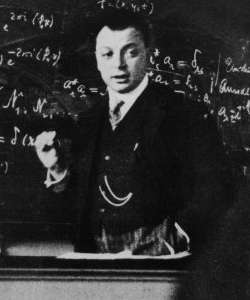
While the 1922 experiment provided the data, the correct explanation emerged in 1927. Researchers like Ronald G. J. Fraser and others demonstrated that the observed magnetic properties were due to electron spin rather than orbital motion. This discovery led to the development of the spin-statistics theorem, which links a particle's spin to its behavioral rules.
Fermions vs. Bosons
Particles are divided into two broad families based on their spin quantum numbers. This distinction determines how matter and forces behave in the universe.
Fermions
Fermions possess half-integer spins (such as 1/2, 3/2, 5/2). They obey Fermi–Dirac statistics and are governed by the Pauli exclusion principle, which states that no two identical fermions can share the same quantum numbers (position, velocity, and spin direction) at the same time. This principle is why matter occupies space and does not simply collapse.
Bosons
Bosons possess integer spins (such as 0, 1, 2). They follow Bose–Einstein statistics and do not have the restrictions of the exclusion principle. Consequently, bosons can "bunch together" in the same quantum state. This property is essential for the creation of lasers (where photons align in the same state) and the phenomenon of superconductivity.
It is important to note that composite particles can have different spins than their components. For example, a helium-4 atom consists of fermions (electrons and quarks) but has a total spin of 0, causing it to behave as a boson.
| Feature | Fermions | Bosons |
|---|---|---|
| Spin Values | Half-integer (1/2, 3/2, etc.) | Integer (0, 1, 2, etc.) |
| Statistics | Fermi–Dirac | Bose–Einstein |
| Exclusion Principle | Obeyed | Not Obeyed |
| Examples | Electrons, Quarks | Photons, Gluons, Higgs boson |
Magnetic Moments and the g-factor
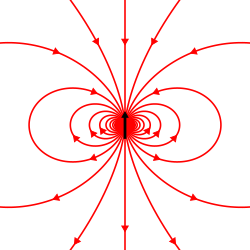
A charged particle with spin possesses a magnetic moment (μ), which essentially means the particle acts like a tiny bar magnet. For a spin-1/2 particle, this moment depends on its charge, mass, and spin angular momentum.
The electron's magnetic moment is characterized by the g-factor. The Dirac equation predicts a value of 2, but quantum electrodynamics (QED) provides a more precise value: −2.002 319 304 360 92. The slight deviation from 2 is caused by the electron's interaction with surrounding quantum fields and virtual particles.
Mathematical Representation and Direction
In quantum mechanics, spin states are described by spinors—vector-like objects that behave differently than standard vectors under rotation. For instance, rotating a spin-1/2 particle by 360° does not return it to its original state; it requires a full 720° rotation to return to the original quantum phase.
The direction of spin is described by the spin projection quantum number. For a spin-1/2 particle, there are two possible values: +1/2 and −1/2. These are commonly referred to as spin up and spin down. The number of possible values is known as the multiplicity, calculated as 2s + 1.
Applications of Spin
The ability to manipulate and measure spin has led to critical technological advancements in medicine and science:
- Magnetic Resonance Imaging (MRI): A medical imaging technique that relies on the spin density of protons in the body.
- Nuclear Magnetic Resonance (NMR): Used extensively in chemistry to determine the structure of molecules.
- Electron Spin Resonance (ESR): Used in physics and chemistry to study materials with unpaired electrons.
Frequently Asked Questions
Is spin the same as a particle physically rotating?
No. While the term "spin" suggests a rotating ball, it is actually an intrinsic property of the particle. In many cases, the particle is considered a point-like object with no physical radius to rotate.
What is the difference between a fermion and a boson?
Fermions have half-integer spins and obey the Pauli exclusion principle, meaning they cannot occupy the same state. Bosons have integer spins and can occupy the same state, allowing them to bunch together.
What is the significance of the Higgs boson's spin?
The Higgs boson has a spin of 0, making it the first known scalar elementary particle. This property is central to its role in explaining electroweak symmetry breaking.
Why does a spin-1/2 particle need a 720-degree rotation to return to its original state?
This is a unique property of spinors. Unlike classical vectors, a 360-degree rotation changes the quantum phase of the particle to its opposite; a second full rotation is required to restore the original phase.
How does spin relate to magnetism?
Charged particles with spin create a magnetic moment. This means they act like microscopic magnets, which allows them to be manipulated by external magnetic fields, as seen in MRI machines.