Low-Tech: The Evolution of Sustainable and Accessible Technology
In an era dominated by rapid digitalization and complex machinery, the concept of low-tech offers a compelling alternative. Far from being a mere return to the past, low-tech represents a conscious approach to technology that prioritizes accessibility, sustainability, and human-scale design. From primitive tools to modern movements resisting resource depletion, the philosophy of low-tech seeks to balance human needs with the planetary limits of our environment.
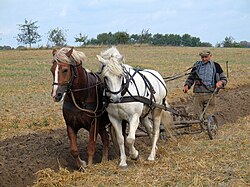
At its most basic level, low-tech encompasses primitive technologies such as bushcraft—skills and tools utilizing wood, stone, and wool. It also includes pre-Industrial Revolution machinery, such as sailboats and windmills, which operated on natural energy and simple mechanical principles.
The Rise of the Low-Tech Movement
The modern conceptualization of low-tech gained momentum in the 1970s. Following the economic boom after the Vietnam War, a growing skepticism toward unchecked growth and technological progress emerged. This shift was highlighted by the influential 1972 report, The Limits to Growth.
During this period, thinkers began defining "soft technologies." These were described as "intermediary" by E. F. Schumacher and "liberating" by M. Bookchin. In the United States, researchers like Langdon Winner explored the democratic potential of these technologies, advocating for tools that empower individuals rather than centralizing power in large corporations or states.
Modern Perspectives and Resource Scarcity
By the 2000s, "low-tech" became a more frequent term in scientific literature. Scholars such as Gordon and Hirsch-Kreinsen began analyzing the work of 1970s theorists, often categorizing technological approaches as "high tech, low tech, or no tech."
In recent years, the conversation has shifted toward resource scarcity, particularly the dwindling supply of essential minerals. This has led to severe criticisms of high-tech systems that rely on unsustainable extraction processes.
In 2014, French engineer Philippe Bihouix published L'âge des low tech (The Age of Low-Techs). Bihouix argued that nations with limited energy and mineral resources, such as France, should transition from being a "start-up nation" to a "low-tech nation" to align with sustainable development goals.

Expanding the Definition: Specialized Tech Categories
As the movement has evolved, several nuanced terms have emerged to describe specific characteristics of low-tech and its alternatives:
- Retro-tech: Focuses on old but clever inventions. While not always durable or accessible, these are often decentralized and manufactured by individuals.
- Wild-tech: Aims to provide tools for manufacturing methods that escape traditional classification. This is often linked to the "tech rebel" movement, which focuses on hacking and re-appropriating technology.
- Small-tech: A digital-focused alternative to "Big Tech" (such as GAFAM). It maintains technological complexity but bases it on collaborative work, commons, and social justice.
- (S)lowtech or Slow-tech: A play on words emphasizing a slow lifestyle. It explores the negative effects of technology on human health and seeks to reduce technology addiction, particularly among youth.
- Easy-tech: Technology that is simple to implement, easy to use, and accessible to everyone. This is a core component of the general low-tech definition.
- No-tech: A lifestyle that avoids the use of technology whenever possible, emphasizing the time-consuming and negative aspects of modern tools.
- Lo-Tek: A term introduced by Julia Watson in her book The Power of Lo—TEK to describe nature-based technologies.
Key Facts
- Origins: Rooted in primitive tools (bushcraft) and pre-industrial machines like windmills.
- 1970s Influence: Shaped by The Limits to Growth and the concept of "soft technologies."
- Sustainability: Modern low-tech is driven by the reality of mineral and energy resource scarcity.
- Core Goal: To create technologies that are accessible, democratic, and sustainable.
- Diverse Spectrum: Ranges from "no-tech" (avoidance) to "small-tech" (democratic digital complexity).
| Term | Primary Focus | Key Characteristic |
|---|---|---|
| Retro-tech | Old inventions | Decentralized and simple |
| Wild-tech | Unclassifiable tools | Hacking and re-appropriation |
| Small-tech | Digital commons | Opposed to Big Tech (GAFAM) |
| Slow-tech | Lifestyle and health | Reducing tech addiction |
| No-tech | Avoidance | Minimal to no tech usage |
| Lo-Tek | Nature-based | Biomimicry and natural systems |
Frequently Asked Questions
What is the difference between low-tech and no-tech?
Low-tech refers to the use of simple, accessible, and sustainable technologies. No-tech, conversely, promotes a lifestyle that avoids the use of technology entirely whenever possible.
How does small-tech differ from low-tech?
While low-tech often emphasizes simplicity, small-tech focuses on the digital realm. It maintains high technological complexity but shifts the ownership and governance toward democratic principles and collaborative commons rather than corporate control.
Why is resource scarcity important to the low-tech movement?
High-tech industries rely heavily on rare minerals and high energy consumption. Low-tech advocates argue that because these resources are finite, we must transition to simpler technologies to ensure long-term sustainability.
What is the goal of the "slow-tech" movement?
Slow-tech aims to reduce the human addiction to technology and explore how constant connectivity affects health and development, promoting a slower, more intentional pace of life.
Who is Philippe Bihouix and what is his contribution?
Philippe Bihouix is a French engineer who authored L'âge des low tech. He proposed that nations should move away from the "start-up" model and embrace low-tech strategies to better meet sustainable development goals.