Louis Armstrong's Cinematic Legacy: A Complete Filmography
While primarily celebrated as a revolutionary jazz trumpeter and vocalist, Louis Armstrong maintained a prolific presence on the silver screen. Throughout his career, Armstrong appeared in a wide array of feature-length films and short subjects, bridging the gap between the world of improvisational music and the structured art of cinema.
For the most part, Armstrong appeared as himself, allowing his natural charisma and musical genius to shine. However, he occasionally stepped into scripted roles, showcasing a versatility that extended beyond his horn. From early 1930s shorts to major Hollywood productions of the 1960s, his filmography serves as a visual record of his global influence.
Key Facts
- Frequent Persona: Armstrong most often appeared in films as himself, though he took on several character roles.
- Diverse Formats: His screen work includes feature films, documentary shorts, and television movies.
- Global Reach: He appeared in international productions, including films from Italy, Germany, and Denmark.
- Career Span: His cinematic contributions span over five decades, from Ex-Flame in 1930 to Trumpet Kings in 1985.
The Evolution of Armstrong on Screen
Early Appearances and Shorts
Armstrong's entry into cinema began in the early 1930s. His early work often consisted of short films that captured his musical energy, such as A Rhapsody in Black and Blue and I'll Be Glad When You're Dead You Rascal You (both 1932). During this era, he also began appearing in features like Ex-Flame (1930) and Pennies from Heaven (1936), where he played a character named Henry.
Mid-Century Mainstream Success
As his fame grew, Armstrong became a staple in musical and comedy films. In the 1940s and 50s, he appeared in titles such as Cabin in the Sky (1943) as The Trumpeter and A Song Is Born (1948). His presence in The Glenn Miller Story (1954) and High Society (1956) further cemented his status as a cultural icon who could seamlessly integrate into high-budget Hollywood productions.
International Work and Later Years
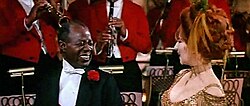
Armstrong's appeal was not limited to the United States. He appeared in various European productions, including the Italian film I'm in the Revue (Botta e risposta) in 1950 and the German TV movie Berlin-Melodie in 1963. One of his most memorable late-career roles was as the Orchestra Leader in the 1969 classic Hello, Dolly!
Complete Filmography Summary
The following table provides a comprehensive overview of Louis Armstrong's credited and uncredited appearances across cinema and television.
| Year | Film Title | Role |
|---|---|---|
| 1930 | Ex-Flame | Louis Armstrong |
| 1932 | A Rhapsody in Black and Blue (Short) | Louis Armstrong |
| 1932 | I'll Be Glad When You're Dead You Rascal You (Short) | Louis Armstrong |
| 1934 | København, Kalundborg og - ? | Louis Armstrong |
| 1936 | Pennies from Heaven | Henry |
| 1937 | Artists and Models | Louis Armstrong |
| 1937 | Every Day's a Holiday | Louis Armstrong |
| 1938 | Doctor Rhythm | Trumpet Player |
| 1938 | Going Places | Gabe |
| 1941 | Birth of the Blues | Louis Armstrong |
| 1943 | Cabin in the Sky | The Trumpeter |
| 1943 | Show Business at War (Short) | Uncredited |
| 1944 | Jam Session | Uncredited |
| 1945 | Pillow to Post | Orchestra Leader |
| 1947 | New Orleans | Louis Armstrong |
| 1948 | A Song Is Born | Louis Armstrong |
| 1950 | I'm in the Revue (Botta e risposta) | Band Leader |
| 1950 | Saint-Germain-des-Prés | Louis Armstrong |
| 1951 | The Strip | Louis Armstrong |
| 1951 | Here Comes the Groom | Uncredited |
| 1952 | Glory Alley | Shadow Johnson |
| 1953 | Saluti e baci | Louis Armstrong |
| 1954 | The Glenn Miller Story | Louis Armstrong |
| 1956 | High Society | Louis Armstrong |
| 1959 | The Night Before the Premiere | Louis Armstrong |
| 1959 | The Five Pennies | Louis Armstrong |
| 1959 | The Beat Generation | Louis Armstrong |
| 1959 | La Paloma | Louis Armstrong |
| 1959 | Kærlighedens melodi (Formula for Love) | Musician with Orchestra |
| 1961 | Paris Blues | Wild Man Moore |
| 1961 | Auf Wiedersehen | Louis Armstrong |
| 1963 | Berlin-Melodie (TV Movie) | Louis Armstrong |
| 1965 | When the Boys Meet the Girls | Louis Armstrong |
| 1966 | Rhein-Melodie (TV Movie) | Louis Armstrong |
| 1966 | A Man Called Adam | Willie Ferguson |
| 1969 | Hello, Dolly! | Orchestra Leader |
| 1985 | Trumpet Kings | Louis Armstrong |
Frequently Asked Questions
Did Louis Armstrong always play himself in movies?
No. While he frequently appeared as himself, he also played several characters, such as Henry in Pennies from Heaven, Gabe in Going Places, Shadow Johnson in Glory Alley, and Wild Man Moore in Paris Blues.
What was one of Louis Armstrong's most famous film roles?
One of his most prominent and recognizable roles was as the Orchestra Leader in the 1969 film Hello, Dolly!
Did Louis Armstrong appear in international films?
Yes, he appeared in several international productions, including films from Denmark (København, Kalundborg og - ?), Italy (Saluti e baci), and Germany (Auf Wiedersehen).
Did he appear in any television movies?
Yes, Armstrong appeared in TV movies such as Berlin-Melodie (1963) and Rhein-Melodie - Wein, Gesang und gute Laune (1966).
Were there any films where Louis Armstrong was uncredited?
Yes, he had uncredited appearances in Show Business at War (1943), Jam Session (1944), and Here Comes the Groom (1951).