Louella Parsons: The Formidable Queen of Hollywood Gossip
Long before the era of social media and paparazzi, one woman held the power to make or break a movie star's career with a single stroke of her pen. Louella Parsons was not just a journalist; she was the self-appointed social and moral arbiter of Hollywood, wielding an influence that often eclipsed that of the most prestigious film critics.
Parsons' rise to power was a masterclass in networking and strategic loyalty, beginning in 1914 when she wrote the first movie gossip column in the United States for the Chicago Record Herald. Her trajectory changed forever when she caught the eye of publishing mogul William Randolph Hearst. After Parsons championed the talent of Hearst's protégé, Marion Davies—at a time when most critics were dismissive—Hearst hired her in 1923 as the motion-picture editor of the New York American for $200 a week (approximately $3,779 today).
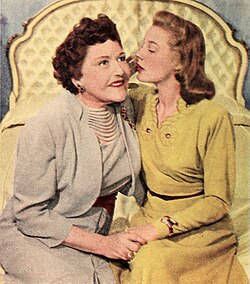
Key Facts
- Reach: At her peak, her column appeared in over 700 newspapers worldwide with more than 20 million readers.
- Power Base: Maintained a vast network of informants, including studio staff, hairdressers, and medical professionals.
- Rivalry: Engaged in a lifelong, fierce professional feud with fellow columnist Hedda Hopper.
- Influence: Successfully campaigned to suppress the release of Orson Welles' Citizen Kane.
- Career Span: Wrote movie columns from 1914 until her retirement in 1965.
The Architecture of Influence
Parsons operated her empire from her Beverly Hills home, utilizing a sophisticated intelligence network. Her staff included a secretary, a "leg" man for news gathering, a female reporter covering cafés, and her long-time assistant reviewer, Dorothy Manners. Even her husband, Harry Martin, a urologist and studio doctor, was suspected of providing inside information.
Her power was rooted in the fear of her disfavor. She famously scooped the divorce of Mary Pickford and Douglas Fairbanks Sr. after Pickford mistakenly trusted her discretion. In another instance, she reportedly held Ria Gable at her home to ensure her report on Clark Gable's divorce reached the wires first.
The Radio Era and "Hollywood Hotel"
Parsons expanded her reach into broadcasting, hosting weekly programs sponsored by SunKist and the Charis Foundation. In 1934, she launched Hollywood Hotel with Campbell's Soup Company. The show featured stars in scenes from upcoming films, often appearing for free to avoid reprisals from Parsons. Her signature opening, "My first exclusive of tonight is...", became a phrase dreaded by the industry.
The Great Rivalry: Parsons vs. Hopper
For years, Parsons enjoyed a monopoly on Hollywood gossip, but in 1938, Hedda Hopper emerged as a challenger. Initially, the two had a symbiotic relationship: Hopper provided tips from movie sets in exchange for mentions in Parsons' column. However, once Hopper established her own syndicated column, the relationship soured into a legendary feud.
The two women differed sharply in style. While Hopper was known for a crass tone, Parsons adopted a "sweetness and light" approach, often using a facade of goofy vagueness to coax secrets from her subjects. Despite their hatred, they collectively commanded a readership of 75 million people.
The Battle Over Citizen Kane
One of the most significant displays of Parsons' power occurred during the release of Orson Welles' Citizen Kane. Believing the film was a veiled attack on William Randolph Hearst, Parsons launched a campaign to stop it. After a private screening, she cabled Hearst, who responded with the command: "Stop Citizen Kane." Parsons threatened RKO chief George J. Schaefer with lawsuits and vowed to expose the private lives of industry leaders if the film were released. Her pressure led to the cancellation of the Radio City Music Hall premiere and contributed to the film's initial financial failure.
The Ingrid Bergman Scandal
The rivalry with Hopper peaked in the early 1950s regarding actress Ingrid Bergman. Parsons scooped the news that Bergman was pregnant while unmarried and living with director Roberto Rossellini. Hopper, who had previously defended Bergman, felt betrayed by the scoop and launched a vicious PR campaign against the actress, illustrating how personal vendettas often drove the gossip of the era.
Career Summary
| Period/Year | Milestone/Event | Impact/Detail |
|---|---|---|
| 1914 | First Movie Column | Started at Chicago Record Herald. |
| 1923 | Hearst Appointment | Became motion-picture editor of New York American. |
| 1925 | Syndication | Moved to LA; column reached 20 million+ readers. |
| 1934 | Hollywood Hotel | Launched influential radio program. |
| 1941 | Citizen Kane Campaign | Used Hearst's influence to suppress the film's release. |
| 1965 | Retirement | Column taken over by Dorothy Manners. |
Decline and Legacy
The era of the all-powerful columnist began to fade after William Randolph Hearst's death in 1951. As movie stars transitioned into producers, they gained more control over their own images. Parsons' influence waned further when the Los Angeles Examiner folded in 1962, moving her to the afternoon Los Angeles Herald-Express, which gave her rival Hedda Hopper the advantage of the morning news cycle. She officially stepped down in December 1965.
Frequently Asked Questions
How did Louella Parsons get her start with William Randolph Hearst?
Parsons gained Hearst's attention by writing favorably about his mistress and protégé, Marion Davies, while other critics were disparaging her. This loyalty led Hearst to hire her as the motion-picture editor of the New York American in 1923.
What was the nature of the feud between Louella Parsons and Hedda Hopper?
The feud was a professional and personal rivalry for dominance over Hollywood gossip. While they initially collaborated, they became fierce competitors, often scooping each other on scandals and attacking one another's personal lives and associates.
How did Parsons influence the release of Citizen Kane?
Acting on behalf of William Randolph Hearst, Parsons threatened RKO with lawsuits and promised to expose the private secrets of studio heads to prevent the film's release. She also pressured the manager of Radio City Music Hall to cancel the premiere by threatening a press blackout.
What was Parsons' writing style compared to Hedda Hopper's?
Parsons used a "sweetness and light" or "gooey" style, characterized by a chatty, informal tone. In contrast, Hedda Hopper was known for a much more crass and aggressive tone in her columns.
Who was Dorothy Manners?
Dorothy Manners was Parsons' assistant reviewer who worked with her for thirty years and eventually took over the column when Parsons retired in 1965.