Singing Cowboys: The Musical Icons of the American Western
The image of the rugged frontiersman is a staple of American cinema, but for a golden era of Hollywood, the cowboy was as likely to break into song as he was to draw a six-shooter. The singing cowboy became a cultural phenomenon, blending the adventure of the Wild West with the appeal of popular music, transforming the Western genre into a musical spectacle.
This trend began in the transition from silent films to "talkies," where studios discovered that music could enhance the romanticism of the frontier. While some legendary actors only dabbled in the genre, others built entire careers around the persona of the melodic lawman.
Key Facts
- Ken Maynard was the first singing cowboy on screen, debuting in silent films in 1923.
- Gene Autry is the most iconic figure of the genre, often referred to simply as "the singing cowboy."
- Roy Rogers rose to prominence as the "King of the Cowboys" during Gene Autry's military service in WWII.
- John Wayne played a darker version of the singing cowboy, though his vocals were dubbed because he could not sing.
- The era declined with the rise of television and the end of the B-movie production cycle in the 1950s.
The Pioneers of the Musical West
The movement started with Ken Maynard, who combined rugged horsemanship with music. After recording with Columbia Records, he sang in Sons of the Saddle (1930). Shortly after, Bob Steele began a series for Tiffany Pictures, though he eventually moved away from singing roles.
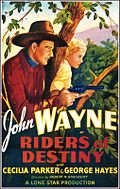
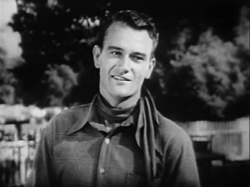
One of the most surprising early entries into the genre was a 27-year-old John Wayne. In Riders of Destiny (1933), Wayne played "Singin' Sandy Saunders." Unlike the polished stars who followed, Wayne's portrayal was grittier; he wore a black ten-gallon hat and sang dark lyrics about death and blood. Because Wayne lacked singing ability, his voice was dubbed by the son of director Robert N. Bradbury. Wayne eventually left the singing genre in 1935, citing a desire for authenticity, as real cowboys rarely sang before a gunfight.
The Titans: Gene Autry and Roy Rogers
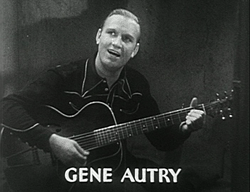
When Republic Pictures sought a replacement for John Wayne, they found Gene Autry. A former rodeo rider and singer, Autry possessed the rare ability to both ride and sing convincingly. His career exploded with the 1935 serial The Phantom Empire, where he introduced a contemporary Western setting featuring telephones, airplanes, and even robots.
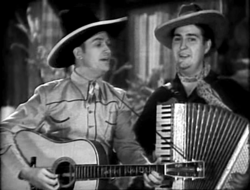
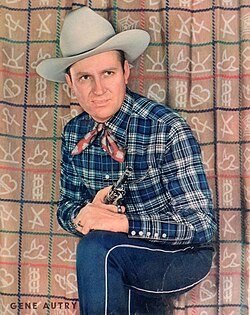
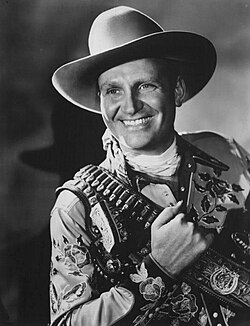
Autry was a trailblazer who used his own name as his character's name, a trend later followed by others. He remained one of the highest-grossing Western stars in history until his death in 1998.
The landscape shifted in 1937 when Autry had a contract dispute with Republic Studios. The studio promoted Roy Rogers (born Leonard Slye) to fill the void. Rogers quickly became a superstar in his own right. While Autry maintained a lead in record sales, Rogers became the "King of the Cowboys" during World War II while Autry served in the Army Air Corps.
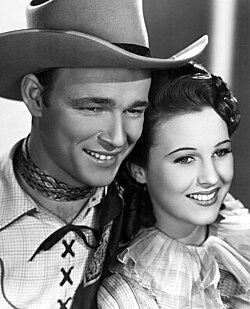
Diverse Voices of the Genre
Beyond the two giants, several other actors brought unique styles to the singing cowboy archetype:
- Dick Foran: A Warner Bros. star known for a "golden voice" similar to Nelson Eddy.
- Tex Ritter: A Grand National Pictures star whose song "Do Not Forsake Me Oh My Darlin'" from High Noon (1952) won an Academy Award. He was also the father of actor John Ritter.
- Herb Jeffries: Broke barriers by starring in a series of films beginning with Harlem on the Prairie (1937).
- Dorothy Page: One of the few "singing cowgirls," appearing in three films in 1939.
- James Newill: Adapted the trend for the North, playing a singing Mountie in the Renfrew of the Royal Mounted series.
Other Notable Contributors
The genre saw various other stars, including Bob Baker at Universal, Eddie Dean at Producers Releasing Corporation, and Rex Allen, who is credited with the last theatrical singing cowboy film, Phantom Stallion (1954). Ken Curtis, a member of the Sons of the Pioneers, also transitioned from singing Westerns to a famous role as Festus Hagen on Gunsmoke.
The Decline and Legacy
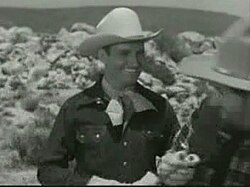
The era of the singing cowboy faced criticism from non-singing actors like Buck Jones, who argued that songs were often used to "pad" film length at the expense of plot and character. With the arrival of television, the B-movie market collapsed. While Autry and Rogers transitioned to successful TV shows in the 1950s, the archetype eventually faded into nostalgia.
Today, the singing cowboy lives on through parody and homage. Films like Rustlers' Rhapsody, Toy Story 2, and the Coen brothers' Hail, Caesar! and The Ballad of Buster Scruggs play with these stereotypes. The musical group Riders in the Sky continues to keep the tradition alive.
| Actor | Notable Contribution / Fact | Key Film/Series |
|---|---|---|
| Ken Maynard | First singing cowboy on screen | Sons of the Saddle |
| John Wayne | Darker, dubbed singing roles | Riders of Destiny |
| Gene Autry | The definitive "Singing Cowboy" | The Phantom Empire |
| Roy Rogers | The "King of the Cowboys" | Shine On, Harvest Moon |
| Tex Ritter | Academy Award-winning song | High Noon (Song) |
| Herb Jeffries | Pioneering Black singing cowboy | Harlem on the Prairie |
Frequently Asked Questions
Who was the first singing cowboy in cinema?
Ken Maynard is credited as the screen's first singing cowboy, appearing in silent films starting in 1923 and later singing in Sons of the Saddle (1930).
Did John Wayne actually sing in his movies?
No, John Wayne could not sing. His singing roles, such as "Singin' Sandy Saunders," were dubbed by the son of director Robert N. Bradbury.
What is the difference between Gene Autry and Roy Rogers?
While both were massive stars, Gene Autry is often seen as the original "singing cowboy" and had greater record sales. Roy Rogers became the "King of the Cowboys" and rose to peak popularity while Autry was serving in the military during WWII.
Why did the singing cowboy genre disappear?
The decline was primarily caused by the advent of television, which led to a drop in the production of B-movies, and a shift in audience preference away from the stylized musical Western.
Were there any singing cowgirls?
Yes, Dorothy Page was a notable singing cowgirl who appeared in three films for Grand National Pictures in 1939.