Lola Mora: The Pioneering Sculptor of Argentina
Dolores Candelaria Mora Vega, known professionally as Lola Mora, was a trailblazing Argentine sculptor who challenged the social and artistic norms of the late 19th and early 20th centuries. A master of Classicism—an artistic movement characterized by a return to the idealized forms and balance of ancient Greek and Roman art—Mora is remembered today as both a cultural rebel and a pioneer for women in the professional arts.
Early Life and Education
Born on November 17, 1866, in San Miguel de Tucumán, Lola was the third of seven children born to Regina Vega and Romualdo Alejandro Mora, a prosperous landowner of Spanish origin. In a move that was highly unusual for the era, her parents believed that their daughters deserved the same quality of education as their sons. At age seven, Lola attended the Colegio Sarmiento de Tucumán Province as a boarding student.
Tragedy struck in 1885 when both of her parents passed away within two days of each other. During this difficult period, Lola and her siblings were cared for by her older sister, Paula Mora Vega, and Paula's husband, engineer Guillermo Rucker.
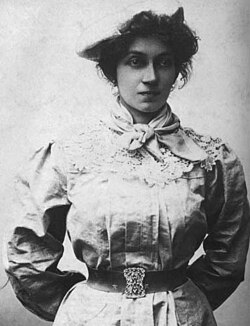
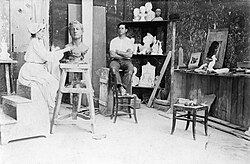
Lola's artistic journey began at age 20 with portrait painting, but she soon discovered her true passion in sculpting with granite and marble. After studying in her home province, she received a scholarship to study in Rome, Italy. There, she refined her craft under the tutelage of Costantino Barbella and Giulio Monteverde.
Professional Career and Controversies
Upon returning to Argentina in 1900, Mora leveraged government connections to secure her first major commissions, creating two bas-reliefs for the Historical House of Tucumán. However, as her career progressed, her sensual style and her identity as a female artist sparked significant controversy.
A prime example of this friction was the 1903 creation of the Nereids Fountain (Las Nereidas) for the city of Buenos Aires. The sculpture faced numerous bureaucratic hurdles from the city's Deliberative Council, resulting in the work being moved from location to location for years.
Beyond the arts, Mora possessed a versatile and inventive mind. She obtained several patents, including a mining system and a unique method for projecting films using a column of vapor instead of a traditional screen.
Later Years and Legacy
The latter part of Mora's life was marked by financial instability. She invested in extravagant business ventures, including petroleum surveys in Salta, which eventually left her dependent on a pension. She died in poverty and obscurity in Buenos Aires on June 7, 1936, at the age of 69. Following her death, her personal diaries, letters, and mementoes were burned by her friends.
Despite her difficult end, her artistic contributions remain permanent fixtures of the Argentine landscape. Her life was later dramatized in the 1996 film Lola Mora, directed by Javier Torre.
Key Facts
- Full Name: Dolores Candelaria Mora Vega.
- Artistic Style: Classicism.
- Most Famous Work: The Nereids Fountain (Las Nereidas).
- Education: Studied under Giulio Monteverde and Costantino Barbella in Rome.
- Innovations: Held patents for mining systems and screenless film projection.
- Final Resting Place: La Chacarita Cemetery, Buenos Aires.
Major Works and Locations
| Work | Location | Year/Detail |
|---|---|---|
| Nereids Fountain | Puerto Madero, Buenos Aires | 1903 |
| House of Tucumán Bas-reliefs | Tucumán | 1900 |
| Palace of the Argentine National Congress | Buenos Aires | Inaugurated 1906 |
| Oath Passage Sculptures | Rosario | Historic Centre |
| Avellaneda Memorial | Plaza Alsina, Avellaneda | 1913 |
| Monument to Liberty | Rosario | Monument to the Flag |
Frequently Asked Questions
What was Lola Mora's most controversial work?
The Nereids Fountain (Las Nereidas) was her most controversial piece due to its sensual style and the bureaucratic opposition it faced from the Buenos Aires Deliberative Council.
Where did Lola Mora study art?
After initial studies in her home province of Tucumán, she moved to Rome, Italy, on a scholarship to study under Costantino Barbella and Giulio Monteverde.
Did Lola Mora do anything other than sculpture?
Yes, she was an inventor who obtained patents for mining systems and a system to project films using a column of vapor instead of a screen.
How did Lola Mora's upbringing influence her career?
Her parents were unusually progressive for the time, ensuring that their daughters received the best possible education, which provided the foundation for her pursuit of professional art.
Where can her work be seen today?
Her works are located across Argentina, most notably at Puerto Madero in Buenos Aires, the Palace of the Argentine National Congress, and various sites in Rosario and Tucumán.