San Miguel de Tucumán: The Historic Heart of Northern Argentina
Located 1,311 kilometers from Buenos Aires, San Miguel de Tucumán (commonly known simply as Tucumán) serves as the capital and largest city of the Tucumán Province. As the fifth-largest city in Argentina and the primary urban center of the northern region, it blends a rich colonial legacy with its role as a modern commercial hub.
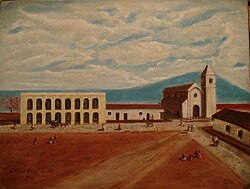
The city was originally founded in 1565 by Spanish conquistador Diego de Villarroel during an expedition from Peru. Due to poor water quality at its first site in Campos de Ibatín, the settlement was relocated to its current position in 1685.
Key Facts
- Founding: Established in 1565; moved to current site in 1685.
- Historical Significance: Site where Argentine Independence from Spain was declared on July 9, 1816.
- Nickname: The province is known as the "Garden of the Republic" due to its fertile irrigated lands.
- Geography: Situated on the slopes of the Aconquija mountains.
- Economy: Major producer of sugarcane, rice, tobacco, and fruit.
- Climate: Humid subtropical (Cwa) with monsoonal precipitation patterns.
Geography and Climate
San Miguel de Tucumán is positioned in a transition zone between the temperate climates of the south and the subtropical climates of the north. It is characterized by a humid subtropical climate (Cwa), where rainfall is heavily concentrated in the summer months.
The average annual temperature is 19.3°C (66.7°F). Summers are hot and humid, with daytime highs typically between 30°C and 31°C, though heat waves can push temperatures as high as 45°C. Winters are sunny and mild, averaging 13.6°C (56.5°F), with frosts being uncommon and snow being an extremely rare occurrence.
| Season | Typical Temperature Range | Weather Characteristics |
|---|---|---|
| Summer | 24°C to 26°C (Mean) | Hottest, most humid, and highest rainfall. |
| Winter | 12°C to 14°C (Mean) | Sunny, drier, and mild. |
| Spring | Rapid transition to summer | Short, often sunny and arid. |
| Fall | 12°C to 27°C | Gradual decrease in rainfall. |
Historical Legacy and Independence
Tucumán holds a place of paramount importance in Argentine history. Following the establishment of the circular fortress "La Ciudadela" by Belgrano, the city became a strategic point between the Río de la Plata and Upper Peru. This led to its selection as the venue for the Congress of Independence.
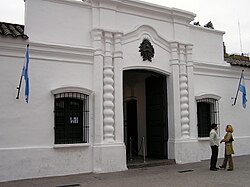
On July 9, 1816, the Casa de Tucumán (House of Tucumán) served as the site where independence from Spain and all other foreign dominations was declared. While the original structure deteriorated over time and was largely demolished in 1903, it was meticulously rebuilt in 1942 using original plans and historical photographs to preserve the room where the act of independence was signed.
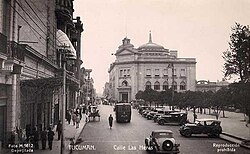
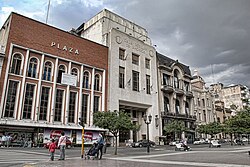
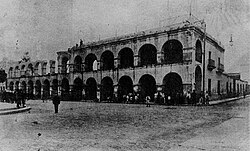
As the city grew in the late 19th century, the arrival of the British-owned Córdoba Central Railway and a wave of immigrants from Spain, Italy, and Arabic regions transformed the architecture. The colonial style gave way to Neoclassical, eclectic, and picturesque designs.
Cultural Heritage and Main Sights
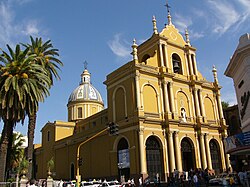
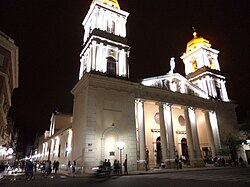
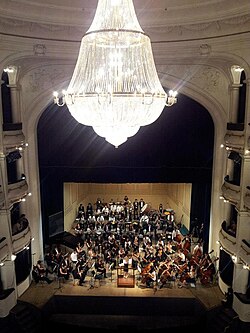
The city is rich in architectural and artistic landmarks. Beyond the Casa de Tucumán, visitors can explore the Basílica de San Francisco, the Cathedral, and the Museum of Northern Folklore. The city also features the San Martín Theatre and the Government Palace.
Education and Public Life
Tucumán is a center for higher learning, hosting the National University of Tucumán (est. 1914) and the Saint Thomas Aquinas University of the North (est. 1965). In recent history, the city has also been a site for legal reckoning, hosting trials of former military officers for war crimes committed during the 1976–83 dictatorship.
Transport and Infrastructure
The city is a major transit hub for northern Argentina. It boasts one of the country's largest bus stations, the 30,000 m² central station opened in 1994. Air travel is facilitated by the Teniente General Benjamín Matienzo International Airport, which connects the city to Buenos Aires, Bolivia, and other regional destinations.
Railway History
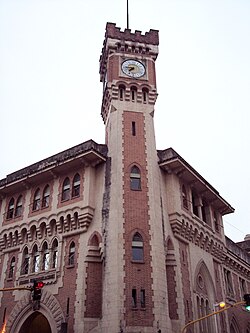
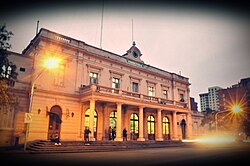
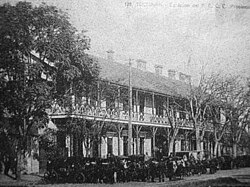
Tucumán once had several railway terminals. Today, the Tucumán (Mitre) station remains the only terminal active for passenger services, operated by Trenes Argentinos and NCA.
Sports and Notable Figures
Association football is the dominant sport in the city, characterized by a fierce rivalry between Club Atlético San Martín (founded 1909) and Club Atlético Tucumán (founded 1901), the oldest club in the province.
The city has produced numerous influential figures across various fields:
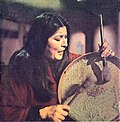
- Arts & Music: Folk singer Mercedes Sosa and sculptor Lola Mora.
- Architecture: Renowned architect César Pelli.
- Politics & Law: Former Presidents Nicolás Avellaneda and Julio A. Roca, and political theorist Juan Bautista Alberdi.
- Economics: Raúl Prebisch, a founder of ECLAC-UN.
Frequently Asked Questions
Why is Tucumán called the "Garden of the Republic"?
The province earned this nickname because it is a highly productive irrigated area that grows large quantities of fruit, sugarcane, tobacco, and rice.
What is the significance of the Casa de Tucumán?
It is the site where the Argentine Congress gathered on July 9, 1816, to declare the nation's independence from Spain.
What is the best time to visit based on the weather?
Winters (June to August) are generally the most pleasant, as they are sunny and mild, avoiding the extreme heat and humidity of the summer months.
Which railway station is still active for passengers?
The Tucumán (Mitre) station is the only terminal currently active for passenger services.
Who are the main football rivals in the city?
The primary rivalry is between Club Atlético San Martín and Club Atlético Tucumán.