José Fioravanti: The Master of Argentine Civic Sculpture
José Fioravanti was a prolific Argentine sculptor whose work defined the civic landscape of his home country and beyond. From intimate portraiture to towering national monuments, Fioravanti blended technical precision with a deep sense of realism, leaving an indelible mark on the public spaces of Argentina, Uruguay, and Venezuela.
Key Facts
- Born: August 4, 1896, in Buenos Aires, Argentina.
- Died: October 10, 1977, in Buenos Aires, Argentina.
- Specialization: Civic monuments and Realist portrait busts.
- Key Technique: Transitioned from casting to direct carving (sculpting directly into the material without preliminary small-scale models known as maquettes).
- Major Works: The National Flag Memorial in Rosario and various presidential monuments in Buenos Aires.
Early Life and Artistic Evolution
Born in Buenos Aires, Fioravanti displayed a passion for sculpture from a young age. Rather than following a traditional academic path, he was largely self-taught, honing his craft within the city's various private ateliers. His talent was recognized early; he first exhibited at the National Salon in 1912 and achieved significant acclaim in 1919, winning First Prize in his category for the piece My Sister María.
In his early career, Fioravanti focused on Realist portrait busts created through casting. One of his most notable early commissions was the bust of former President José Figueroa Alcorta, designed for the president's crypt in the La Recoleta Cemetery.
European Influence and International Recognition
Between 1924 and 1927, Fioravanti traveled through Europe, a period that fundamentally altered his artistic approach. He abandoned the use of maquettes in favor of direct carving, a method that allowed for a more immediate relationship between the artist and the stone. His work gained international visibility during this time, with exhibitions at the Luxembourg Museum in Paris and the Museum of Modern Art in Madrid.
Upon returning to Buenos Aires, his prestige grew. In 1928, President Marcelo Torcuato de Alvear inaugurated a "Friend of the Arts" event featuring Fioravanti's work. Impressed by the sculptor's skill, President Alvear commissioned him to create decorative wall reliefs for the interiors of the Casa Rosada, the executive mansion and office of the President of Argentina, which were previously considered cold and denuded.
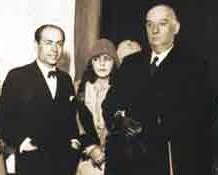
Fioravanti returned to Paris in 1929, where his reputation continued to climb, culminating in a solo exhibition at the Galerie nationale du Jeu de Paume in 1934.
Academic Career and Monumental Legacy
Returning to Argentina in 1935, Fioravanti entered the academic sphere as a Professor at the College of Fine Arts. He continued to produce award-winning work, including a gold-medal-winning portrait of his wife, the painter Ludmilla Feodorovna, titled Woman with Book (1936).
Establishing his own atelier in the seaside town of La Lucila del Mar, Fioravanti spent the latter half of his career creating landmark monuments. His portfolio includes memorials to Presidents Nicolás Avellaneda and Roque Sáenz Peña, as well as international figures such as Venezuelan General Simón Bolívar and U.S. President Franklin Roosevelt.
The National Flag Memorial
One of Fioravanti's most significant achievements is his contribution to the National Flag Memorial in Rosario, overlooking the Paraná River. Constructed between 1947 and 1957, this landmark features a monument to Manuel Belgrano and five allegorical sculptures crafted from bronze and travertine. This project marked a second major collaboration with Alfredo Bigatti, with whom he had previously worked on the Roosevelt memorial.
Other notable works include two sea lion effigies in Mar del Plata (1941), a memorial to General Fructuoso Rivera in Montevideo (1965), and a tribute to General Manuel Savio, the father of the Argentine steel industry, in Villa María, Córdoba (1969).
Summary of Major Works
| Work/Monument | Location | Year/Period | Significance |
|---|---|---|---|
| My Sister María | National Salon | 1919 | First Prize winner |
| Casa Rosada Reliefs | Buenos Aires | 1928 | Presidential commission |
| Sea Lion Effigies | Mar del Plata | 1941 | Public esplanade art |
| National Flag Memorial | Rosario | 1947–1957 | Monument to Manuel Belgrano |
| General Fructuoso Rivera | Montevideo | 1965 | International memorial |
| General Manuel Savio | Villa María | 1969 | Tribute to steel industry founder |
Frequently Asked Questions
What was José Fioravanti's primary artistic style?
Fioravanti was a sculptor known for his Realist approach, particularly in his portrait busts and civic monuments, which aimed for accuracy and dignity in depicting historical figures.
What is "direct carving" in the context of Fioravanti's work?
Direct carving is a technique where the sculptor carves directly into the final block of stone or wood without using a maquette, which is a small-scale preliminary model.
Which major Argentine landmark features Fioravanti's work?
The National Flag Memorial in Rosario is one of his most prominent works, featuring a monument to Manuel Belgrano and several allegorical sculptures made of bronze and travertine.
Who was Ludmilla Feodorovna?
Ludmilla Feodorovna was a painter and the wife of José Fioravanti. He created a gold-medal-winning portrait of her titled Woman with Book for the 1936 National Salon.
Did Fioravanti work outside of Argentina?
Yes, he exhibited his work in Madrid and Paris, and he created public monuments in Montevideo, Uruguay, and for Venezuelan General Simón Bolívar.