Little Brother Montgomery: The Legacy of a Boogie-Woogie Pioneer
Eurreal Wilford "Little Brother" Montgomery was a towering figure in the world of American music, blending the raw energy of the blues with the sophisticated rhythms of jazz and boogie-woogie—a percussive, piano-driven style characterized by a strong rhythmic bass line. A versatile musician and vocalist, Montgomery served as a vital bridge between the early sounds of New Orleans and the evolving urban blues of Chicago.
Key Facts
- Full Name: Eurreal Wilford Montgomery.
- Musical Style: Specialized in jazz, blues, and boogie-woogie.
- Early Influence: Heavily influenced by the legendary Jelly Roll Morton.
- Notable Composition: "Crescent City Blues," which eventually influenced Johnny Cash's "Folsom Prison Blues."
- Recognition: Posthumously inducted into the Blues Hall of Fame in 2013.
- Unique Skill: Largely self-taught and unable to read music, he learned complex band routines entirely by ear.
Early Life and Musical Roots
Born on April 18, 1906, in Kentwood, Louisiana, Montgomery grew up in a sawmill town near the Mississippi border. His heritage was a blend of African-American and Creek Indian ancestry. His famous nickname originated in childhood; because he resembled his father, Harper Montgomery, he was called "Little Brother Harper," a name that eventually evolved into Little Brother Montgomery.
Montgomery's musical journey began at the age of four. By 11, he had already left home to perform in barrelhouses (informal drinking establishments also known as juke joints) across Louisiana. His development was significantly shaped by Jelly Roll Morton, a pioneer of jazz piano who frequently visited the Montgomery home.
A Journey Through the American South and Chicago
Montgomery's early professional years were spent performing at turpentine and lumber camps in Mississippi, Arkansas, and Louisiana. He honed his craft playing with bands led by Buddy Petit and Clarence Desdunes. In 1928, he moved to Chicago, where he became a staple at rent parties—social gatherings where music was played to help the host raise money for rent. It was during this first Chicago residency (1928–1931) that he made his initial recordings.
Between 1931 and 1938, Montgomery shifted his focus to Jackson, Mississippi, where he led a jazz ensemble known as the Southland Troubadours. However, the pull of the city returned in 1941, and he moved back to Chicago permanently.
Global Reach and Later Career
In the late 1950s, Montgomery's music began to reach a broader white audience, leading to a surge in popularity during the 1960s. He toured extensively across the United States and Europe, recording several albums abroad. In 1969, he established his own record label, FM Records, named after his wife's maiden name, Floberg.
Throughout the 1970s, he was revered as a "living legend," providing a direct link to the early New Orleans blues tradition. His versatility allowed him to collaborate across genres, including contributing to two albums by the group Spanky and Our Gang in 1968.
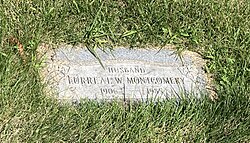
Montgomery passed away on September 6, 1985, in Champaign, Illinois, at the age of 79.
Musical Contributions and Influence
Montgomery was known for original compositions such as "Vicksburg Blues," "Farrish Street Jive," and "Shreveport Farewell." One of his most enduring legacies is the instrumental "Crescent City Blues." This piece was used as the foundation for a song by Gordon Jenkins, which was later adapted by Johnny Cash for the iconic "Folsom Prison Blues."
| Year | Album Title | Label |
|---|---|---|
| 1960 | Tasty Blues | Bluesville |
| 1961 | Blues | Folkways |
| 1962 | Chicago: The Living Legends | Riverside |
| 1968 | Farro Street Live | Folkways |
| 1972 | Blues Piano Orgy | Delmark |
| 1975 | Church Songs | Folkways |
Frequently Asked Questions
How did Little Brother Montgomery get his nickname?
As a child, he strongly resembled his father, Harper Montgomery, and was called "Little Brother Harper," which eventually became "Little Brother Montgomery."
Did Little Brother Montgomery read music?
No, he was largely self-taught and did not read music. He possessed a remarkable ability to learn band routines and arrangements entirely by ear.
What is the connection between Montgomery and Johnny Cash?
Montgomery's instrumental "Crescent City Blues" served as the basis for a song by Gordon Jenkins, which Johnny Cash subsequently adapted into "Folsom Prison Blues."
When was he inducted into the Blues Hall of Fame?
Little Brother Montgomery was posthumously inducted into the Blues Hall of Fame in 2013.
Who was Paul Gayten?
Paul Gayten, a noted R&B musician and producer, was the nephew of Little Brother Montgomery.