Ma Rainey: The Mother of the Blues
Before the world knew the electric roar of modern blues, there was Gertrude Pridgett, the powerhouse vocalist known to history as Ma Rainey. A pioneer of the classic female blues genre, Rainey combined raw emotional power with a commanding stage presence, carving a path for generations of musicians who followed. From the traveling minstrel shows of the early 1900s to the recording studios of the 1920s, her voice became a cornerstone of American music.
Key Facts
- Birth Name: Gertrude Pridgett
- Active Years: 1899–1939
- Primary Genre: Classic female blues
- Key Label: Paramount
- Major Honors: Inducted into the Blues Hall of Fame and Rock and Roll Hall of Fame
- Notable Recording: "See See Rider Blues" (inducted into the Grammy Hall of Fame)
Early Life and the Rise of "Ma" Rainey
Gertrude Pridgett began her musical journey as a teenager, performing in an era where the blues was evolving from folk traditions into a professional art form. In 1904, she married Will "Pa" Rainey, a partnership that would define her early professional identity. Together, they toured with the Rabbit Foot Minstrels, a traveling variety show, before establishing their own ensemble: Rainey and Rainey, Assassinators of the Blues.
It was during this period of rigorous touring that she earned the moniker "Ma," a testament to her maturity, authority, and maternal presence within the music community.
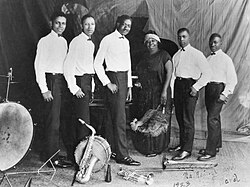
The Recording Era and Musical Collaborations
While Rainey had been performing for decades, she did not enter a recording studio until 1923. Once she began, her productivity was immense; over the next five years, she recorded more than 100 tracks for the Paramount label. Her discography is a masterclass in the twelve-bar blues (a standard blues structure consisting of twelve measures) and other popular song forms of the time.
Among her most enduring works are "Bo-Weevil Blues" (1923), "Moonshine Blues" (1923), and the definitive blues standard "Ma Rainey's Black Bottom" (1927). Rainey was not just a solo act; she frequently collaborated with the era's greatest talents, including Louis Armstrong, Tampa Red, and Thomas Dorsey. She also toured and recorded extensively with her Georgia Jazz Band.
Recording Highlights and Styles
Rainey's work spanned several styles, from traditional ballads to comedy tracks and complex mixtures of blues and popular song forms. Her 1924 recording of "See See Rider Blues" remains one of her most significant contributions to the American songbook.
| Title | Year | Accompaniment | Musical Classification |
|---|---|---|---|
| Bad Luck Blues | 1923 | Lovie Austin Blues Serenaders | Twelve-bar blues |
| See See Rider Blues | 1924 | Her Georgia Jazz Band (with Louis Armstrong) | Mixture of blues/popular |
| Ma Rainey's Black Bottom | 1927 | Her Georgia Band | Non-blues |
| Black Cat Hoot Owl Blues | 1928 | Her Tub Jug Washboard Band | Twelve-bar blues |
Later Years and Lasting Legacy
Rainey continued to tour until 1935, after which she largely retired from the road. She returned to her hometown of Columbus, Georgia, where she worked as a theater impresario—a person who organizes and finances theatrical productions. She lived in a house she had originally built for her mother until her death on December 22, 1939, at the age of 53.
Her influence has only grown posthumously. Rainey was inducted into the Blues Hall of Fame in 1983 and the Rock and Roll Hall of Fame in 1990. In 1994, the U.S. Post Office honored her with a 29-cent commemorative stamp, and in 2023, she received the Grammy Lifetime Achievement Award.
Today, her legacy is preserved through a small museum in Columbus, Georgia, and her life has inspired cinematic portrayals, most notably in the 2020 Academy Award-winning film Ma Rainey's Black Bottom.
Frequently Asked Questions
Who was Ma Rainey?
Ma Rainey, born Gertrude Pridgett, was a pioneering singer of the classic female blues genre and is often referred to as the "Mother of the Blues."
When did Ma Rainey start recording?
Although she performed as a teenager and toured for years, Ma Rainey made her first professional recording in 1923.
Which famous musicians did Ma Rainey collaborate with?
She collaborated with several jazz and blues legends, including Louis Armstrong, Tampa Red, and Thomas Dorsey.
What happened to Ma Rainey after she stopped touring?
After retiring from touring in 1935, she became a theater impresario in Columbus, Georgia, where she lived until her death in 1939.
Is Ma Rainey's music recognized by the Grammys?
Yes, she was honored with the Grammy Lifetime Achievement Award in 2023, and her song "See See Rider Blues" was inducted into the Grammy Hall of Fame in 2004.