Lithuania: A Journey Through the History, Culture, and Economy of the Baltic State
Located in the heart of the Baltic region, the Republic of Lithuania is a nation defined by its resilience, deep-rooted traditions, and a strategic position within Europe. From its origins as a vast medieval empire to its modern status as a high-income member of the European Union and NATO, Lithuania blends a rich historical legacy with a forward-looking approach to technology and governance.
Today, Lithuania is a unitary semi-presidential republic with its capital, Vilnius, serving as a vibrant hub of culture and politics. With a population of approximately 2.9 million people, the nation is characterized by its high Human Development Index (HDI) and a strong commitment to democratic values.
Key Facts
- Capital: Vilnius, the largest city and political center.
- Official Language: Lithuanian.
- Government: Unitary semi-presidential republic.
- Currency: Euro (€).
- National Bird: The white stork, which has the highest-density population in Europe.
- Peak Territory: Once the largest state in Europe during the era of the Grand Duchy.
- Economic Status: Very high HDI (0.895) with a strong GDP per capita.
Historical Evolution
Early Beginnings and the Grand Duchy
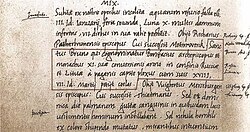
The earliest written mention of Lithuania dates back to March 9, 1009, in the Annals of Quedlinburg. By 1236, the Grand Duchy of Lithuania had emerged, and in 1253, Mindaugas was crowned King, marking a pivotal moment in the nation's statehood.
During the medieval period, Lithuania expanded significantly. At its peak, it was the largest state in Europe, exercising influence over vast territories before entering a union with Poland in 1386. This eventually led to the creation of the Polish-Lithuanian Commonwealth in 1569.
![Changes in the territory of Lithuania from the 13th to 15th century. At its peak, Lithuania was the largest state in Europe.[46][47]](/images/c3/ea/c3eaee0e535817e8c50878926653e7c4d97f3a0667f40d50cae7a9b418022bb6.png)
The Struggle for Independence
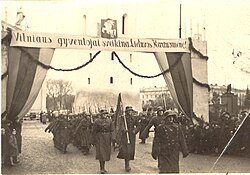
The late 18th century brought the partitions of the Commonwealth, ending in 1795. However, the desire for sovereignty remained strong. Lithuania reinstated its independence on February 16, 1918, though this was interrupted by the Soviet occupation starting June 16, 1940.
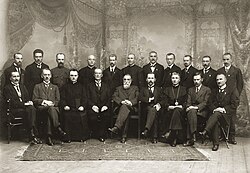
The modern era of sovereignty began on March 11, 1990, when Lithuania restored its independence from the Soviet Union, a move that paved the way for its integration into the global community.
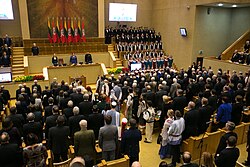
Geography and Environment
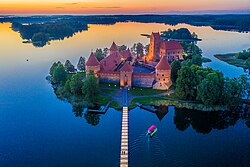
Lithuania covers a total area of 65,300 square kilometers. Its landscape is characterized by diverse geomorphological subdivisions, ranging from coastal plains to inland forests.
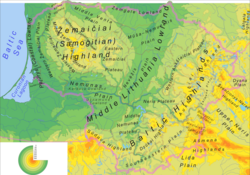
The nation is renowned for its biodiversity, particularly its bird populations. The white stork is not only a national symbol but also a testament to the country's preserved natural habitats.
![The white stork is the national bird of Lithuania, which has the highest-density stork population in Europe.[108][109]](/images/13/0b/130b2b23da8dc39a9d1a69185c66c085c9c937ee0cd1b9239816d8345c715b82.jpg)
Government and International Relations
![Emilia Plater leading peasant scythemen during the 1831 Uprising against the Russian Empire; often nicknamed as a Lithuanian Joan of Arc[65]](/images/31/5f/315f822bf0fbda75321b976987113f664042fcf449d9d47c1a8a321073a36400.jpg)
The Lithuanian government is structured as a semi-presidential republic. The Seimas serves as the parliament, where legislative decisions are made to govern the state.
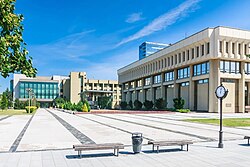
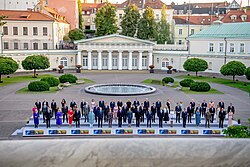
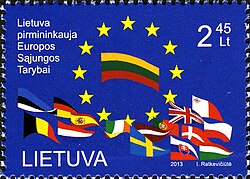
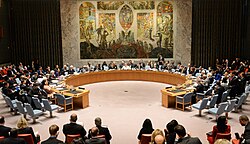
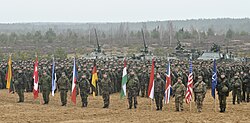
Internationally, Lithuania is a proactive member of the European Union and NATO. It has served on the United Nations Security Council and has hosted major international events, such as the 2023 Vilnius NATO summit, emphasizing its role in regional security.
Economy and Infrastructure
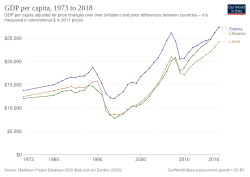
Lithuania has seen significant economic growth, with a nominal GDP per capita of approximately $36,545 (2026 estimate). The economy is diversified, with strengths in science, technology, and agriculture.
![Comparison of Lithuania's GDP per capita to rest of the world where countries with higher GDP per capita are marked in red (2022)[182]](/images/7d/6b/7d6b95371ff7e9a993dd9e5a2fff7ca8af3cafc75e35437fba211925df903226.png)
Key Economic Sectors
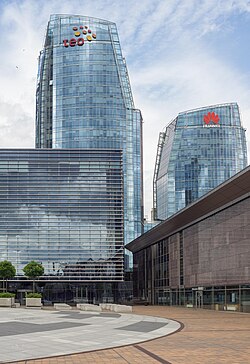
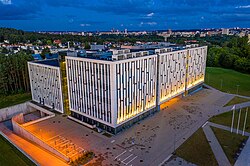
- Technology: The growth of skyscrapers and headquarters in Vilnius reflects a booming tech sector.
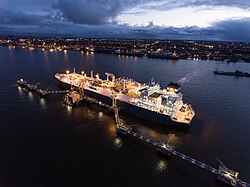
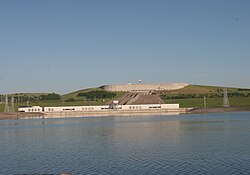
- Energy: The country utilizes advanced infrastructure, including the Kruonis Pumped Storage Plant and the FSRU Independence in Klaipėda for energy security.
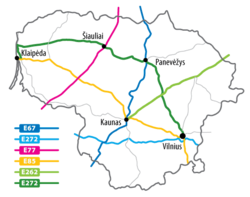
- Transport: A comprehensive network of highways and railways connects the major urban centers.
Regional Economic Distribution
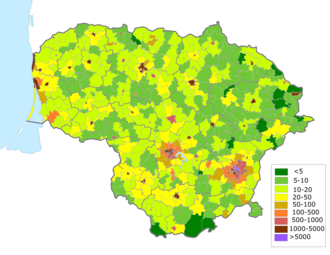
Economic activity is concentrated in the major counties, with Vilnius County leading in both population and GDP.
| County | Population | GDP (Billion EUR) | GDP per capita (EUR) |
|---|---|---|---|
| Vilnius | 851,346 | 29.4 | 35,300 |
| Kaunas | 580,333 | 13.7 | 23,900 |
| Klaipėda | 336,104 | 7.0 | 21,300 |
| Šiauliai | 261,764 | 4.6 | 17,600 |
| Panevėžys | 211,652 | 3.6 | 17,100 |
Culture and Society
Language and Literature
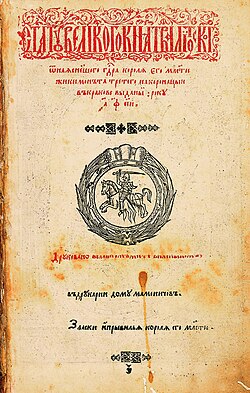
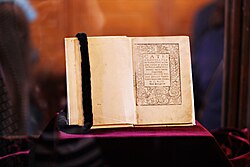
The Lithuanian language is a unique Baltic tongue. The first printed book in Lithuanian, the Catechism of Martynas Mažvydas, was published in 1547.
Arts and Architecture
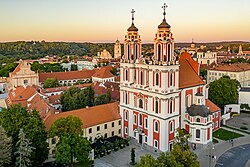
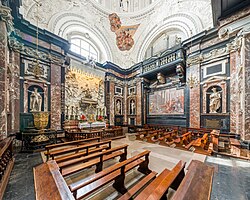
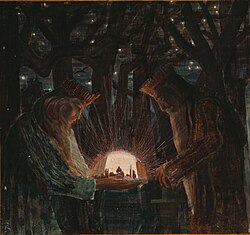
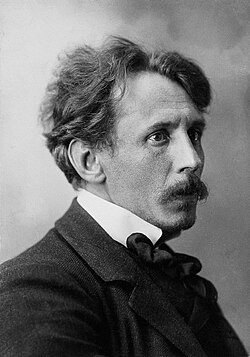
Lithuania is famous for its Vilnian Baroque architecture, seen in the churches of the capital. The nation also boasts a rich tradition in painting and music, notably the works of M.K. Čiurlionis.
Cuisine and Traditions
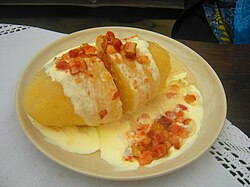
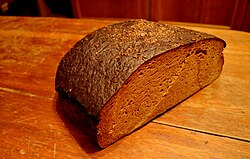
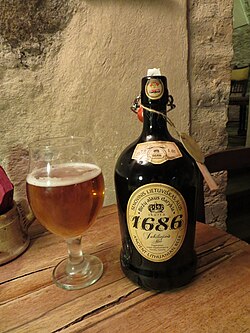
Lithuanian cuisine is hearty and traditional, featuring staples such as dark rye bread and Cepelinai (potato-based dumplings filled with meat, curd, or mushrooms). The country also maintains a long tradition of beer brewing.
Frequently Asked Questions
![Lithuanian counties by GDP per capita, 2022[148]](/images/1a/77/1a77ae8df13ebb7e12f507dbee57b4a080d3d9a2c781c924f98090965e290ca5.png)
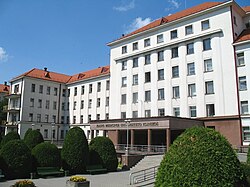
![Vilnius University, one of the oldest universities in the region.[347] It was established by Stephen Báthory, King of Poland and Grand Duke of Lithuania, in 1579.](/images/4b/45/4b459a3cdcf2b4b114e908a582adb4a42e67e08fb56f082a4f377002c4cf684d.jpg)
![The earliest known Lithuanian glosses (between 1520 and 1530) written in the margins of Johann Herolt book Liber Discipuli de eruditione Christifidelium. Words: teprÿdav[ſ]ʒÿ (let it strike), vbagÿſte (indigence).](/images/5d/34/5d34fe265a5714ac02eabf2c7a7538bb901c796ce3e07b92e6fd86a61bc6b8a6.jpg)
![Title page of Radivilias (1592, Vilnius). The poem celebrating commander Mikołaj Radziwiłł the Red (1512–84) and recounts the famous victory of Lithuanian Armed Forces over Moscow troops (1564).[377]](/images/06/a0/06a077f41ecf0795e1ebdd341ea8f39a22becec35e155f2053f587033d7f4660.jpg)
When was Lithuania first mentioned in historical records?
Lithuania was first mentioned on March 9, 1009, in the 11th-century Annals of Quedlinburg.
What is the significance of the Grand Duchy of Lithuania?
The Grand Duchy was a powerful medieval state that, at its peak, became the largest state in Europe before forming a union with Poland.
What are the primary official languages and religions in Lithuania?
The official language is Lithuanian. In terms of religion, Christianity is the most prevalent (79.4%), with Catholicism being the dominant denomination (74.2%).
Which city is the capital of Lithuania?
Vilnius is the capital and largest city of Lithuania.
What is the national bird of Lithuania?
The white stork is the national bird, and Lithuania is known for having the highest-density stork population in Europe.