Understanding the Baltic States: A Journey Through History, Resilience, and Modernity
The Baltic states—comprising Estonia, Latvia, and Lithuania—represent a unique geopolitical grouping in Northern Europe. Defined by a shared history of struggle, a drive for sovereignty, and a rapid integration into Western institutions, these three nations offer a compelling study of resilience. From ancient tribal lands to modern high-income economies, the Baltic story is one of enduring identity in the face of shifting imperial powers.
Key Facts
- Member States: Estonia, Latvia, and Lithuania.
- International Affiliations: All three are members of the European Union (EU), NATO, the OECD, and the Eurozone.
- Independence: Originally declared in 1918; restored in 1991 following the collapse of the Soviet Union.
- Economic Status: Classified as high-income economies with a very high Human Development Index (HDI).
- Regional Cooperation: Active participants in the Council of the Baltic Sea States and the Baltic Assembly.
A Turbulent History: From Empires to Independence
Early History and Imperial Rule
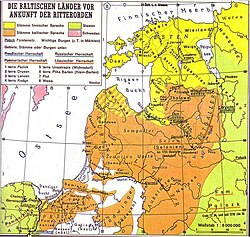
Long before the modern era, the region was inhabited by various peoples, including Baltic tribes. Over centuries, these lands faced successive waves of foreign rule. Following the Great Northern War, Estonia and most of Latvia fell under the Russian Empire, while the partitions of the Polish–Lithuanian Commonwealth (1772–1795) ended Lithuania's independence.
While all three were eventually incorporated into the Russian Empire, their social structures varied. Estonia and Latvia maintained some autonomy and influential German landowners, whereas Lithuania faced more intense Russification—the policy of forcing a dominant language and culture upon a region—due to repeated uprisings.
The Interwar Period (1918–1940)
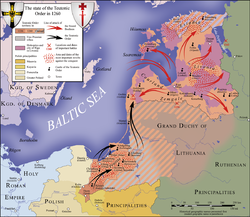
The end of World War I brought a brief era of sovereignty. Estonia, Latvia, and Lithuania all declared independence between 1918 and 1920, successfully navigating wars of independence against various forces, including Soviet Russia. This period established the foundations of their modern statehood.
Occupation and the Struggle for Freedom
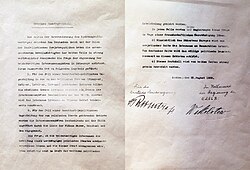
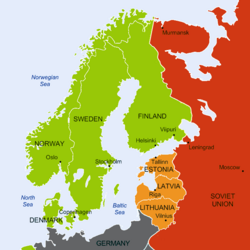
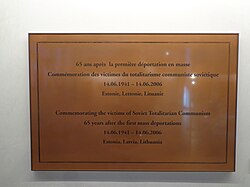
The sovereignty of the Baltic states was violently interrupted by World War II. Following the Molotov–Ribbentrop Pact, the Soviet Union occupied and annexed the three states in 1940, followed by a Nazi German occupation in 1941, before the Soviets re-occupied the region in 1944. This era was marked by mass repressions, including the deportation of approximately 10% of the adult population to remote locations or Gulags (forced labor camps).
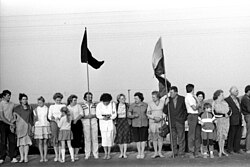
The path to freedom began in the late 1980s with the Singing Revolution, a massive campaign of civil resistance. A defining moment occurred on August 23, 1989, with the Baltic Way, a human chain stretching 600 km from Tallinn to Vilnius, involving approximately two million people. This movement culminated in the restoration of independence in 1991 as the Soviet Union disintegrated.
The Modern Era: Integration and Cooperation
Western Integration
Since regaining independence, the Baltic states have prioritized integration with Western Europe. This strategic goal was realized in 2004, when all three nations joined both NATO (a military alliance) and the European Union. Today, they are fully integrated into the Eurozone, having adopted the euro in Estonia (2011), Latvia (2014), and Lithuania (2015).
Regional and Economic Strength
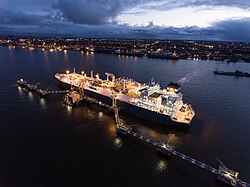
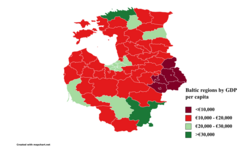
The three nations maintain strong regional ties through organizations like the Baltic Assembly and the Council of the Baltic Ministers. Economically, they are characterized as high-income, stable members of the OECD. They also focus heavily on energy security, complying with EU regulations to increase renewable energy and reduce greenhouse gas emissions.
Cultural Identity
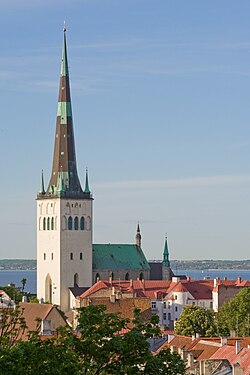
Despite their shared political goals, the states maintain distinct cultural identities. This is reflected in their languages—with Estonia belonging to the Finnic branch and Latvia and Lithuania belonging to the Baltic branch—and their diverse religious landscapes, ranging from Lutheranism to Catholicism.
Summary of Baltic States Statistics
| Feature | Estonia | Latvia | Lithuania |
|---|---|---|---|
| Capital | Tallinn | Riga | Vilnius |
| Population (2025 est.) | 1,362,954 | 1,823,500 | 2,886,000 |
| Area (km²) | 45,339 | 64,589 | 65,300 |
| GDP per capita (2024) | €30,380 | €23,410 | €29,100 |
| HDI (2023) | 0.905 (Very High) | 0.889 (Very High) | 0.895 (Very High) |
Frequently Asked Questions
What is the difference between the Baltic states and the Baltic region?
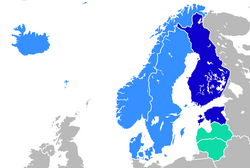
The Baltic states refers specifically to the three sovereign countries of Estonia, Latvia, and Lithuania. The Baltic region is a broader geographic term that can include other areas surrounding the Baltic Sea.
How did the Baltic states regain their independence?
Independence was restored through a combination of civil resistance, known as the Singing Revolution, and massive public demonstrations like the Baltic Way. This process culminated in 1991 during the dissolution of the Soviet Union.
Are the Baltic states part of the Eurozone?
Yes, all three Baltic states are members of the Eurozone and use the Euro as their official currency.
What are the main ethnic groups in the region?
While each country has a majority ethnic group, there are significant minorities. For example, Latvia has a 33% minority population (including Russians, Belarusians, and Ukrainians), Estonia has a 27.6% minority population, and Lithuania has a 12.2% minority population.
How do the Baltic states cooperate today?
They cooperate through various inter-parliamentary and intergovernmental bodies, such as the Baltic Assembly and the Council of the Baltic Ministers, as well as through shared membership in the EU and NATO.