Linz: The Industrial and Cultural Heart of Upper Austria
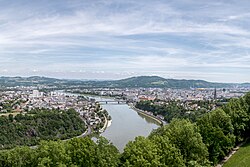
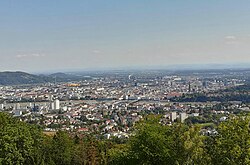
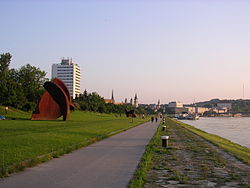
Linz is a vibrant statutory city located in the state of Upper Austria. Situated along the banks of the Danube, it serves as a critical hub for industry, transport, and the arts. From its historic old town to its cutting-edge digital museums, Linz blends a rich imperial past with a forward-looking approach to technology and urban living.
The city is characterized by its diverse landscape, ranging from the heights of the Pöstlingberg to the bustling container terminals of its harbor. As a center of education and culture, it hosts several prestigious universities and is the birthplace of world-renowned figures in music and science.
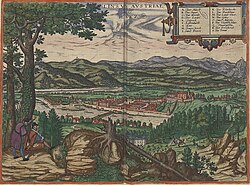
Key Facts
- Population: Approximately 214,064 inhabitants (as of January 1, 2025).
- Location: Upper Austria, situated on the Danube river.
- Area: 95.99 square kilometers.
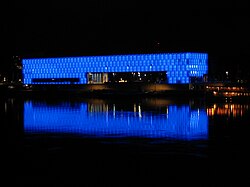
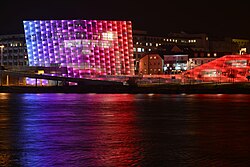
- Key Landmarks: The New Cathedral, Ars Electronica Center, and Lentos Museum.
- Transport: A multimodal network including trams, a major airport, and an international waterway.
City Geography and Administration
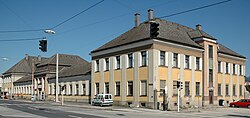
Linz is organized into 16 statistical districts to manage its urban growth and services. The Innere Stadt (Inner City) serves as the historic and administrative core, while districts like Urfahr and Ebelsberg provide residential and commercial balance. The city's elevation averages 266 meters above sea level.
Administrative Districts
The city's division into districts allows for precise statistical tracking of population and land use. The largest districts by area include Ebelsberg and Pichling, while the Innere Stadt remains one of the most densely populated.
Transport and Infrastructure
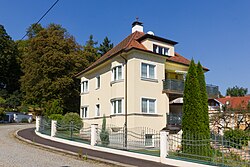
Linz boasts a highly efficient transport system designed to reduce reliance on individual motorized vehicles. The modal split—the proportion of travelers using different transport modes—shows a strong preference for walking (25.7%) and public transport (20.5%), with bicycles accounting for 10.7% of trips.
Public and Rail Transport
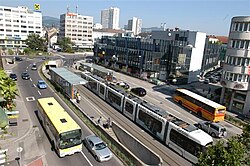
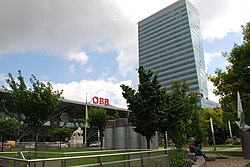
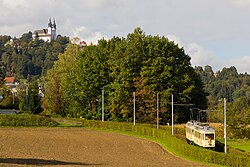
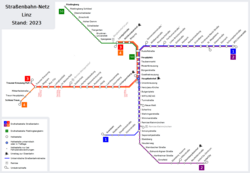
The city is well-connected via the Linz Central Station and an extensive tramway network. A unique feature of the local transit is the Pöstlingbergbahn, a specialized tram line that ascends the Pöstlingberg hill.
Shipping and Aviation
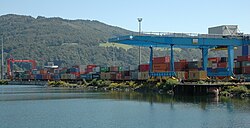
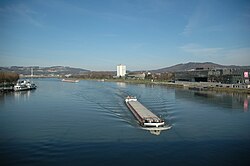
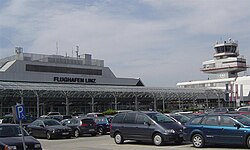
As a major port on the Danube, Linz is a vital node for international shipping. Its harbor includes a modern container terminal that facilitates the movement of freight across Europe. For air travel, the city is served by the Linz–Hörsching Airport.
Culture, Architecture, and Tourism
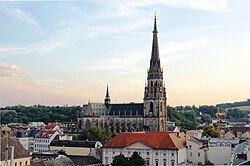
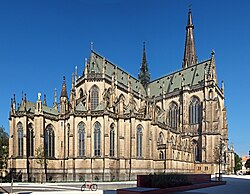
Linz is a city of contrasts, where neogothic architecture meets digital art. The New Cathedral (Mariendom) is one of the most prominent landmarks, showcasing stunning neogothic detail. In contrast, the Ars Electronica Center positions the city as a global leader in electronic arts and technology.
Museums and Arts
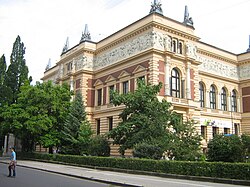
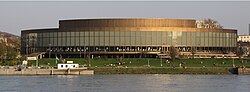
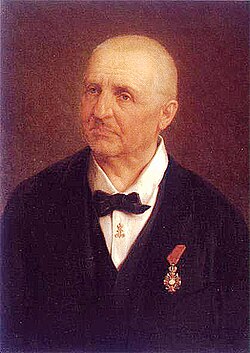
The city's cultural offerings are anchored by the Lentos Museum of Modern Art and the Regional Gallery. For music lovers, the Brucknerhaus and Musiktheater Linz provide world-class venues, honoring the legacy of the great composer Anton Bruckner.
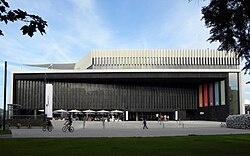
Historic Sites
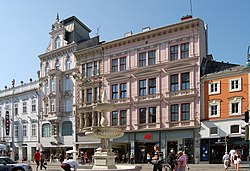
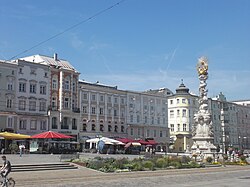
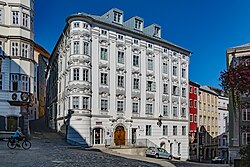
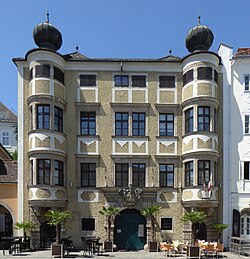
The old quarter and the main square, featuring the Trinity Column, offer a glimpse into the city's historical evolution. Other notable sites include the old town hall and the former townhouse of Kremsmünster Abbey.
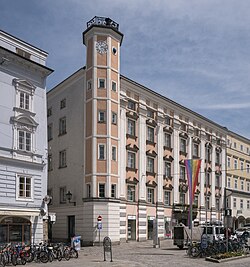
Demographics and Climate
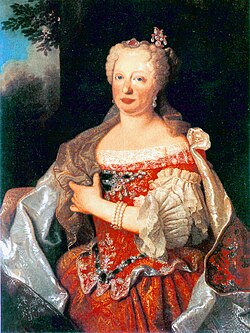
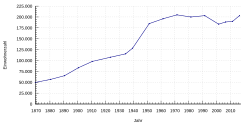
The population of Linz has seen significant growth since the late 19th century, expanding from roughly 49,000 in 1869 to over 210,000 today. The city is multicultural, with significant populations from Romania, Bosnia and Herzegovina, and Croatia.
Climate Overview
Linz experiences a temperate climate with distinct seasons. Summers are generally warm, with record highs reaching 37.8°C, while winters can be cold, with record lows dropping to -30.0°C. Precipitation is distributed throughout the year, peaking in July.
| Month | Mean Max Temp (°C) | Mean Min Temp (°C) | Precipitation (mm) | Sunshine Hours |
|---|---|---|---|---|
| January | 2.8 | -1.8 | 56.6 | 49.3 |
| April | 16.7 | 6.4 | 51.3 | 171.4 |
| July | 25.2 | 15.2 | 105.1 | 238.6 |
| October | 14.0 | 7.0 | 58.5 | 110.3 |
Notable Figures
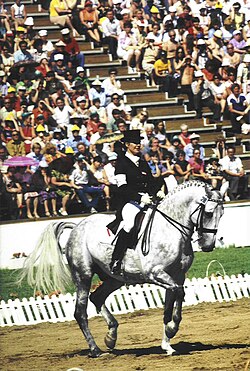
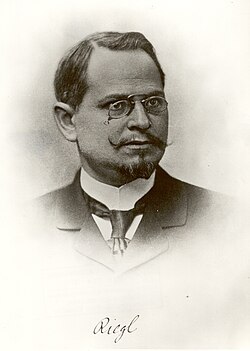
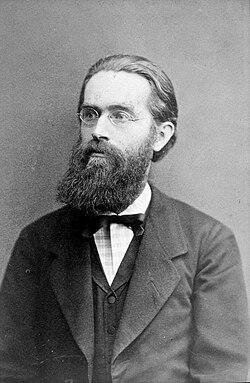
Linz has been home to many influential individuals. In the arts, Anton Bruckner remains the most celebrated figure. In science, Julius von Hann is recognized as a father of modern meteorology. The city's history is also linked to political figures and athletes, including Olympic gold medalist Elisabeth Theurer.
Frequently Asked Questions

What is the population of Linz?
As of January 1, 2025, the population is recorded as approximately 214,064 inhabitants, though Statistics Austria notes a slightly different figure of 213,557.
What are the main transport options in Linz?
Linz offers a diverse transport network including a comprehensive tram system, the Pöstlingbergbahn, a central railway station, the Linz–Hörsching Airport, and international shipping via the Danube.
Which museums are most famous in Linz?
The most prominent museums include the Ars Electronica Center, which focuses on digital art and technology, and the Lentos Museum, which specializes in modern art.
Who is Anton Bruckner?
Anton Bruckner was a renowned Austrian composer and organist, famous for his symphonies and sacred music, and he is one of the most significant cultural figures associated with Linz.
What is the climate like in Linz?
Linz has a temperate climate with an average annual precipitation of 839.7 mm. It experiences warm summers (averaging 20.9°C in July) and cold winters (averaging 0.5°C in January).