Ingolstadt: A Bavarian Hub of History, Innovation, and Industry
Situated along the banks of the Danube in Upper Bavaria, Ingolstadt is a city where medieval heritage meets cutting-edge automotive engineering. As the second-largest city in Upper Bavaria and the fifth-largest in the state of Bavaria, it serves as a vital economic and cultural center. With a population of approximately 141,185 as of late 2024, the city has evolved from a strategic state fortress into a modern metropolitan area supporting nearly half a million people.
Key Facts
- Location: Independent city on the Danube, Upper Bavaria, Germany.
- Economic Driver: Home to Audi, the region's largest employer.
- Historical Significance: Former seat of the first university in Bavaria (founded 1472).
- Geography: Bavaria's fourth-largest city by urban area (133.37 km²).
- Cultural Landmark: Site of the founding of the Illuminati order in 1776.
Geography and Urban Layout
Ingolstadt spans an urban area of 133.37 km², stretching roughly 18 km from east to west and 15 km from north to south. The city's elevation varies from 362 meters at the confluence of the Schutter and the Danube to a peak of 410.87 meters in the Pettenhofen district. Its strategic position is highlighted by its proximity to the geographic center of Bavaria in Kipfenberg, located just 14 km from the city boundary.
A Journey Through History
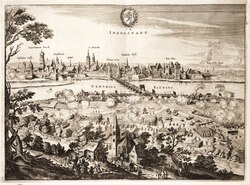
First mentioned in 806, Ingolstadt rose to prominence in the late Middle Ages as one of the capitals of the Bavarian duchies. Its architectural landscape still reflects this era of prestige. In 1472, Louis IX, Duke of Bavaria, established the University of Ingolstadt, which served as a bastion of the Catholic Church during the Reformation under scholars like Johann Eck. Although the university eventually moved to Landshut and then Munich (becoming LMU Munich), its intellectual legacy remains.
For over 400 years, the city functioned as a Bavarian state fortress. One of its most curious historical artifacts is the Schwedenschimmel (Swedish Grey), the preserved warhorse of King Gustav II Adolf of Sweden, which was killed during the 1632 Siege of Ingolstadt. This specimen is regarded as the oldest preserved animal specimen in Europe.
Economic Powerhouse: The Audi Legacy
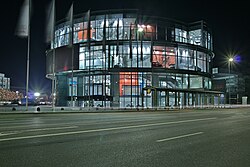
The modern economic identity of Ingolstadt is inextricably linked to the automotive industry. In 1945, Auto Union arrived in the city after its original factories in East Germany were seized as war reparations. With support from the Marshall Plan, the company was formally re-founded in 1949. Following a takeover by Volkswagen in 1964, the company evolved into Audi, which today dominates the local economy as the primary employer.
Culture, Arts, and Sightseeing
The city's historic old town is a treasure trove of Gothic architecture. Key landmarks include the Herzogskasten (old ducal castle, c. 1255), the New Castle (built from 1418), and the Gothic hall church of Our Lady, begun in 1425. The Kreuztor, dating from 1385, remains a primary landmark and one of the few surviving gates of the old city wall.
Museums and Theatres
Ingolstadt offers a diverse array of cultural institutions:
- German Museum of Medical History: The only museum of its kind in Germany, tracing medicine from Ancient Egypt to the present.
- Bavarian Police Museum: Located in the neoclassicistic Triva Turm, documenting police development since 1918.
- Museum of Concrete Art: Focused on Minimalism and Concrete Art, this museum is slated to move to a new facility in 2027.
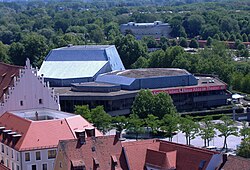
- Stadttheater Ingolstadt: A modern venue opened in 1966 that hosts approximately 500 performances annually.
Education and the "Quartier G" Innovation Hub
Ingolstadt is a center for higher learning, hosting the Technische Hochschule Ingolstadt and the Catholic University of Eichstätt-Ingolstadt. The latter is notable for its International Double Degree Program and the Ingolstadt School of Management.
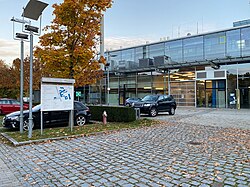
The city is currently developing Quartier G, a creative hotspot centered around the historic Alte Gießereihalle (1882). This hub will integrate the Technische Hochschule, the Audi Academy, the Museum of Concrete Art, and the digital startup hub "brigk" to foster synergy between culture, education, and industry.
Sports and Recreation
With 83 registered sports clubs and over 41,000 members, athletics are central to city life. The city is particularly renowned for:
- Ice Hockey: ERC Ingolstadt, winners of the 2014 German Ice Hockey League Championship.
- Football: FC Ingolstadt 04, which reached the Bundesliga in 2015.
For nature lovers, the Glacis serves as a green belt surrounding the city center. Within this area lies Klenzepark, the city's largest park, which attracts roughly 100,000 visitors per month during warm seasons.
| Category | Detail |
|---|---|
| Population (2024) | 141,185 |
| Total Area | 133.37 km² |
| Major Industry | Automotive (Audi) |
| Key Higher Ed | TH Ingolstadt, Catholic University of Eichstätt-Ingolstadt |
| Highest Point | 410.87 m (Pettenhofen) |
Frequently Asked Questions
What is the significance of the Schwedenschimmel?
The Schwedenschimmel is the stuffed warhorse of King Gustav II Adolf of Sweden, killed during the 1632 Siege of Ingolstadt. It is considered the oldest preserved animal specimen in Europe.
Which major company is based in Ingolstadt?
Audi is the city's largest employer and the dominant force in the local economy, having evolved from Auto Union after its relocation to the city following World War II.
What is Quartier G?
Quartier G is a newly created creative and innovation hub designed to foster networking between the Technische Hochschule Ingolstadt, the Audi Academy, and various cultural institutions like the Museum of Concrete Art.
What are the main sports teams in the city?
The city is best known for ERC Ingolstadt (ice hockey) and FC Ingolstadt 04 (association football).
Which historical order was founded in Ingolstadt?
The freethinking Illuminati order was founded in Ingolstadt in 1776 by Adam Weishaupt.