Line Infantry: The Evolution of Linear Warfare and Tactical Formations
For centuries, the sight of disciplined rows of soldiers standing shoulder-to-shoulder defined the European battlefield. This system, known as line infantry, was a method of organization and combat where troops were trained to fight in linear formations—typically two or three ranks deep—to deliver coordinated volleys of musket or rifle fire. This tactical approach transformed the nature of engagement, shifting the focus from individual combat to the collective power of massed firepower.
The rise of line infantry began in the late 16th and early 17th centuries, rooted in the reforms of Maurice of Nassau and the Dutch army. These practices spread rapidly across Europe through military manuals and the movement of professional officers, eventually reaching their zenith during the Napoleonic Wars. However, as weapon technology advanced from smoothbore muskets to high-precision rifles, the vulnerability of these dense formations led to their eventual decline.
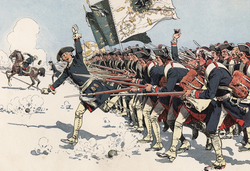
Key Facts
- Origins: Developed in the late 16th century by Maurice of Nassau and the Dutch army.
- Core Tactic: Soldiers fought in linear ranks to maximize the number of weapons firing simultaneously.
- Key Innovation: The transition from matchlock to flintlock muskets and the invention of the socket bayonet.
- Peak Usage: Reached widespread application during the Napoleonic Wars.
- Cause of Decline: The introduction of rifled muskets and the Minié ball, which increased lethality at long ranges.
The Development of Linear Tactics
From Squares to Lines
In the 16th century, infantry typically fought in tercios—large squares composed of pikemen with smaller groups of musketeers at the corners. First appearing in Spain in 1534, these formations were designed for stability but limited the amount of firepower that could be brought to bear on the enemy.
In the 1590s, Maurice of Nassau introduced a more dynamic approach inspired by Roman military writers. He emphasized drilling, parading, and the ability to reform ranks quickly. His cousin, William Louis of Nassau, further refined this by implementing a system of rotating ranks. This allowed musketeers to fire in groups and then move to the rear to reload, creating a continuous stream of fire that overcame the slow reload time of muzzle-loading weapons.
To implement these complex maneuvers, the Nassau family reduced the size of military units, replacing massive regiments with more manageable battalions. This shift required higher levels of discipline and coordination, as more soldiers were now exposed to direct combat in a spread-out line.
The Swedish Influence and Technical Shifts
Gustavus Adolphus of Sweden further evolved these tactics by introducing paper cartridges—pre-measured powder and ball—which significantly increased the rate of fire. He organized his troops into squadrons of pikemen and musketeers, maintaining the pike as a necessary defense against cavalry.
By the end of the Thirty Years' War, the linear system had proven its superiority. Two major technological leaps soon followed: the replacement of the unreliable matchlock with the flintlock (which used a spark from flint and steel) and the invention of the socket bayonet by Vauban. The bayonet allowed musketeers to defend themselves against cavalry, rendering the dedicated pikeman obsolete.
Prussian Refinements under Frederick the Great
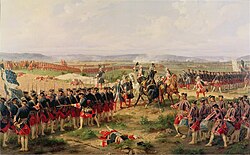
Frederick the Great of Prussia turned the Prussian infantry into the gold standard of European warfare through rigorous drill and discipline. In 1740, he reduced the standard line from four ranks to three to balance stability with maximum firepower. In this formation, the first rank would kneel after firing, allowing the third rank to shoot over them.
Prussian troops were renowned for their rapid fire, achieving up to seven rounds per minute during drill. Frederick also utilized the oblique order, a maneuver that allowed him to concentrate superior force on a specific flank of the enemy army, achieving local numerical superiority even when outnumbered overall.
Line Infantry in the Napoleonic Wars
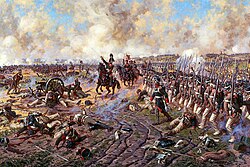
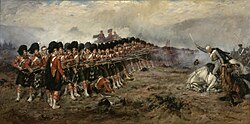
During the Napoleonic era, the three-rank line remained the standard for maximizing frontage and delivering volleys. However, different nations adapted the system to their needs:
- The British: Under the Duke of Wellington, the British often used a two-deep line, which maximized firepower and utilized terrain, such as reverse slopes, to shield troops from artillery.
- The Austrians: Favored "battalion masses"—compact formations that could quickly resist cavalry but were more vulnerable to cannon fire.
- The French: While using lines, they increasingly relied on skirmishers and compact columns, especially in the difficult terrain of Italy.
Arms, Equipment, and the Technological Shift
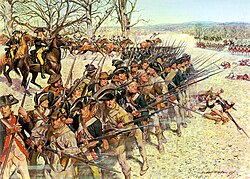
For most of the 18th century, the smoothbore flintlock musket was the primary weapon. These weapons had low accuracy, with effective ranges typically under 80 meters; the inaccuracy was compensated for by firing in massed volleys. By the early 19th century, percussion caps replaced flintlocks, offering better reliability in wet weather.
The mid-19th century brought a revolutionary change: the rifled musket. While rifles existed previously, they were slow to load. The invention of the Minié ball—a hollow-based bullet that expanded to fit the rifling—allowed ordinary soldiers to use rifles with the ease of smoothbores. This increased the effective range and accuracy of infantry fire fourfold.
The Decline of the Line
The increased lethality of rifled muskets made traditional dense linear formations suicidal. Attackers advancing in close-order lines were now targeted by defenders from several hundred yards away, long before they could reach traditional musket range. This gap between weapon technology and tactical doctrine led to catastrophic casualties in conflicts like the American Civil War.
By the late 19th century, the introduction of breech-loading rifles (such as the Prussian Dreyse needle gun and the French Chassepot) and metallic cartridges further accelerated the shift. Armies abandoned the rigid line in favor of looser formations and cover-based combat, marking the end of the era of line infantry.
| Era | Primary Weapon | Key Formation | Defining Characteristic |
|---|---|---|---|
| 16th Century | Matchlock & Pike | Tercio (Square) | Defensive stability against cavalry |
| 17th-18th Century | Flintlock Musket | Linear (3 Ranks) | Coordinated volleys and drilling |
| Early 19th Century | Percussion Musket | Line & Column | Massed maneuvers and skirmishing |
| Mid-Late 19th Century | Rifled Breech-loader | Loose Formations | Long-range precision and cover |
Frequently Asked Questions
Why did line infantry stand so close together?
Standing shoulder-to-shoulder maximized the number of muskets that could fire at the enemy simultaneously. Because individual smoothbore muskets were highly inaccurate, massed volleys were necessary to ensure a sufficient number of projectiles hit the target.
What was the purpose of the "three-rank" system?
The three-rank system provided a balance between firepower and stability. It allowed for a continuous cycle of firing and reloading; for example, the first rank could kneel so the third rank could fire over them, maintaining a steady stream of lead.
How did the bayonet change infantry tactics?
The socket bayonet allowed a musketeer to transform their firearm into a spear. This eliminated the need for separate pikemen to protect the infantry from cavalry, allowing the entire unit to be armed with firearms.
Why did rifled muskets lead to the end of line infantry?
Rifling increased the range and accuracy of fire fourfold. Soldiers in dense lines became easy targets for defenders who could now hit them from hundreds of yards away, making the traditional close-order advance far too deadly.
What was the "oblique order" used by Frederick the Great?
The oblique order was a tactical maneuver where the army advanced in a slanted line, concentrating a massive force against one specific flank of the enemy while keeping the rest of the line held back, creating a local numerical advantage.