Liberal Nationals: The History of a Divided Party
The story of the Liberal Nationals is a complex chronicle of political fragmentation, ideological shifts, and eventual absorption. Emerging from the fractures of the British Liberal Party during the early 1930s, this group navigated a precarious path between traditional Liberalism and the growing influence of the Conservative Party.
The divide began when the main body of the Liberal Party supported Ramsay MacDonald's second Labour government, which lacked a parliamentary majority. A dissident faction, led by Sir John Simon, vehemently opposed this alliance. These MPs began cooperating with the Conservatives and, most controversially, advocated for replacing free trade—the cornerstone of traditional Liberalism—with tariffs, a policy known as protectionism.
By June 1931, the tension peaked when Sir John Simon, Ernest Brown, and Robert Hutchison resigned their party whip to sit as independents.
The Great Split of 1931
The formation of a makeshift National Government in August 1931 briefly reconciled the dissident Liberals with their party. However, this peace was short-lived. Acting leader Herbert Samuel feared that a snap general election would grant the Conservatives a massive majority and lead to the total abolition of free trade. While Samuel sought to maintain a separate Liberal identity, Simon and his allies were willing to embrace protectionism to ensure the National Government remained broad-based.
This ideological clash resulted in a three-way split leading up to the October 1931 general election:
- Liberal National Party: Supporters of the National Government and protectionism.
- Samuelites: The mainstream Liberals who remained cautious of the National Government.
- Independent Liberals: A small group led by David Lloyd George who opposed the National Government entirely.
Following the election, the "Simonites" (the Liberal Nationals) formally separated from the official Liberal Party in Parliament. By 1933, the Samuelites had completely abandoned the government, leaving the Liberal Nationals as the primary Liberal force supporting the administration.
Despite the parliamentary divide, the organizational split was murkier. Some local associations supported Liberal National candidates while remaining affiliated with the National Liberal Federation. For example, Walter Runciman, a cabinet minister from a wealthy shipping family, served as President of the Federation until 1936, even after the split in the House of Commons.
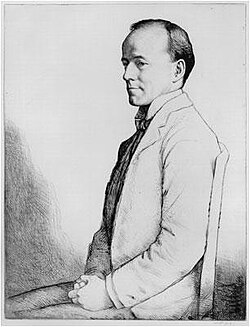
War, Marginalization, and the Path to Merger
Throughout the 1930s and 1940s, attempts to reunite the Liberal factions repeatedly failed, primarily because the Liberal Nationals refused to withdraw their support for the National Government. During World War II, the group suffered from numerous defections to the Conservatives or the Independent Liberals.
When Winston Churchill formed an all-party coalition in 1940, the Liberal Nationals were marginalized. Sir John Simon was moved to the role of Lord Chancellor, and the new leader, Ernest Brown, struggled to maintain the party's status. Post-war efforts to reunite in 1945 were largely unsuccessful, except at the regional level in London and specific constituencies like Huddersfield.
By the mid-1940s, the Liberal Nationals had become almost indistinguishable from the Conservatives in policy and opinion. This culminated in the Woolton-Teviot agreement of May 1947, where Lord Woolton (Conservatives) and Lord Teviot (Liberal Nationals) agreed to merge the two parties at the constituency level. At this point, the group rebranded as the National Liberals.
Impact on the British Political Landscape
The merger had profound consequences for both the official Liberal Party and the newly formed National Liberals. The official Liberals viewed the use of the "National Liberal" label as a Conservative attempt to misappropriate their historic identity, which further weakened their electoral position. By 1951 and 1955, the Liberal Party was struggling to field more than 100 candidates.
Conversely, the National Liberals enjoyed significant parliamentary success, winning 17 seats in 1950, peaking at 21 seats in 1955, and remaining the larger of the two Liberal groupings for years. Several National Liberals achieved high office, including John Scott Maclay (Secretary of State for Scotland) and Charles Hill (Minister of Housing and Local Government).
A notable figure of this era was Gwilym Lloyd George. Though he never formally joined the National Liberals, he operated independently of the Liberal whip from 1931, served in Neville Chamberlain's administration, and eventually became Home Secretary from 1954 to 1957.
| Faction | Key Leader(s) | Stance on National Govt | Economic View | Ultimate Fate |
|---|---|---|---|---|
| Liberal Nationals | Sir John Simon | Strong Support | Protectionism/Tariffs | Merged with Conservatives (1947) |
| Samuelites | Herbert Samuel | Conditional/Opposed | Free Trade | Remained as official Liberal Party |
| Independent Liberals | David Lloyd George | Total Opposition | Free Trade | Reunited with Samuelites after 1935 |
Key Facts
- The Liberal Nationals split from the main Liberal Party in 1931 over support for the National Government and tariffs.
- Sir John Simon was the primary leader of the "Simonites" (Liberal Nationals).
- The Woolton-Teviot agreement of 1947 formally merged the party with the Conservatives at the constituency level.
- After 1947, they were renamed the National Liberals.
- The group remained larger in Parliament than the official Liberal Party through the mid-1950s.
Frequently Asked Questions
What caused the split in the Liberal Party in 1931?
The split was caused by disagreements over whether to support the National Government and whether to abandon free trade in favor of protectionist tariffs to combat cheap foreign imports.
Who were the "Simonites"?
The "Simonites" were the members of the Liberal National Party who followed the leadership of Sir John Simon and formally repudiated the official Liberal Party to support the National Government.
What was the Woolton-Teviot agreement?
Signed in May 1947, this agreement between Lord Woolton and Lord Teviot merged the Liberal Nationals and the Conservative Party at the local constituency level.
How did the National Liberals differ from the official Liberal Party after 1947?
The National Liberals acted as allies of the Conservative Party, often running candidates under combined labels, while the official Liberal Party remained independent and struggled with a diminished electoral presence.
Did any National Liberals hold high government office?
Yes, figures such as John Scott Maclay (Secretary of State for Scotland) and Charles Hill (Minister of Housing and Local Government) held cabinet-level positions.