Liaoyang: A Journey Through One of Northeast China's Oldest Cities
Situated on the banks of the Taizi River in east-central Liaoning province, Liaoyang is a city where ancient history meets modern urban life. Located approximately one hour south of the provincial capital, Shenyang, this prefecture-level city serves as a vital cultural and historical hub in Northeast China. From its origins before the Warring States period to its role as a former imperial capital, Liaoyang offers a profound look into the shifting dynasties of the region.
Key Facts
- Location: Liaoning Province, China, on the Taizi River.
- Historical Significance: One of the oldest continuously inhabited cities in Northeast China.
- Major Landmark: The White Pagoda (Baita), dating back to the Liao Dynasty.
- Administrative Seat: Baita District.
- Economy: GDP of approximately CN¥ 102.9 billion.
- Climate: Temperate with significant seasonal variations.
A Deep Dive into History
Liaoyang's history is as layered as the soil of the Liaodong region. Long before the modern era, the site served as Xiangping, the capital of the Liaodong Commandery during the Qin and Han dynasties. Throughout the centuries, it has been a strategic prize for various powers, including the Goguryeo kingdom and the Tang dynasty.
The Liao and Jin Dynasties
The city rose to significant prominence during the Liao dynasty. Many architectural remnants from this era still stand today, most notably the White Pagoda. Later, under the Jurchen Jin dynasty, the city functioned as the empire's eastern capital, known as Dongjing.
The Manchu Rise and the Later Jin
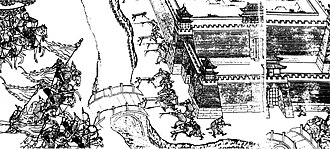
In the 17th century, Liaoyang became a central stage for the rise of the Manchu people. In 1621, Nurhaci, the founder of the Later Jin dynasty, captured the city and established it as his capital. Although the capital was moved to Shenyang in 1625, the city's imperial legacy remains visible in the Dongjingling tombs located just east of the city.
Modern Era and Challenges
The 20th century brought significant upheaval, including the Boxer Rebellion and the Battle of Liaoyang during the Russo-Japanese War. In more recent history, the city has navigated the complexities of industrial shifts, notably during the labor protests of 2002 following the bankruptcy of the Liaoyang Ferroalloy Factory.
Geography and Climate
Liaoyang covers a prefecture-level area of 4,710 km². The landscape is defined by its river systems and a climate that experiences distinct seasons. Winters can be quite cold, with record lows reaching below -35°C, while summers are warm and humid, with temperatures often exceeding 35°C.
| District/City/County | Chinese Name | Population | Area (km²) | Density (/km²) |
|---|---|---|---|---|
| Baita District | 白塔区 | 359,401 | 30 | 12,138 |
| Wensheng District | 文圣区 | 160,466 | 287 | 559 |
| Hongwei District | 宏伟区 | 142,491 | 164 | 868 |
| Gongchangling District | 弓长岭区 | 80,870 | 288 | 238 |
| Taizihe District | 太子河区 | 134,604 | 269 | 482 |
| Dengta City | 灯塔市 | 354,617 | 1,331 | 304 |
| Liaoyang County | 辽阳县 | 372,131 | 2,853 | 152 |
Tourism and Cultural Attractions
For travelers, Liaoyang offers a blend of spiritual sites, museums, and outdoor recreation. The Baita Park is the city's largest green space and home to the historic White Pagoda. Nearby, the Guangyou Temple—one of the largest and oldest temple complexes in the northeast—features a massive sandalwood Buddha statue.
Museums and Notable Figures
Culture enthusiasts can visit the Liaoyang Museum to view various antiques or explore specialized museums dedicated to famous residents, such as the renowned author Cao Xueqin (author of Dream of the Red Chamber) and the Qing dynasty official Wang Erlie.
Recreation and Shopping
Beyond historical sites, the city offers diverse activities:
- Outdoor Adventure: Rafting on the Taizi River, visiting the Shenwo Reservoir Scenic Area, or skiing in Gongchangling County.
- Leisure: Hot spring resorts and golf courses in the eastern outskirts.
- Urban Life: Five major shopping malls and pedestrian streets featuring regional snacks and Korean BBQ restaurants.
Frequently Asked Questions
What is the most famous landmark in Liaoyang?
The White Pagoda (Baita) in Baita Park is one of the most iconic landmarks, dating back to the Liao Dynasty.
How far is Liaoyang from Shenyang?
Liaoyang is approximately a one-hour drive south of Shenyang, the provincial capital.
What kind of climate should I expect in Liaoyang?
Liaoyang has a temperate climate with cold, snowy winters and warm, humid summers.
Are there any notable historical figures from Liaoyang?
Yes, Liaoyang is the birthplace of the famous author Cao Xueqin and the notable Qing dynasty official Wang Erlie.
What can I do for outdoor activities in the region?
Visitors can enjoy rafting on the Taizi River, exploring the Shenwo Reservoir, or visiting the hot springs and ski centers in Gongchangling County.