Korean Population in China: History, Demographics, and Cultural Impact
The presence of ethnic Koreans in China is a complex and deeply rooted historical phenomenon. From the development of agricultural landscapes in Northeast China to the modern-day vibrant communities in major metropolitan hubs, the Korean diaspora has shaped the social and economic fabric of the region. Today, this community is comprised of various groups, including the Chaoxianzu—ethnic Koreans with Chinese nationality—as well as South Korean expatriates and North Korean residents.
Key Facts
- The total population of Koreans in China (including South Korean and North Korean expatriates) was estimated at 2,109,727 in 2023.
- The 2020 Hukou census recorded 1,702,479 ethnic Korean Chinese (Chaoxianzu).
- Koreans are the largest or second-largest ethnic Korean population living outside the Korean Peninsula.
- Significant populations are concentrated in Jilin, Heilongjiang, and Liaoning provinces.
- The community is known for high educational attainment, with literacy rates three times the national average in 1982.
Demographics and Distribution
The distribution of Koreans in China is primarily concentrated along the border with North Korea. The Yanbian Korean Autonomous Prefecture serves as a major cultural and population center. Within this region, certain cities show a high density of ethnic Koreans, such as Longjing (65.4%), Yanji (53.5%), and Tumen (52.5%).
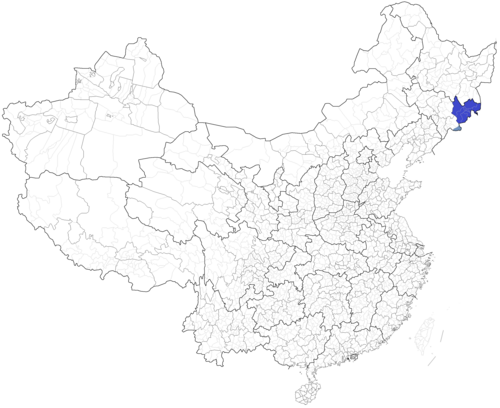
Beyond the border regions, significant populations reside in Northeast China, Inner Mongolia, and the Shandong peninsula. Large expatriate communities of South Koreans have also formed in major economic centers like Beijing, Shanghai, Dalian, and Qingdao. In Shenzhen, Guangdong, hundreds of South Korean companies operate, reflecting strong bilateral trade ties.
Population Trends and Migration
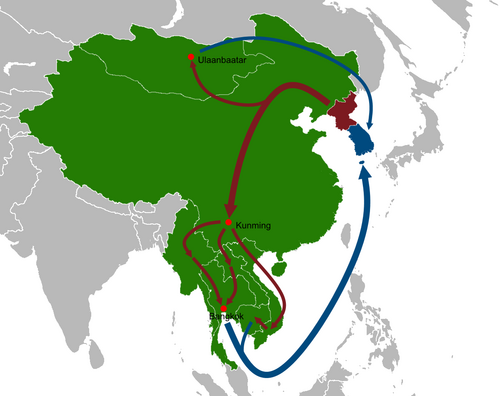
While the ethnic Korean population grew rapidly between the 1953 and 1964 censuses, recent decades have seen different trends. High levels of emigration to the Republic of Korea (South Korea) for economic opportunities have impacted residential numbers. It is estimated that approximately 42% (about 708,000) of Korean Chinese individuals now reside in Korea while maintaining their Chinese nationality.
| Year | Total Population (1,000s) | Korean Population (1,000s) | Korean Annual Growth Rate (%) |
|---|---|---|---|
| 1953 | 594,347 | 1,120 | — |
| 1964 | 697,943 | 1,349 | 16.9 |
| 1982 | 1,008,175 | 1,766 | 15.0 |
| 1990 | 1,133,683 | 1,921 | 10.5 |
| 2000 | 1,265,830 | 1,920 | −0.1 |
Historical Evolution
Early Migration and Agriculture
Migration patterns shifted significantly during the late Qing era. By 1910, the number of Korean migrants in China reached approximately 260,000. A notable aspect of this era was the development of paddy fields (rice cultivation areas) in Northeast China. Between 1921 and 1928, Korean farmers were responsible for developing or cultivating more than 80% of the rice fields in the region. In 1934, despite making up only 3.3% of the total population in Northeast China, Korean farmers produced 90.1% of the region's rice output.
The Japanese Occupation and Resistance
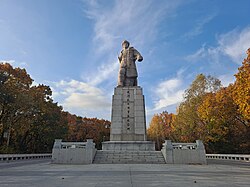
Following the Japanese occupation of Korea in 1910, many Koreans fled to Northeast China to escape Japanese rule. This period saw the establishment of Korean independence movement bases and military training schools. After the 1931 Mukden Incident and the establishment of the puppet state Manchukuo, the Japanese began a systemic migration of Korean farmers to the region.
During the 1930s, many Koreans joined anti-Japanese forces led by the Chinese Communist Party. Notable leaders like Li Hongguang helped establish the Northeast Anti-Japanese United Army. In the 1st, 2nd, 3rd, and 7th army divisions of this force, Koreans accounted for half of the total membership. This resistance movement was a critical part of the 14-year struggle against Japanese occupation.
Culture and Education
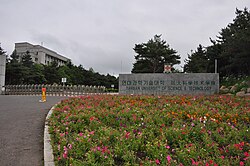
The Korean community in China is recognized for its high levels of education. The 1982 national census indicated that literacy rates among ethnic Koreans were three times the national average. Furthermore, the percentage of the population holding college degrees was more than twice the national average. By the year 2000, over 10% of Korean men in the Yanbian Prefecture had attained education beyond the university level.
Religion plays a significant role in the community, with Buddhism and Christianity being the most prominent faiths. The cultural influence of the community is also seen in its notable figures, ranging from historical Tang dynasty generals of Korean descent to contemporary artists, scientists, and athletes.
Frequently Asked Questions
What is the difference between Chaoxianzu and South Koreans in China?
Chaoxianzu refers to ethnic Koreans who hold Chinese nationality. South Koreans in China are typically citizens of the Republic of Korea who reside in China as students, professionals, or migrant workers.
Where is the largest concentration of Koreans in China?
The largest concentration is in Northeast China, specifically in Jilin, Heilongjiang, and Liaoning provinces, with the Yanbian Korean Autonomous Prefecture being a primary cultural hub.
How did Korean farmers impact agriculture in Northeast China?
Korean farmers were instrumental in the development of rice cultivation. In the 1930s, they produced the vast majority of the rice output in Northeast China and even broke records for growing rice north of the 50th parallel.
Why has the Korean population in China seen recent shifts?
The population has seen shifts due to economic migration, with many Korean Chinese moving to South Korea for better work and economic opportunities.
What is the educational status of the Korean community in China?
The community has historically maintained very high literacy and educational attainment rates, often significantly exceeding the national averages for China.